by Catie Owen | Dec 12, 2025 | Americas, Storage
Press Release
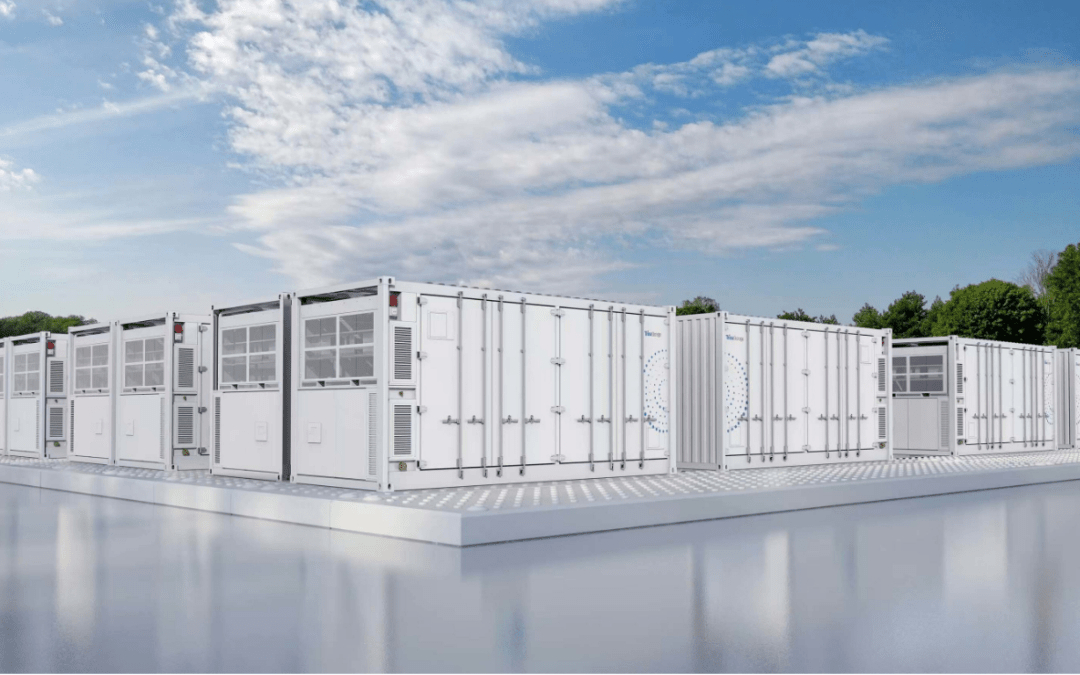
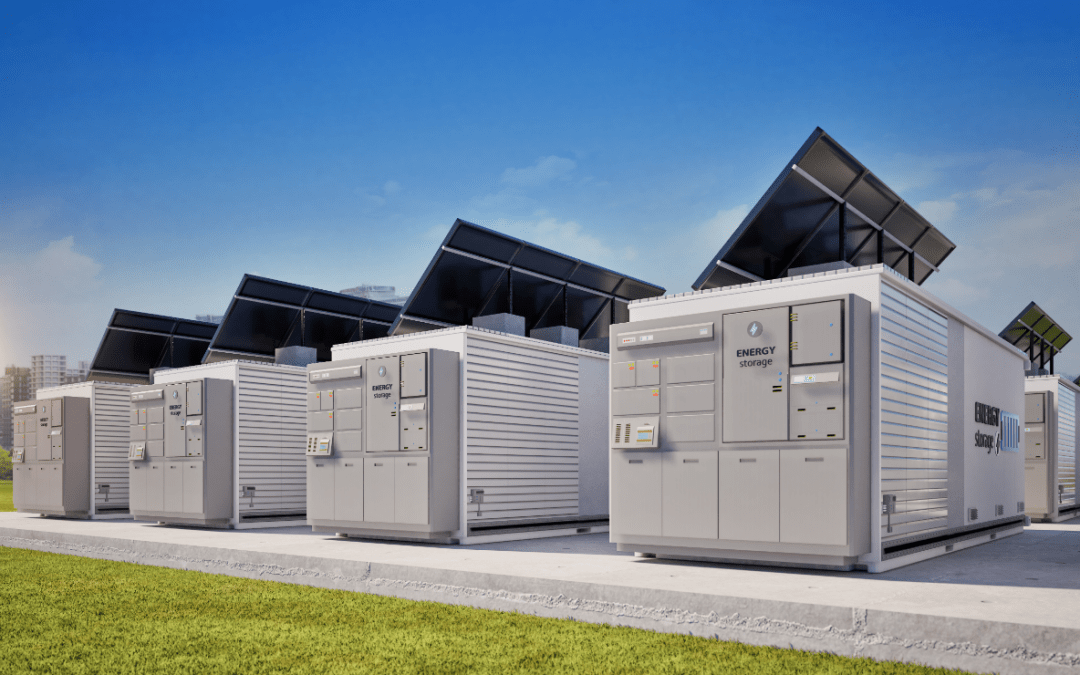
Trina Storage, a global leader in energy storage, announced its expanding strategic partnership with Lightshift Energy (Lightshift), a leading US developer, owner, and operator of energy storage systems. This partnership will deliver a portfolio of energy storage projects totalling more than 1GWh across the United States.
The portfolio will utilise Trina Storage’s Elementa 2.0 & 2.5 energy storage solution, which is engineered for high efficiency, intrinsic safety, and dependable performance under diverse operating conditions. These installations will support utilities and local communities through enhanced grid stability, peak-load management, and flexible capacity, as increased power demand and extreme weather threaten grid stability nationwide.
The partnership will strengthen Lightshift’s unique position deploying fleets of distribution-connected batteries, enabling fast, scalable delivery and direct support for load growth while improving reliability and generating significant savings for Lightshift’s customers.
Trina Storage and Lightshift have previously demonstrated successful collaboration and strong execution, including four projects in Groton, Holden, and Paxton, Massachusetts in 2024. During a Northeast heatwave, Trina Storage commissioned two sites ahead of schedule, providing critical capacity to local utilities during periods of elevated demand.
These results highlighted the effectiveness of coordinated planning, responsive delivery, and consistent system performance in the field.
The continuing partnership and large GWh portfolio highlight Trina Storage’s expertise in US energy storage project engineering, certification, commissioning, and operations. Supported by regional teams and partners, the company delivers local system integration, EMS coordination, grid testing, and onsite commissioning, ensuring efficient project execution and reliable performance.
“We are pleased to continue our collaboration with Lightshift through this significant milestone,” said Doug Alderton, Head of Sales, Trina Storage North America. “Our earlier joint projects demonstrate what our strong partnership can accomplish under demanding conditions.
Trina Storage is dedicated to delivering more reliable, flexible energy storage to communities across the US and we look forward to supporting Lightshift in making our shared vision a reality.”
“Lightshift is committed to scaling high-value storage assets that support the reliability and evolution of the US power system,” said Mike Herbert, Managing Partner at Lightshift Energy.
“We are proud to continue our work alongside Trina Storage on projects that advance our strategy and reflect our continued focus on delivering solutions that strengthen grid resilience, address load growth, and provide consistent, high-quality performance for the customers and communities we serve.”
As Trina Storage further grows its presence in North America, this expanded partnership highlights the company’s long-term commitment to supporting secure, efficient, and resilient energy infrastructure for the future.
[Image credit: PRNewsfoto/Trina Storage]
Want to publish a press release? Submit your content here for review by our editorial team.
by Catie Owen | Dec 9, 2025 | Americas, Large Scale Utility Solar
The US solar industry installed 11.7GW of new capacity in the third quarter of 2025 – its third-largest quarter on record – pushing total 2025 installations past 30GW.
According to the U.S. Solar Market Insight Q4 2025 report by the Solar Energy Industries Association (SEIA) and Wood Mackenzie, solar and storage accounted for 85% of all new power added to the grid in the first nine months of the Trump Administration.
The report highlighted that 73% of all capacity installed this year was built in states won by President Trump, including eight of the top ten states (Texas, Indiana, Florida, Arizona, Ohio, Utah, Kentucky, and Arkansas). Utah surged into the top ten with over 1GW of capacity coming online.
This market growth occurs despite federal actions, such as a U.S. Department of the Interior (DOI) memo, that have created significant business uncertainty for utility-scale projects.
SEIA president and CEO Abigail Ross Hopper said the “record-setting quarter for solar deployment shows that the market is continuing to turn to solar to meet rising demand.”
She warned that unless the administration “reverses course, the future of clean, affordable, and reliable solar and storage will be frozen by uncertainty… America’s manufacturing surge, our global competitiveness, and billions of dollars in private investment are on the line.”
The US has added 17.7GW of new module manufacturing capacity in 2025, with new facilities in Louisiana and South Carolina. With a new Michigan wafer facility, the US can now produce every major component of the solar module supply chain.
However, due to the lack of clarity from the DOI on permitting, the report’s forecast for utility-scale deployment through 2030 remains unchanged.
Michelle Davis, Wood Mackenzie’s head of solar research, stated, “We expect 250 gigawatts of solar to be installed from 2025 – 2030. But the US solar industry has more potential.”
She concluded the industry is “well positioned to meet more of this new demand if existing constraints were alleviated,” referencing the over 73 GW of permitted solar projects vulnerable to politically motivated delays.
by Catie Owen | Nov 27, 2025 | Americas, Large Scale Utility Solar, Storage
RWE has commissioned the Stoneridge Solar project in Texas, introducing 200MW of solar power alongside 100MW (200 MWh) of battery storage capacity to the state’s grid.
This development aims to provide reliable, cost-competitive, and locally generated electricity to meet Texas’s growing energy needs and support US energy dominance.
The Stoneridge Solar facility is positioned as a significant economic driver for the region. The project created more than 200 construction jobs and will support permanent operational roles going forward.
Furthermore, it is expected to generate millions in tax revenue for Milam County and the Thorndale Independent School District. These investments are specifically earmarked to benefit local schools and first responders.
Andrew Flanagan, CEO of RWE Clean Energy, highlighted the project’s broad positive influence, stating: “Stoneridge Solar is a great example of the power of local partnership and the positive role energy projects play in economic stimulation.
“We are helping Texas and the nation secure their energy future with scalable, homegrown energy while also delivering meaningful benefits to communities across America’s heartland.”
RWE has engaged directly with the local community, contributing to initiatives such as funding renovations at Thorndale Elementary School and partnering with the local volunteer fire department.
Stoneridge Solar reinforces RWE’s overarching goal to accelerate energy independence and secure power for the grid.
The company’s total energy capacity across the US now exceeds 11GW, cementing its position in delivering affordable power solutions to American homes and businesses.
[Image credit: RWE]
by Catie Owen | Nov 25, 2025 | Americas, Commercial & Industrial Solar, Large Scale Utility Solar, Storage
The 30th Conference of the Parties to the United Nations Framework Convention on Climate Change (COP30) convened in Belém, Brazil, from 10 – 21 November 2025.
Dubbed the ‘Implementation COP’, the summit gathered delegates from nearly 200 nations to carry out ‘Mission 1.5’: limiting global warming to 1.5°C above preindustrial levels.
The summit also opened on the promise of finalising frameworks for climate finance, ensuring that developing nations have the capital required for their energy transitions.
Where does renewable energy come into this?
COP30 follows in the footsteps of the historic consensus at COP28 (2023) to transition away from fossil fuels to prioritise renewable energy. However, COP28 struggled to secure a unified global roadmap for phasing out fossil fuels.
Discussions saw stiff pushback from oil and gas-producing nations, including Saudi Arabia and Russia, who resisted a definitive timeline for phase-out.
As such, COP30 faced the highly anticipated task of turning pledges into concrete national policies, as pressure mounts from global institutions, businesses, and citizens alike.
However, as COP30 ran on into the early hours of 22 November, frustrations rose as the chance to both discuss and finalise a roadmap to decarbonisation seemed to be slipping through the delegates’ fingers.
A stalemate had formed between a coalition of 80 developed and developing countries pushing to end reliance on fossil fuels, and a group led by Saudi Arabia, its allies, and Russia – all pushing against decarbonisation. Despite this, the ‘Belém political package’ was finally signed.
“The message coming out of Belém was clear: despite the noise, clean energy and climate action remain the foundation on which the global economy is being remade and rebuilt,” commented Ed Miliband, the UK’s Secretary of Energy Security and Net Zero, and co-chair of the UK’s Solar Taskforce.

The UK’s energy secretary and co-chair of the Solar Taskforce, Ed Miliband, played a role in securing the final agreement.
COP30’s final conclusions
The signatories have agreed to start working on a roadmap to move away from fossil fuels with a report due in 2026. However, engaging in this initiative will be voluntary.
Developing countries have secured financing to help them adapt to extreme weather, and a “just transition mechanism” will be provided to workers in high-carbon industries to help them shift to renewables.
Notably, China and Russia requested that “critical minerals” for renewable energy technology not be included in the transition discussions, despite the human rights abuses discussions surrounding them remaining a hot topic across renewable industries.
Impact on the solar industry
The International Renewable Energy Agency (IRENA) noted that investing in infrastructure for the energy transition was paramount, praising discussions at the conference that covered the need for “expanded, modernised, and flexible grids”.
The agency additionally praised the increased prevalence of supply chain resilience in ministerial discussions and in the Climate Action Agenda. At COP30, UNEZA and the Global Clean Power Alliance (GCPA) announced a strategic partnership to address international supply chain challenges.
Furthermore, leading solar manufacturers used the global stage to reaffirm their commitment to aggressive climate targets.
Longi
Longi released its 2024-2025 Climate Action White Paper during the summit. The company outlined a comprehensive strategy to ‘achieve net-zero emissions across the entire value chain by 2050’, benchmarking its progress against the International Transition Plan Task Force disclosure framework.
Longi reported achieving a ‘monocrystalline silicon cell conversion efficiency of 27.81%’. Li Zhenguo, Longi’s founder, stated: ‘Addressing climate change is a systemic project requiring global collaboration. The value of an enterprise is reflected not only in its economic benefits but also in its contributions to our planetary home.’
JA Solar
JA Solar marked its fourth consecutive year at the summit by launching its ‘4F (Faster, Foster, Fairer, Further)’ environmental climate strategy. With cumulative global shipments now exceeding 317 GW, the company highlighted its role in the transition.
Executive President Aiqing Yang noted that ‘the private sector and the clean energy sector in particular, must play a key role in the shift to a climate resilient world.’ The company also held a one-on-one meeting with the Science Based Targets initiative (SBTi) to discuss its decarbonisation pathway, further solidifying its leadership position.
Statkraft
Europe’s largest renewable energy producer, Statkraft, inaugurated new solar farms and battery facilities in Brazil during the conference. The farms are anticipated to generate 789GWh of electricity per annum and save 111,000 tonnes of CO₂ annually – supporting Brazil’s role in reaching global emission reduction targets.
“These projects directly support the global goals to triple renewable energy capacity, ensure a just transition from fossil fuels, and foster local development in a sustainable way,” said Birgitte Ringstad Vartdal, Statkraft’s President and CEO.
Fernando de Lapuerta, Executive Vice President of Statkraft’s international business, concluded: “Solar energy, in combination with batteries and wind power, is the fastest and cheapest way to cut emissions and ensure a just transition.”
[Images credit: COP30 Brasil Amazonia]
by Catie Owen | Nov 20, 2025 | Americas, Commercial & Industrial Solar
First Solar has announced plans to establish a new solar module production facility in Gaffney, South Carolina, USA.
Dedicated to the final production processes for its Series 6 Plus modules, the company expects to invest approximately $330m in the new plant. The new facility will take thin film solar cells produced by First Solar’s international fleet and transform them into fully completed modules.
Commercial operations are scheduled to begin in the second half of 2026 and is anticipated to offer an average manufacturing salary of $74,000 per year.
South Carolina Governor Henry McMaster commented: “South Carolina is proud to be a destination for innovative energy companies that are powering our country with American technology.
“First Solar’s investment will create 600 new jobs in Cherokee County, which will greatly strengthen the local economy and help advance America’s energy independence.”
The decision was reportedly driven by demand for domestically produced energy technology, which was catalysed by the One Big Beautiful Bill Act, signed into law in July 2025.
This move is intended to increase First Solar’s capacity for American-made solar technology that is fully compliant with anticipated Foreign Entities of Concern (FEOC) guidance.
“The passage of the One Big Beautiful Bill Act and the Administration’s trade policies boosted demand for American energy technology, requiring a timely, agile response that allows us to meet the moment,” First Solar CEO Mark Widmar added.
“We expect that this new facility will enable us to serve the US market with technology that is compliant with the Act’s stringent provisions, within timelines that align with our customers’ objectives.”
It expands the company’s existing South Carolina presence, which includes a distribution centre and a partnership with Inland Port Greer.
This new plant will become part of the largest solar technology manufacturing and research and development (R&D) footprint in the Western Hemisphere. According to the company’s official statement, First Solar expects to directly employ over 5,500 people in the US by the end of 2026.
The Gaffney plant is expected to add 3.7GW to First Solar’s annual nameplate capacity, reaching 17.7GW by 2027.
by Catie Owen | Nov 14, 2025 | Americas, Europe, Everything Installer
Press Release
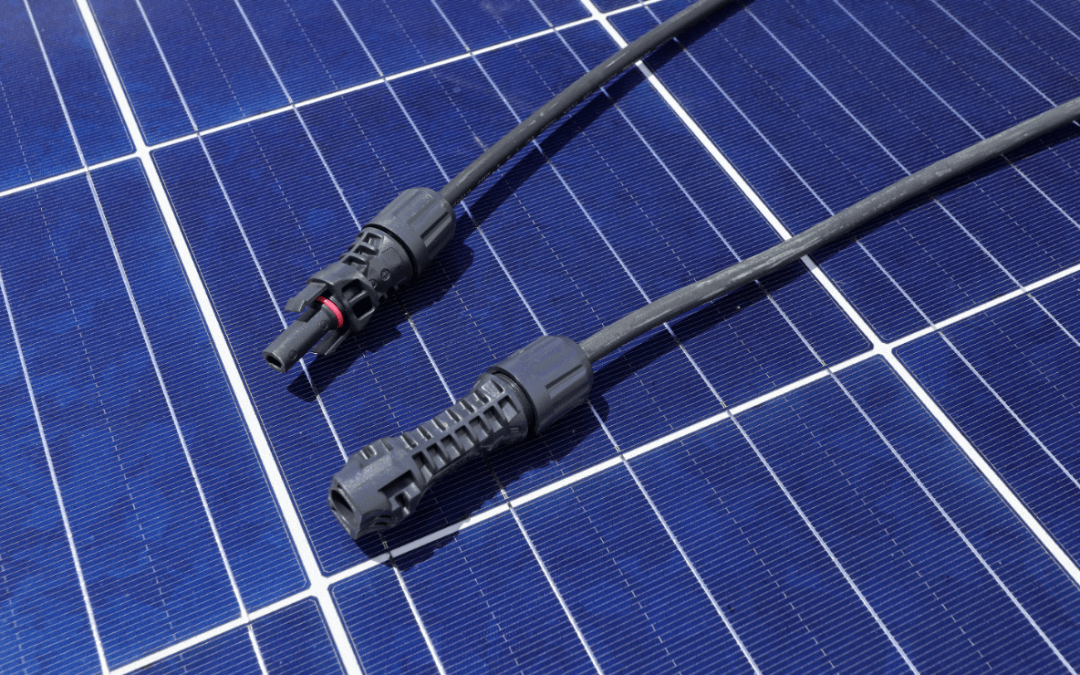
Stäubli and Create Energy announce strategic partnership to revolutionise PV connector technology for the renewable energy industry.
The Swiss-based Stäubli Electrical Connectors, market-leading in connecting PV DC systems, and Create Energy, a US-based leading innovator in renewable energy solutions, are proud to announce a strategic manufacturing partnership.
Together, the companies will produce a next-generation PV DC connector designed to transform the solar and renewable energy industry and address long-standing challenges in the tracker market. This will set a new benchmark for safety, reliability, and performance.
The collaboration combines Stäubli’s legacy of excellence in electrical connectivity with Create Energy’s agile innovation and advanced manufacturing capabilities.
“We’re excited to collaborate with Create Energy to bring this innovation to life and contribute to increasing safety and performance in the PV tracker systems. Together, we’re setting a new benchmark for PV connectivity in the renewables space, and we are excited about this future collaboration!” says Matthias Mack, Vice-President Renewable Energy at Stäubli.
The new connector is specifically designed to withstand the dynamic mechanical stresses and environmental conditions unique to solar tracking systems.
By leveraging Stäubli’s high-quality materials, electrical design expertise, and Create Energy’s precision engineering, the new product promises to enhance system longevity, reduce maintenance costs, and improve overall energy yield.
“The misuse of PV connectors in the tracker market has been a persistent issue, compromising system integrity and long-term performance. I have had a close association with the North American Staubli unit for over two decades. This partnership with Stäubli allows us to deliver a purpose-built solution that not only solves this problem but also pushes the industry forward.” says Dean Solon, Founder and CEO at Create Energy.
The new connector solution will be introduced to the market in 2026, with distribution across North America and international markets.
Want to publish a press release? Submit your content here for review by our editorial team.
by Catie Owen | Nov 13, 2025 | Americas, Commercial & Industrial Solar
Atlas Renewable Energy, a leading international provider of renewable energy solutions, has officially inaugurated the Shangri-La solar project, located in the department of Tolima, Colombia.
The inauguration marks the start of operations for the company’s first project in Colombia, representing a decisive step in expanding large-scale solar energy and strengthening the nation’s sustainable energy system.
With an installed capacity of 201MWp, the Shangri-La plant is expected to generate approximately 403.7 GWh of energy per year, an amount equivalent to the energy consumption of over 214,000 Colombian families.
The project is also anticipated to offset nearly 161,000 tons of CO₂ emissions annually, which is comparable to taking around 34,000 vehicles off the road for a year. This directly contributes to fulfilling national decarbonisation commitments.
Rubén Borja, Country Manager at Atlas Renewable Energy in Colombia, commented: “Shangri-La’s launch marks a firm step in Colombia’s energy transition.
“This project not only delivers clean and reliable energy to the national grid, but has also been a driving force for employment, training, and development for the communities in Tolima. We are proud to have built, in record time, infrastructure that fuels regional progress and reinforces Atlas’s commitment to the country’s energy security.”
During construction, Atlas prioritised local employment, with over 65% of jobs created in Tolima. Furthermore, the participation of women in the project reached 22%, exceeding targets and fostering their development in technical and operational work.
The company also promoted its “We are part of the same energy” program to foster gender inclusion and technical skills in local communities.”
The Shangri-La Solar Plant is part of a partnership with ISAGEN aimed at developing, building, and operating 1,000MW of solar projects over the coming years.
by Catie Owen | Nov 11, 2025 | Americas, Europe, Large Scale Utility Solar
Statkraft, Europe’s largest producer of renewable energy, has inaugurated new solar farms and battery facilities in Brazil during the COP30 climate summit in Belém.
The hybrid projects aim to harness the country’s solar and wind potential to support global emission reduction goals.
Norway’s Minister of Climate and Environment Andreas Bjelland Eriksen, Bahia Governor Jerônimo Rodrigues, and Statkraft CEO Birgitte Ringstad Vartdal inaugurated the Morro do Cruzeiro Solar (76MWp) and Santa Eugênia Solar (198MWp) plants in Bahia.
The company is also commissioning the 69MWp Serrita solar farm in Pernambuco later this year. Together, the three solar farms represent a total investment of 2.3 billion NOK and will add 340MWp of clean energy to Brazil’s power system – around 5% of the country’s new solar capacity in 2025.
The farms are expected to generate 789GWh of electricity annually – more than Norway’s total annual solar production – and, together with associated wind projects, produce 3,400GWh each year. Statkraft estimates the projects will save 111,000 tonnes of CO₂ annually.
“These projects directly support the global goals to triple renewable energy capacity, ensure a just transition from fossil fuels, and foster local development in a sustainable way,” said Birgitte Ringstad Vartdal, Statkraft’s President and CEO.
Fernando de Lapuerta, Executive Vice President of Statkraft’s international business, added: “By investing in innovative renewable solutions and working closely with local communities, we are not only supporting Brazil’s energy transition but also contributing to global climate goals.”
According to Statkraft’s latest Green Transition Scenarios, limiting global warming to 1.9 °C remains possible under optimistic conditions, though current progress risks pushing temperatures up by around 2.4 °C.
“Solar energy, in combination with batteries and wind power, is the fastest and cheapest way to cut emissions and ensure a just transition,” said Lapuerta.
With these new installations, Statkraft Brazil’s portfolio reaches 2.3GW, positioning the company among the country’s major renewable energy producers.
“We are committed to generating positive social impact by creating employment opportunities, enhancing local infrastructure, and establishing vocational training programmes,” said Thiago Tomazzoli, Statkraft Brazil’s Country Manager.
by Catie Owen | Oct 28, 2025 | Americas, Storage
Brazil’s Minister of Mines and Energy, Alexandre Silveira, met with leading Chinese energy companies on Friday, 24 October, as part of the Government’s visit to the 47th ASEAN Summit in Malaysia.
The meetings, which also include visits to Indonesia and Malaysia, aimed to attract international investment for Brazil’s first battery auction, expected to take place later this year.
In a statement on its official LinkedIn page, the Ministry of Mines and Energy said that Alexandre Silveira participated in a meeting with the Association of Southeast Asian Nations (ASEAN), of which Brazil is working to become a member.
According to Silveira, the auction will mark “a new cycle of modernisation and innovation in the Brazilian electricity sector.”
The event is hoped to enable the contracting of BESS that enhances the reliability of the National Interconnected System (SIN), supports greater integration of renewable sources such as solar and wind.
“We are preparing Brazil’s first battery auction, which will be crucial to ensuring the stability and efficiency of our electrical system,” said Silveira. “This is a historic step toward an even cleaner, safer, and more innovative energy matrix.”
During the meetings, companies including Huawei Digital Power, BYD, CATL, Envision, Sungrow, HyperStrong, and Hithium Energy Storage presented solutions and cooperation models focused on large-scale batteries and smart grids.
Silveira confirmed that the auction will take place under the Capacity Reserve Auction (LRCAP) framework, which guarantees available electrical power for the national system. This year’s edition will introduce a specific product for energy storage systems.
“Attracting investment to the battery auction is strategic for the future of the sector,” Silveira added. “We are paving the way for a new technological frontier that will bring innovation, jobs, and greater energy security to the country.”
The initiative underscores Brazil’s goal of drawing sustainable, high-value investments while advancing a fair and inclusive energy transition. It also aligns with efforts to strengthen Brazil’s position as a global renewable energy leader ahead of hosting COP30 in 2025.
[Image credit: Brazil’s Ministry of Mines and Energy (MME)]
by Catie Owen | Oct 20, 2025 | Americas, Large Scale Utility Solar
Over 20 US states have filed legal action against the U.S. Environmental Protection Agency (EPA), disputing the agency’s decision to cancel a $7bn programme designed to expand solar power access for low-income households.
The scheme, known as “Solar For All”, was introduced under the 2022 Inflation Reduction Act and had allocated grants to support rooftop and community solar projects.
This was part of a drive to reduce carbon emissions and make solar power more accessible to households.
The EPA cancelled the programme in August and withdrew roughly 90% of the funds granted to states that had been awarded, according to the lawsuit.
EPA administrator Lee Zeldin commented in July that such actions would be part of the Trump administration’s “One Big Beautiful Bill” spending cuts, which sought to end many Biden-era renewable initiatives as a supposed cost-saving measure.
Challenged by the states
The states behind the legal challenge argued the funding would boost solar deployment, cut greenhouse-gas emissions tied to electricity production and lower energy bills.
“Congress passed a solar energy program to help make electricity costs more affordable, but the administration is ignoring the law and focused on the conspiracy theory that climate change is a hoax,” said Washington State Attorney General Nick Brown.
Demonstrating the impact of this per state, the release noted that the EPA’s decision “jeopardises” about $156m for Washington state.
Leading the complaint are Brown and the attorneys general of Arizona and Minnesota, joined by the attorneys general of
California, Colorado, Connecticut, the District of Columbia, Hawaiʻi, Illinois, Massachusetts, Maine, Maryland, Michigan, New Jersey, New Mexico, New York, North Carolina, Oregon, Rhode Island, and Vermont.
The governors of Kentucky and Pennsylvania, as well as the Wisconsin Economic Development Corporation, are also joining the complaint.
Challenged by the industry
Earlier in the month, a coalition of nonprofits and solar installers filed a similar lawsuit, claiming the EPA had “unilaterally and illegally terminated” the programme.
The claim notes that this is in breach of the Administrative Procedure Act and its “constitutional authority” by cancelling a Congress-approved programme.
A separate lawsuit – filed in Rhode Island by labour unions, solar firms, and community groups – argues the EPA’s action will result in nearly a million people losing access to affordable solar power, and that “hundreds of thousands of good-paying, high-quality jobs will be lost.”
Just as the states’ legal action against the EPA cites, the Rhode Island lawsuit states that many of the grants had already been awarded before the cancellation and asserts that the agency lacked authority to reclaim them.
As lawsuits continue to roll in, complainants hope to end the Trump administration’s continued rollback of Biden-era renewable initiatives.
by Catie Owen | Oct 16, 2025 | Americas, Large Scale Utility Solar
The U.S. Bureau of Land Management (BLM) has cancelled the planned 6.2GW Esmeralda 7 solar project in Nevada, ending what would have been one of the country’s largest solar complexes.
The project was due to spread over roughly 118,000 acres of public land near Tonopah and consist of seven utility-scale facilities developed by NextEra Energy Resources, Leeward Renewable Energy, Arevia Power and Invenergy.
Each site would have included battery storage systems, although storage capacity and duration were not disclosed.
Its National Environmental Policy Act (NEPA) review had been stalled since President Trump took office, and the cancellation has now been made official on the BLM’s internal listing.
The cancellation aligns with a broader trend under the Trump administration of imposing stricter scrutiny on renewable projects, with the President himself posting “We will not approve wind or farmer destroying Solar” to his social media platform, Truth Social, in August.
Earlier in 2025, the Department of the Interior announced an “elevated review” for solar and wind projects on public lands.
Kabir Green of the Natural Resources Defence Council characterised the policy as creating “unfettered obstruction of wind and solar projects that create jobs, cut pollution, lower costs and strengthen communities.”
Additional federal actions have included heightened qualification criteria for tax credits, reclaiming $7bn in Solar for All grants, ending USDA’s REAP funding for solar, removing “preferential treatment” for renewables, and imposing tariffs on key energy components and materials.
Despite such headwinds, new solar capacity in the U.S. has continued to grow. In the first half of 2025, the country added 17.92GW of solar capacity, although the pace slowed in Q2 amid policy uncertainty.
by Catie Owen | Oct 14, 2025 | Americas, Commercial & Industrial Solar, Europe
American technology giant Apple has announced a major expansion of its clean energy initiatives in Europe, adding 650MW of renewable energy capacity through new solar and wind developments across the continent.
The projects – located in Greece, Italy, Latvia, Poland, and Romania — are part of Apple’s efforts to match the electricity used by European customers to power and charge their devices with renewable energy.
A recently completed solar farm in Spain also contributes to the expansion, bringing the company’s total European portfolio to over $600m in financing and generating more than one million MWh of clean electricity annually by 2030.
The move forms part of Apple’s wider Apple 2030 goal to become carbon neutral across its entire footprint by the end of the decade.
“By 2030, we want our users to know that all the energy it takes to charge their iPhone or power their Mac is matched with clean electricity,” said Lisa Jackson, Apple’s vice president of Environment, Policy, and Social Initiatives.
“Our new projects in Europe will help us achieve our ambitious Apple 2030 goal, while contributing to healthy communities, thriving economies, and secure energy sources across the continent.”
In Greece, Apple has signed a long-term agreement to source power from a 110MW solar project owned and operated by HELLENiQ ENERGY. In Italy, it is supporting the development of a 129MW portfolio of solar and wind projects, with the first in Sicily due online this month.
In Poland, the company has backed Econergy’s 40MW solar array, while in Romania’s Galați County, it will procure power from a 99MW wind farm developed by Nala Renewables and OX2. In Latvia, Apple has signed one of the country’s first corporate power purchase agreements with European Energy for a 110MW solar farm.
These developments form part of Apple’s strategy to address emissions from product use, which accounted for 29 per cent of its total greenhouse gas emissions in 2024.
Globally, Apple and its suppliers now support more than 19GW of renewable energy capacity across operations and manufacturing.
[Image caption: Apple’s renewable energy projects include the newly operational Castaño solar array in Spain. Image credit: Apple]
by Catie Owen | Oct 10, 2025 | Americas, Commercial & Industrial Solar, Storage
Nexamp has secured a three-year, $330m Construction Warehouse Facility (CWF) from a consortium of financial institutions to support the development and construction of around 20 new distributed generation projects.
The financing will provide flexible construction capital for Nexamp’s near-term solar and energy storage pipeline, with completed assets expected to transition into long-term financing structures such as tax equity or refinancing.
The company said this will help sustain renewable energy growth and strengthen domestic energy resources.
MUFG led the facility with a $200m commitment, serving as Mandated Lead Arranger and Administrative Agent. ING followed with $100m, taking on roles including Mandated Lead Arranger, Lender, Hedge Provider, and Green Loan Structuring Agent.
Siemens Financial Services contributed $30m as Joint Lead Arranger, while U.S. Bank National Association acted as Collateral Agent.
Zaid Ashai, CEO of Nexamp, said the transaction marks a major milestone in the company’s growth. “This facility underscores the strong confidence leading financial institutions have in our proven national platform,” he said.
“By securing flexible construction capital, we are better positioned to deliver the clean energy projects that communities across the country urgently need as demand rises. Solar continues to be the most cost-effective and easy-to-deploy source of new electricity, outpacing all other sources by a wide margin already this year.”
The lenders also emphasised the importance of the collaboration in supporting the clean energy transition.
“MUFG is proud to partner with Nexamp on this important financing, which advances our shared commitment to accessible, affordable energy,” said Takaki Sakai, Managing Director, Project Finance, MUFG.
“We are proud to support Nexamp with this innovative and sustainable financing solution,” added Filipe Barreto, Director, Renewables and Power, ING Americas.
Jim Fuller, Head of Project Finance at Siemens Financial Services, Inc., said: “At a time of increasing power demand, these projects will provide local communities with resilient clean energy.”
Nexamp said the transaction highlights the key role construction warehouse financing plays in expediting renewable energy deployment across the US.
by Catie Owen | Oct 8, 2025 | Africa, Americas, Commercial & Industrial Solar, Innovation
AAAS Energy BV, a Netherlands-based energy developer, has signed a Memorandum of Understanding (MoU) with ChillMine Corporation, a US data centre operator, to develop a new data centre campus in Botswana jointly.
The collaboration aims to establish a world-class facility designed to support AI computing, global hyperscalers, and other energy-intensive digital operations.
Maarten Mennes, Managing Director of AAAS, said, “This MOU with ChillMine is a significant step in our vision to connect sustainable energy development with the digital economy.
By combining power from the Solar PV + BESS Project with natural gas projects in Botswana, currently being developed by third parties, we are creating a unique value proposition for global technology companies seeking to expand into Africa.”
ChillMine’s Co-Founder and CEO, Brian Neirby, added, “We are thrilled to partner with AAAS to bring our data centre expertise to Botswana.
The combination of the energy infrastructure under development and our operational experience will enable us to deliver a best-in-class, high-performance data centre campus that can meet the rigorous demands of the world’s most sophisticated technology users.”
The proposed campus will respond to growing demand for reliable, scalable, and cost-effective data infrastructure across Southern Africa. It will target large-scale cloud providers and other clients requiring continuous, high-capacity power for operations.
As part of the wider development, AAAS intends to integrate the data centre into an Energy Hub and Industrial Park near Palapye. The hub includes a 250 MW solar PV project and a planned Battery Energy Storage System (BESS) of around 100 MW / 400 MWh, both currently in development.
The integrated energy infrastructure is expected to provide a stable and efficient power supply, supporting reliable performance and sustainability across the new data centre campus.
by Catie Owen | Oct 7, 2025 | Americas, Commercial & Industrial Solar, Everything Installer, Large Scale Utility Solar
A coalition of labour unions, nonprofits and solar companies has filed suit challenging the Trump administration’s decision to rescind $7bn in grants awarded under the Solar for All programme.
The complaint, lodged in federal court in Rhode Island, argues that the U.S. Environmental Protection Agency (EPA) and its administrator, Lee Zeldin, unlawfully revoked grants that had already been awarded to states, tribes and nonprofits.
Zeldin announced in July that this would be part of the Trump administration’s “One Big Beautiful Bill” spending cuts, which seek to end many Biden-era renewable initiatives to “level the playing field” for fossil fuels.
The plaintiffs include the Rhode Island AFL-CIO, the Rhode Island Centre for Justice, Solar United Neighbours, and several solar installers and community organisations.
Serving households
Having been part of the previous President Joe Biden’s $27bn “green bank” (the Greenhouse Gas Reduction Fund), the Solar for All programme was established during the passing of a climate law in 2022.
According to the lawsuit, it was designed to serve over 900,000 households in lower-income communities.
Additionally, it was projected to save recipients about $400 annually on electricity bills while reducing or avoiding more than 30m metric tonnes of carbon dioxide equivalent in greenhouse gas emissions.
The Conservation Law Foundation (CLF) briefly notes that across the country, Solar for All “is expected to save an estimated $350m annually on energy bills and generate 200,000 new jobs.”
“This program would provide families with low incomes access to clean, affordable solar power: energy that lowers bills, improves air quality, and keeps people safer during extreme heat,” Kate Sinding Daly, Senior Vice President for Law and Policy for the CLF, commented in a statement.
“Stripping those benefits away is unlawful and betrays communities.”
In response, the EPA has declined to comment on pending litigation.
Rescinding the programme
In a previous social media statement from July, Zeldin had defended the cancellation by asserting that “the bottom line is this: EPA no longer has the statutory authority to administer the program or the appropriated funds to keep this boondoggle alive.”
Plaintiffs contend that stripping away the grants would deprive communities of access to clean energy, worsen energy insecurity, and stall job growth in the renewable energy sector.
“The Trump administration’s rollback of the Solar for All program is a shameless attempt to prop up fossil fuel companies at the expense of families,” Daly added.
The lawsuit seeks a judicial order to reinstate Solar for All and restore its funding; it can be read here.
by Catie Owen | Oct 3, 2025 | Americas, Large Scale Utility Solar, Storage
The Trump administration has announced the cancellation of $7.6bn in grants for clean energy projects across 16 states.
The funding supported more than 200 initiatives, including battery plants, solar farms, hydrogen projects, electric grid upgrades, and carbon capture efforts.
The decision was disclosed on Wednesday in a post by White House budget director Russell Vought, who said: “Nearly $8 billion in Green New Scam funding to fuel the Left’s climate agenda is being cancelled.”
The move comes amid an ongoing standoff between President Donald Trump and congressional Democrats over the federal government shutdown.
Cancelled projects
According to the Department of Energy (DOE), 223 projects were cancelled following a review that concluded they did not sufficiently advance US energy needs or were not financially sustainable.
The department stated the grants came from the Office of Clean Energy Demonstrations, the Office of Energy Efficiency and Renewable Energy, and other divisions.
One of the most significant cancellations involves $1.2bn allocated to California’s planned hydrogen hub. Governor Gavin Newsom’s office said the hub had attracted $10bn in private investment and warned that cutting the project could endanger over 200,000 jobs.
“Clean hydrogen deserves to be part of California’s energy future – creating hundreds of thousands of new jobs and saving billions in health costs,” Newsom said.
Senator Alex Padilla of California called the cancellation “vindictive, shortsighted and proof this administration is not serious about American energy dominance.”
Environmental groups expressed concern over the cuts. Jackie Wong, senior vice president at the Natural Resources Defence Council, said: “This is yet another blow by the Trump administration against innovative technology, jobs and the clean energy needed to meet skyrocketing demand.”
The states affected include California, Colorado, Connecticut, Delaware, Hawaii, Illinois, Maryland, Massachusetts, Minnesota, New Hampshire, New Jersey, New Mexico, New York, Oregon, Vermont and Washington.
Previous blows to solar
The news comes over a month since the administration’s August announcement that eligibility rules for clean energy tax credits were being tightened, threatening the country’s upcoming renewable projects. Solar, in particular, was highlighted.
August also saw the cancellation of the $7bn Solar For All programme, which was set to provide easier access to solar power for over 900,000 low-income households.
These targeted blows to the solar – and wider renewable energy – sector are part of a policy shift heralded by the signing of Executive Order 14315, Ending Market Distorting Subsidies for Unreliable, Foreign-Controlled Energy Sources, and the implementation of the One Big Beautiful Bill Act.
The motivation behind this shift is to re-prioritise fossil fuels, according to the US Department of the Interior.
by Catie Owen | Oct 1, 2025 | Americas, Commercial & Industrial Solar
TotalEnergies has agreed to sell a 50% stake in a 1.4GW North American solar portfolio to insurance vehicles and accounts managed by global investment firm KKR.
The deal values the portfolio at $1.25bn and alongside refinancing arrangements, will provide TotalEnergies with $950m upon closing.
The portfolio consists of six utility-scale solar projects with a combined capacity of 1.3GW, plus 41 distributed generation assets totalling 140 MW.
These assets are primarily located in the United States, with their electricity either contracted to third parties or to be marketed by TotalEnergies.
Following completion, subject to customary conditions, TotalEnergies will retain a 50% share and continue to operate the assets.
“We are pleased to enter into this new strategic partnership with KKR in North America, a key deregulated electricity market to expand our integrated business model,” said Stéphane Michel, President of Gas, Renewables & Power at TotalEnergies.
“Aligned with our strategy, this transaction unlocks value from newly commissioned assets and further strengthens the profitability of our Integrated Power business.”
Cecilio Velasco, Managing Director at KKR, added: “TotalEnergies is a renewable energy industry leader globally, and we are thrilled to establish this joint venture with the TotalEnergies team to support their renewables business.
“We have long been investors in renewables through our infrastructure platform, having committed more than $23bn to date in energy transition investments.”
The transaction reflects TotalEnergies’ Integrated Power business model, which combines renewables such as solar and wind with flexible assets including storage and combined-cycle gas turbines.
To reach its 12% profitability target, the company divests up to half of its renewable projects once they begin operation and risk levels are reduced. This strategy enables TotalEnergies to extract value from its assets while managing financial exposure.
by Catie Owen | Sep 29, 2025 | Americas, Storage
The United States added 5.6GW of battery energy storage from April to June, marking a record quarter, according to the American Clean Power Association (ACP) and Wood Mackenzie.
Utility-scale projects led with 4.9GW installed, a 62% year-on-year increase. The ACP said this is enough to power 3.7m US homes during average peak-demand hours. California, Texas, and Arizona each added more than 1GW, while Wood Mackenzie forecast Florida and Georgia as upcoming growth markets.
Georgia Power, for instance, recently issued a request for proposals for 500MW of grid-scale storage.
Growth may face challenges, said Allison Weis, global head of storage at Wood Mackenzie. “After 2025, utility-scale storage projects must comply with new, stringent battery sourcing requirements to receive the ITC [investment tax credit]. While domestic cell supply is ramping up, supply chain shortages are possible although developers are continuing to consider supply from China to fill in any gaps,” she said.
Weis added: “A rush to start construction under the more-certain near-term regulatory framework uplifts the near-term forecast. Projects that have not met certain milestones by the end of 2025 are at risk of exposure to changing regulations. There is additional downside risk if further permitting delays threaten solar and storage projects.”
The residential market also grew, adding 608MW in Q2, a 132% year-on-year rise. California, Arizona, and Illinois led installations, driven by higher attachment rates and larger-capacity systems.
According to EnergySage, California topped major markets with 79% of quoted projects including batteries, followed by Texas (61%) and Arizona (47%).
“Residential storage is expected to outpace solar due to stronger policy resilience, high attachment rates in key markets like California and Puerto Rico, and continued ITC access through third-party ownership,” said Allison Feeney, research analyst at Wood Mackenzie.
Community, commercial, and industrial storage added 38MW in Q2, up 11%. US storage is forecast to reach 87.8GW by 2029.
by Catie Owen | Sep 18, 2025 | Americas, Commercial & Industrial Solar
Canada’s solar sector is set for strong growth over the next quarter-century, according to a new market outlook from the Canadian Renewable Energy Association (CanREA) and Dunsky Energy + Climate Advisors.
Released on 16 September, Canada’s Renewable Energy Market Outlook: Wind. Solar. Storage presents the first nationwide forecast dedicated to these technologies.
The study highlights “surging electricity demand, increasing cost competitiveness and enabling policy frameworks” as factors positioning wind, solar and storage for rapid expansion.
Vittoria Bellissimo, CanREA’s President and CEO, said the report aims “to offer uniquely Canadian market intelligence to support informed decisions by electricity sector stakeholders, renewable energy and energy storage developers, investors and analysts.”
Although Canada currently ranks 24th worldwide for installed solar capacity, the report projects major gains.
Ahmed Hanafy of Dunsky noted that wind, solar and storage are expected to provide “more than 70% of all new electricity supply capacity deployed between 2025 and 2050,” with annual net investments estimated at $14 – 20bn.
Over the next decade, this could total $143 – 205bn and generate up to 350,000 full-time equivalent jobs.
Leonard Kula, CanREA’s Vice-President of Strategic Initiatives, emphasised the role of solar in decarbonising the grid. “It is going to happen, because solar energy and wind energy are the most affordable and quickly deployable technologies available anywhere in the world today,” he said.
He added that “grid operators increasingly recognise the value that energy storage can deliver in an evolving grid.”
Provincial developments vary. Hydro Québec plans to acquire 3,000 MW of solar power by 2035, alongside wind partnerships with First Nations and local communities. Ontario is expanding procurement for new generation, while Atlantic Canada hosts a range of emerging projects.
Alberta, however, faces “significant uncertainty” due to regulatory and market changes.
The report predicts greenhouse gas emissions from electricity could fall from more than 90 gCO₂/kWh in 2025 to as low as 16.1 gCO₂/kWh by 2035, reaching 10 gCO₂/kWh or below by mid-century.
by Catie Owen | Sep 15, 2025 | Americas, Commercial & Industrial Solar
Longroad Energy has reached financial close and started construction on 1000 Mile Solar, a 400MWdc (300MWac) project in Yoakum County, Texas. The facility is expected to begin commercial operations in 2026.
The US-based renewable energy developer, owner and operator finalised a long-term offtake agreement with Meta in late 2024.
Under the Environmental Attributes Purchase Agreement, Meta will settle financially for the project’s entire energy output, which will be delivered into the Southwest Power Pool (SPP) grid to support its target of powering data centres with 100% clean energy.
“1000 Mile Solar is our seventh renewable energy project in Texas and a milestone project for Longroad,” said Paul Gaynor, CEO of Longroad Energy.
“1000 Mile is Longroad’s first project in the SPP region and brings us to 2.1 GW of successfully developed utility-scale projects in Texas in all three RTO regions, ERCOT, MISO and SPP. Thank you to Meta, our banking partners, our contractor SOLV, our suppliers, and to Yoakum County officials for their roles in helping us advance 1000 Mile.”
Morgan Stanley Renewables has committed tax equity financing, while debt was led by Societe Generale and CIBC, joined by ANZ, Barclays and Key Bank.
“We are excited to partner with Longroad for the first time on its largest solar project developed – a landmark transaction for the company,” said Jorge Iragorri of Morgan Stanley.
“SG is thrilled to have played a lead role … to raise the debt financing for 1000 Mile Solar,” added Ahmed Maqsood of Societe Generale.
CIBC’s Peter O’Neill said the bank’s involvement demonstrated its “commitment to advancing renewable energy and the energy transition in the U.S.”
The project, Longroad’s fifth solar facility in Texas, will use First Solar’s Series 7 photovoltaic modules. SOLV Energy is providing engineering, procurement and construction services, with over 400 jobs anticipated at peak construction. Nextracker will supply tracker equipment.
According to Longroad, 1000 Mile Solar is expected to reduce regional emissions by about 475,000 metric tonnes of CO2 equivalent each year and contribute more than $18m in local tax revenue over its lifetime.