by Solar&StorageXtra Team | Sep 29, 2025 | Americas, Storage
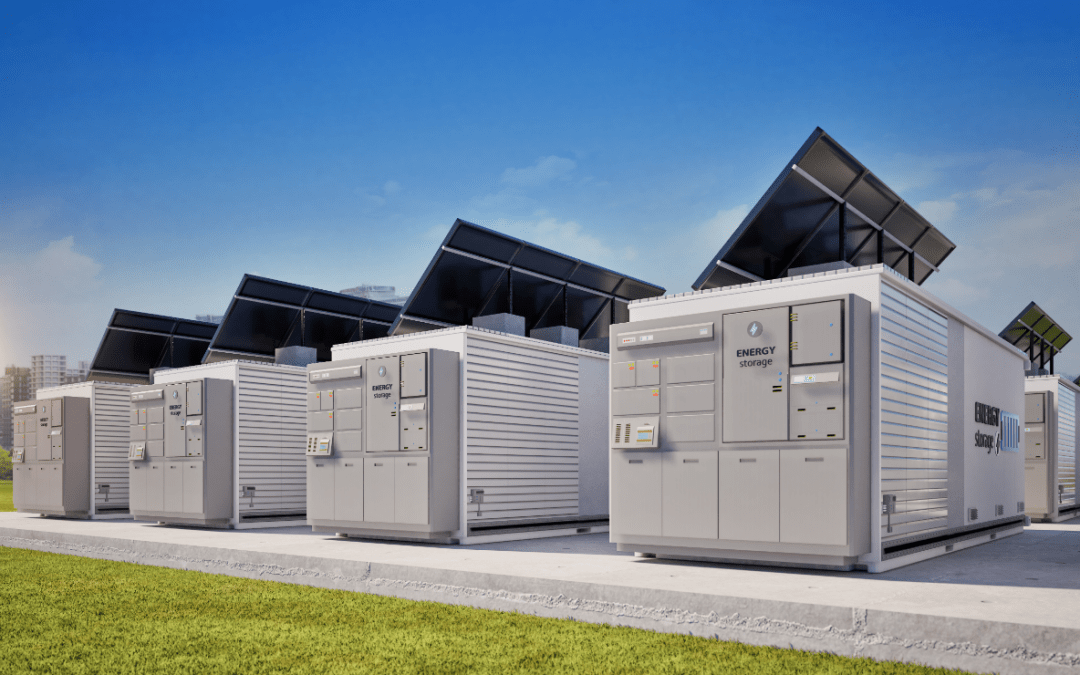
The United States added 5.6GW of battery energy storage from April to June, marking a record quarter, according to the American Clean Power Association (ACP) and Wood Mackenzie.
Utility-scale projects led with 4.9GW installed, a 62% year-on-year increase. The ACP said this is enough to power 3.7m US homes during average peak-demand hours. California, Texas, and Arizona each added more than 1GW, while Wood Mackenzie forecast Florida and Georgia as upcoming growth markets.
Georgia Power, for instance, recently issued a request for proposals for 500MW of grid-scale storage.
Growth may face challenges, said Allison Weis, global head of storage at Wood Mackenzie. “After 2025, utility-scale storage projects must comply with new, stringent battery sourcing requirements to receive the ITC [investment tax credit]. While domestic cell supply is ramping up, supply chain shortages are possible although developers are continuing to consider supply from China to fill in any gaps,” she said.
Weis added: “A rush to start construction under the more-certain near-term regulatory framework uplifts the near-term forecast. Projects that have not met certain milestones by the end of 2025 are at risk of exposure to changing regulations. There is additional downside risk if further permitting delays threaten solar and storage projects.”
The residential market also grew, adding 608MW in Q2, a 132% year-on-year rise. California, Arizona, and Illinois led installations, driven by higher attachment rates and larger-capacity systems.
According to EnergySage, California topped major markets with 79% of quoted projects including batteries, followed by Texas (61%) and Arizona (47%).
“Residential storage is expected to outpace solar due to stronger policy resilience, high attachment rates in key markets like California and Puerto Rico, and continued ITC access through third-party ownership,” said Allison Feeney, research analyst at Wood Mackenzie.
Community, commercial, and industrial storage added 38MW in Q2, up 11%. US storage is forecast to reach 87.8GW by 2029.
by Solar&StorageXtra Team | Sep 18, 2025 | Americas, Commercial & Industrial Solar
Canada’s solar sector is set for strong growth over the next quarter-century, according to a new market outlook from the Canadian Renewable Energy Association (CanREA) and Dunsky Energy + Climate Advisors.
Released on 16 September, Canada’s Renewable Energy Market Outlook: Wind. Solar. Storage presents the first nationwide forecast dedicated to these technologies.
The study highlights “surging electricity demand, increasing cost competitiveness and enabling policy frameworks” as factors positioning wind, solar and storage for rapid expansion.
Vittoria Bellissimo, CanREA’s President and CEO, said the report aims “to offer uniquely Canadian market intelligence to support informed decisions by electricity sector stakeholders, renewable energy and energy storage developers, investors and analysts.”
Although Canada currently ranks 24th worldwide for installed solar capacity, the report projects major gains.
Ahmed Hanafy of Dunsky noted that wind, solar and storage are expected to provide “more than 70% of all new electricity supply capacity deployed between 2025 and 2050,” with annual net investments estimated at $14 – 20bn.
Over the next decade, this could total $143 – 205bn and generate up to 350,000 full-time equivalent jobs.
Leonard Kula, CanREA’s Vice-President of Strategic Initiatives, emphasised the role of solar in decarbonising the grid. “It is going to happen, because solar energy and wind energy are the most affordable and quickly deployable technologies available anywhere in the world today,” he said.
He added that “grid operators increasingly recognise the value that energy storage can deliver in an evolving grid.”
Provincial developments vary. Hydro Québec plans to acquire 3,000 MW of solar power by 2035, alongside wind partnerships with First Nations and local communities. Ontario is expanding procurement for new generation, while Atlantic Canada hosts a range of emerging projects.
Alberta, however, faces “significant uncertainty” due to regulatory and market changes.
The report predicts greenhouse gas emissions from electricity could fall from more than 90 gCO₂/kWh in 2025 to as low as 16.1 gCO₂/kWh by 2035, reaching 10 gCO₂/kWh or below by mid-century.
by Solar&StorageXtra Team | Sep 15, 2025 | Americas, Commercial & Industrial Solar
Longroad Energy has reached financial close and started construction on 1000 Mile Solar, a 400MWdc (300MWac) project in Yoakum County, Texas. The facility is expected to begin commercial operations in 2026.
The US-based renewable energy developer, owner and operator finalised a long-term offtake agreement with Meta in late 2024.
Under the Environmental Attributes Purchase Agreement, Meta will settle financially for the project’s entire energy output, which will be delivered into the Southwest Power Pool (SPP) grid to support its target of powering data centres with 100% clean energy.
“1000 Mile Solar is our seventh renewable energy project in Texas and a milestone project for Longroad,” said Paul Gaynor, CEO of Longroad Energy.
“1000 Mile is Longroad’s first project in the SPP region and brings us to 2.1 GW of successfully developed utility-scale projects in Texas in all three RTO regions, ERCOT, MISO and SPP. Thank you to Meta, our banking partners, our contractor SOLV, our suppliers, and to Yoakum County officials for their roles in helping us advance 1000 Mile.”
Morgan Stanley Renewables has committed tax equity financing, while debt was led by Societe Generale and CIBC, joined by ANZ, Barclays and Key Bank.
“We are excited to partner with Longroad for the first time on its largest solar project developed – a landmark transaction for the company,” said Jorge Iragorri of Morgan Stanley.
“SG is thrilled to have played a lead role … to raise the debt financing for 1000 Mile Solar,” added Ahmed Maqsood of Societe Generale.
CIBC’s Peter O’Neill said the bank’s involvement demonstrated its “commitment to advancing renewable energy and the energy transition in the U.S.”
The project, Longroad’s fifth solar facility in Texas, will use First Solar’s Series 7 photovoltaic modules. SOLV Energy is providing engineering, procurement and construction services, with over 400 jobs anticipated at peak construction. Nextracker will supply tracker equipment.
According to Longroad, 1000 Mile Solar is expected to reduce regional emissions by about 475,000 metric tonnes of CO2 equivalent each year and contribute more than $18m in local tax revenue over its lifetime.
by Solar&StorageXtra Team | Sep 12, 2025 | Americas, Commercial & Industrial Solar
Madison Energy Infrastructure has announced an $800m construction-to-term debt facility to support the rollout of clean energy infrastructure for customers and partners across the United States.
The company said the financing positions it to meet growing demand as it works towards 1 GW of operating capacity. The funding will back project development, construction and long-term operations.
According to Madison, the agreement strengthens its ability to deliver clean energy solutions amid what it describes as a “New Normal” of rising load growth, price volatility and AI-driven infrastructure requirements. The facility draws on new and existing lenders from its previous debt arrangements.
“We believe clean energy infrastructure is a foundational part of our economic future and this facility reflects Madison’s commitment to serving our customers and partners for decades to come,” said Steve Cunningham, co-founder and chief financial officer at Madison.
The funding is backed by several international banks, including Fifth Third Bank, Société Générale, BNP Paribas, KeyBank, Crédit Agricole, TD Bank, Lloyd’s and Natixis. Madison said these partnerships highlight its standing in the clean energy sector and will help it progress a pipeline of distributed generation projects.
“This milestone builds on our enduring alliances with existing lenders who have been with us for many years as well as new banks as we continue to grow,” said Iwona Guier, Executive Vice President of Finance at Madison.
The company plans to use the facility to speed up deployment of clean energy at scale. It aims to serve a broad customer base, including corporate, industrial, K-12, nonprofit, electric cooperative and municipal utility sectors, delivering what it describes as innovative, long-term clean energy solutions nationwide.
[Image credit: Madison Energy]
by Solar&StorageXtra Team | Sep 9, 2025 | Americas, Commercial & Industrial Solar, Europe, Innovation
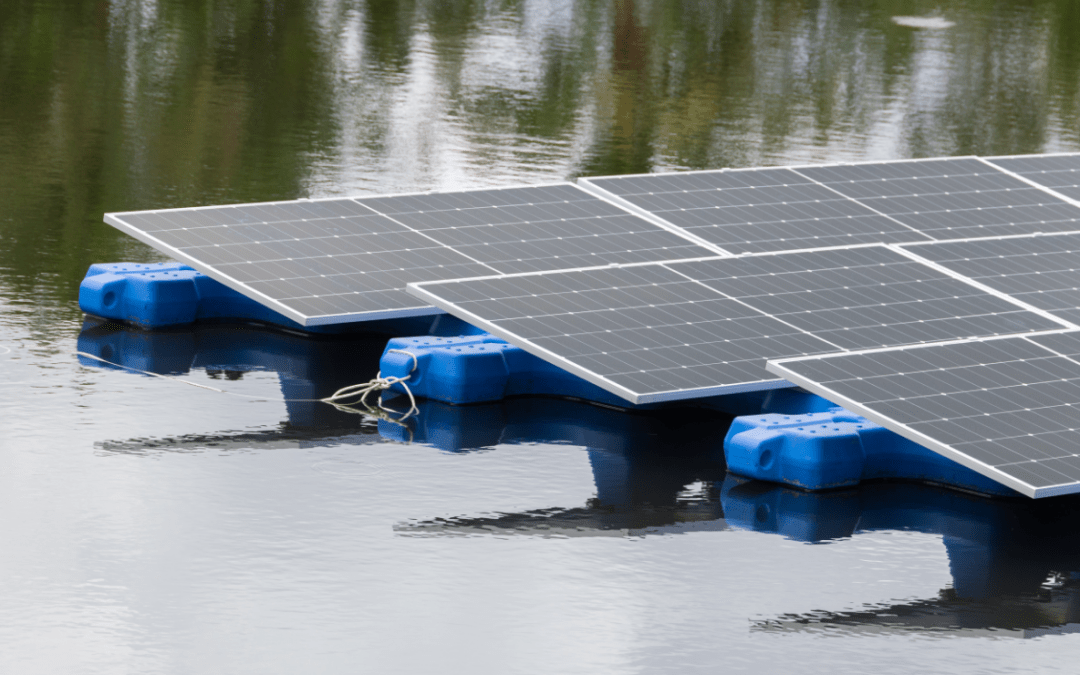
The Regulatory Authority of Bermuda (RA) has launched a Request for Expression of Interest (RfEoI) for the development of a floating solar photovoltaic (FPV) power plant, marking the first stage in a multi-step procurement process.
The project forms part of Bermuda’s 2019 Integrated Resource Plan (IRP), which targets 85% renewable energy penetration by 2035.
With limited land available, the RA views FPV technology as a viable solution for expanding solar capacity. The government has authorised the use of designated seabed areas for such development.
According to the RA, the project could deliver up to 10 MW of floating solar capacity, either at a single large site or across multiple smaller sites. Proposed systems are expected to connect to Bermuda’s 22 kV electricity network. Preliminary sites include locations on the east and west sides of Finger.
Through the RfEoI, the RA seeks to identify experienced developers capable of managing a full FPV project, from feasibility studies and system design to installation, commissioning, and potential operation.
The process
The tender process will follow three stages: Expression of Interest (current stage), Request for Qualification (RFQ), and Invitation to Tender (ITT).
Only bidders that pass the prequalification stage will advance to later phases. The successful developer will be remunerated through a long-term power purchase agreement (PPA) with BELCO, Bermuda’s Transmission, Distribution and Retail (TD&R) licensee.
An Evaluation Panel (EP), comprising representatives from the RA, government departments, and other stakeholders, will oversee the process.
Assessment will be based on criteria such as technical and managerial capacity, financial stability, relevant experience, and cost estimates for power generation.
The indicative timeline sets the deadline for Expression of Interest submissions at 4 November 2025, with evaluation continuing through the end of the year.
The RFQ stage is scheduled to begin in January 2026, with tenders expected by the third quarter of 2027. The winning and reserve bidders are due to be announced in early 2028.
by Solar&StorageXtra Team | Sep 9, 2025 | Americas, Everything Installer, Storage
The United States added nearly 18GW of new solar capacity in the first half of 2025, according to the latest US Solar Market Insight Q3 2025 report from the Solar Energy Industries Association (SEIA) and Wood Mackenzie.
Solar and storage together accounted for 82% of all new power added to the grid in the first six months of the year.
The growth comes amid a shifting policy environment. The passage of the One Big Beautiful Bill Act (HR1) and subsequent Trump administration measures targeting solar have led analysts to revise deployment forecasts downwards.
The report’s low-case forecast warns the US risks losing 44GW of solar deployment by 2030, an 18% decline compared to earlier expectations. When measured against pre-HR1 projections, the potential loss increases to 55 GW, or 21%.
“Solar and storage are the backbone of America’s energy future, delivering the majority of new power to the grid at the lowest cost to families and businesses,” said SEIA president and CEO Abigail Ross Hopper.
“Instead of unleashing this American economic engine, the Trump administration is deliberately stifling investment, which is raising energy costs for families and businesses, and jeopardising the reliability of our electric grid.
“But no matter what policies this administration releases, the solar and storage industry will continue to grow, because the market is demanding what we’re delivering: reliable, affordable, American-made energy.”
The report notes that 77% of all new solar capacity installed in 2025 has been built in states won by President Trump, including eight of the top 10 states for installations: Texas, Indiana, Arizona, Florida, Ohio, Missouri, Kentucky and Arkansas.
Manufacturing has also expanded, with 13GW of new solar module production capacity added in the first half of 2025. This brings total US solar module manufacturing capacity to 55 GW.
However, no new upstream manufacturing investment was recorded in the second quarter, with federal policies cited as a risk to momentum and private capital inflows.
The forecast indicates solar deployment could fall 4% below the pre-HR1 base case by 2030. Short-term activity remains supported by projects already underway, developers working to meet tax credit deadlines, and rising power demand as gas generation becomes more costly and less available.
Orders from the DOI
The Department of the Interior (DOI) has also issued orders that single out solar for more stringent permitting treatment, which the report estimates could affect 44GW of planned projects, particularly in Arizona, California, Utah and Nevada.
“There is considerable downside risk for the solar industry if the federal permitting environment creates more constraints for solar projects,” said Michelle Davis, head of solar research at Wood Mackenzie.
“The solar industry is already navigating dramatic policy changes as a result of HR1. Further uncertainty from federal policy actions is making the business environment for the solar industry incredibly challenging.”
SEIA has written to DOI Secretary Doug Burgum, warning that if executive actions are not reversed, they could lead to job losses, higher electricity costs, and reduced competitiveness for the US economy.
by Solar&StorageXtra Team | Sep 3, 2025 | Americas, Large Scale Utility Solar
Ingeteam has provided photovoltaic inverters for Parliament Solar, a 640 MWdc project in Waller County, near Houston, Texas.
The development, led by Parliament Energy, represents the company’s largest inverter installation in the United States to date.
The site is expected to generate around 1,100 GWh of electricity annually, equivalent to the consumption of approximately 140,000 Texan households.
For the project, Ingeteam supplied 149 INGECON® SUN 3Power Series C liquid-cooled central photovoltaic inverters.
These were integrated into 80 UL-certified transformer stations and delivered as a turnkey solution. The company also carried out commissioning work from its Milwaukee production facility.
Ingeteam said the use of grid-forming technology enabled faster commissioning than originally anticipated.
Nohra Nasr, Vice President & General Manager for Solar PV & BESS in the United States at Ingeteam, said:
“Our experience in the market and the fact that we have a consolidated subsidiary on US soil have been key factors when awarding and executing the project. We hope it will be the first in a long list with this client.”
To date, Ingeteam has supplied more than 6 GW of solar inverters and energy storage solutions across the US. The company views the market as one with strong prospects for further renewable energy deployment.
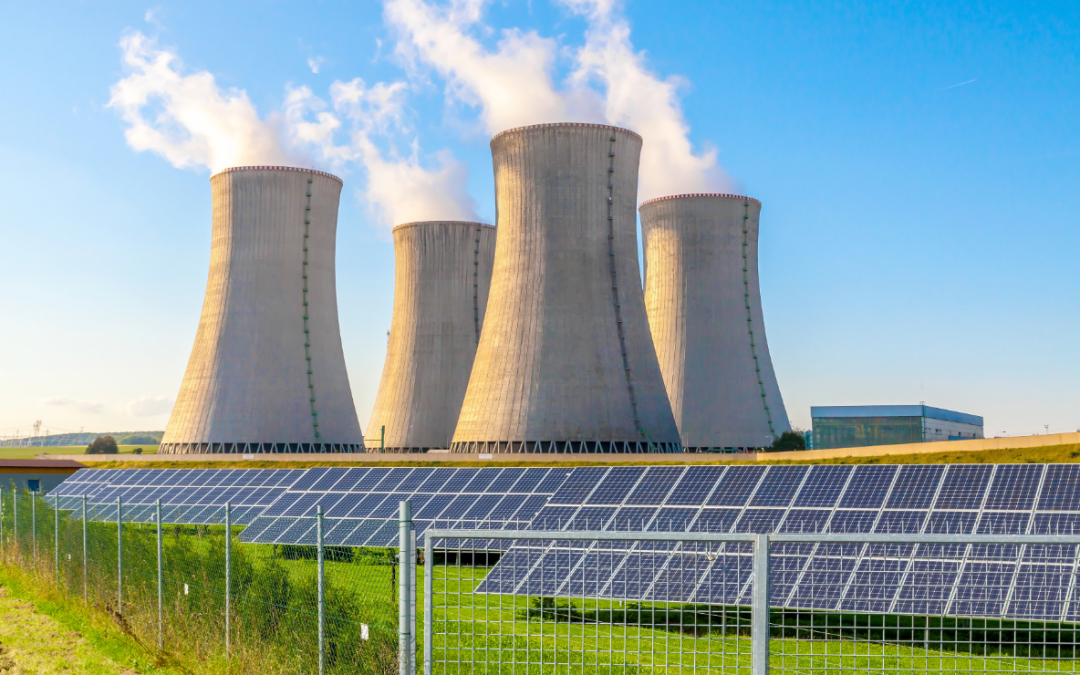
Figures from the Federal Energy Regulatory Commission (FERC) underline this outlook. According to the regulator, utility-scale solar capacity overtook nuclear generation in January 2024.
Solar accounted for 81.5% of all new generating capacity brought online that year, with additions almost nine times greater than the combined total for natural gas and nuclear.
by Solar&StorageXtra Team | Aug 29, 2025 | Americas, Commercial & Industrial Solar, Large Scale Utility Solar
SolarPower Europe has launched the second edition of its Latin America: Solar Investment Opportunities report, revealing the potential for solar growth in Argentina, Brazil, Colombia, Mexico, and Peru.
Published at Intersolar South America 2025, the report was produced in collaboration with the Global Solar Council (GSC) and supported by national renewable energy associations.
The region is aiming to achieve 70% renewable electricity generation by 2030, in line with the Renewable Energy for Latin America and the Caribbean (RELAC) initiative.
With over a quarter of its primary energy already coming from renewables, Latin America is seen as a promising hub for international investment.
Katherine Poseidon, Head of Strategy, Analytics & Process at Voltalia and Chair of SolarPower Europe’s Global Markets Workstream, commented:
“Latin America’s strong solar resources can be an engine for regional growth. This report focuses on several major solar markets in the region, providing clear guidelines to investors alongside concrete recommendations for policymakers looking to tap into Latin America’s potential.”
Highlights
- Brazil continues to dominate regional deployment, adding 18.9GW of solar in 2024 alone.
- Argentina has reached 1.93GW by May 2025, with expectations to more than double capacity by 2029.
- Colombia added 1.6GW in 2024, supported by new regulations enabling decentralised solar and battery storage.
- Mexico has now reached a total capacity of 12.6GW, with distributed generation becoming a key driver of growth.
- Peru, meanwhile, is focusing on rural electrification and grid expansion to leverage its world-class solar resources.
However, common challenges persist. The report highlights infrastructure constraints, particularly in transmission networks, inconsistent regulatory implementation, and limited access to financing. Recommendations include improving permitting processes, harmonising regulations, and boosting the bankability of power purchase agreements (PPAs).
Sonia Dunlop, CEO of the GSC, said: “Investment is the key to transforming Latin America’s solar promise into progress. By unlocking capital through blended finance, risk-mitigation tools, and clearer market structures, we can scale solar where it’s needed most.”
Rodrigo Sauaia, CEO of ABSOLAR, added: “Latin America brings together extremely favourable conditions to accelerate the region’s sustainable energy transition. Countries like Brazil are showing positive signs in this direction, but there is still an important path ahead to consolidate solar power as a strategic driver of Latin American development.”
The report concludes that aligning national policies with global sustainability goals could unlock billions in clean energy investment, create jobs, and enhance energy security across the region.
by Solar&StorageXtra Team | Aug 29, 2025 | Americas, Asia, Everything Installer
High US tariffs and possible anti-dumping duties on Indian solar panel exports are set to deepen a supply glut in India next year as domestic project bidding slows, industry officials and analysts said.
US President Donald Trump’s 50% tariffs on Indian shipments will restrict sales to its largest overseas market, which accounts for 90% of exports.
The situation could worsen if the US Commerce Department imposes anti-dumping duties following a 17 July petition from American solar companies targeting imports from India, Indonesia and Laos.
“The 50% tariff will squeeze margins, and potential anti-dumping duties will make competing in the US even tougher,” said Raj Prabhu, CEO of consultancy Mercom Capital.
India’s awards of new solar projects slowed sharply in the June quarter. “We expect that India will enter overcapacity stage already in 2026, which will feel even worse with the loss of the US market,” said Wood Mackenzie analyst Yana Hryshko.
Government incentives have doubled annual module capacity to 74 gigawatts by March, with forecasts of 190 GW by 2027. Yet factories are running at only 25% utilisation on average, said Vinay Rustagi of Premier Energies.
“Some companies are running at 80%-85% like us, others are running at much lower capacity,” he added.
Finding new export markets will be difficult. Indian modules using Chinese cells are 48% more expensive than Chinese modules, while those made with Indian cells are 143% costlier, Mercom data shows.
India plans to mandate domestic cell use from June 2026, though these are more than three times the cost of Chinese alternatives, said Rystad Energy analyst Fei Chen.
Analysts expect a short-term surge in Chinese imports before the rules take effect.
“Reliance on cell imports is likely to increase in the short term, potentially leading to stockpiling, price spikes, and supply chain pressures,” Prabhu said.
India has seen a solar success in recent months, with the country announcing in July that 50% of its installed capacity now comes from renewable sources – five years ahead of target.
by Solar&StorageXtra Team | Aug 28, 2025 | Americas, Everything Installer, Large Scale Utility Solar
Solar energy supplied nearly 9% of US electricity in the first half of 2025, according to a review of U.S. Energy Information Administration’s (EIA) data by the SUN DAY Campaign.
Figures from the EIA’s latest Electric Power Monthly show that wind and solar combined produced over one-fifth of the nation’s electricity, while renewables overall accounted for 27.7%.
Solar generation set records in June and across the six-month period. Utility-scale solar grew 37.6% year-on-year in January-June, with small-scale systems up 10.7%. Together, solar expanded by 29.7%, providing 8.7% of total generation, up from 6.9% a year earlier.
In June alone, solar supplied 10.2% of national output, rising 25% compared with June 2024. Utility-scale plants grew by 30.1% while rooftop solar rose by 10.5%.
The review found solar produced 45% more electricity than hydropower, and more than hydropower, biomass, and geothermal combined.
Wind power contributed 11.6% of US electricity in the first half of 2025, 2.4% higher than the same period last year. Wind and solar together generated 20.3% of the total, overtaking coal and nuclear.
All renewables increased output by 9.2% year-on-year, compared with 3.0% growth in total US electricity generation. Natural gas remained the leading source, though its output fell 3.7%.
“EIA’s latest data reflect the situation prior to enactment of the Trump/Republican megabill which may adversely future renewable energy growth,” said Ken Bossong, executive director of the SUN DAY Campaign.
On July 7, the US President signed an executive order that scaled back tax incentives for renewable projects, including solar and wind, which is forecasted to negatively impact the nation’s renewable progress.
Bossong adds: “Nonetheless, EIA notes that US developers expect half of new electric generating capacity to come from solar in 2025 and another 13% from wind.”
The EIA released its latest report on 26 August.
by Solar&StorageXtra Team | Aug 26, 2025 | Americas, Large Scale Utility Solar
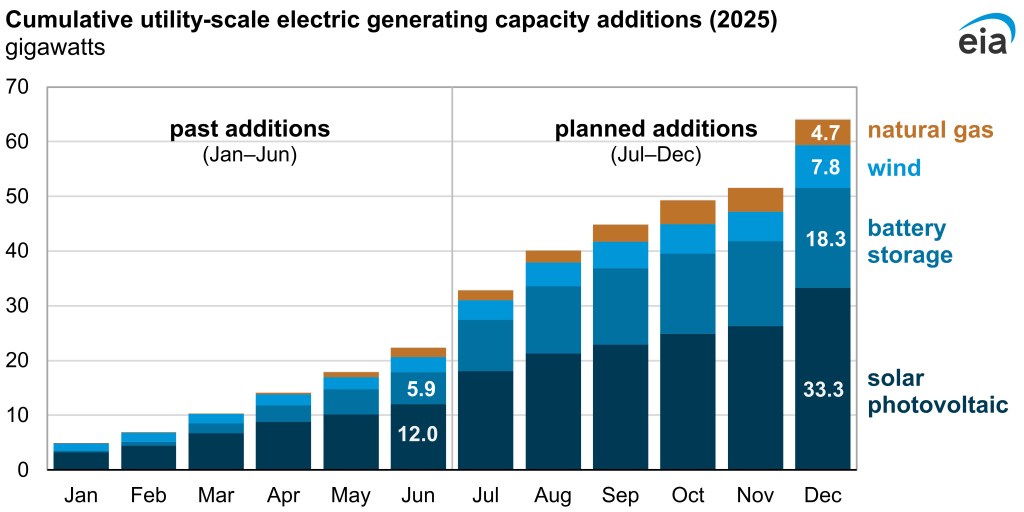
The U.S. Energy Information Administration (EIA) has forecast that solar power will account for more than half of new electric generating capacity coming online in 2025.
According to the EIA’s latest survey of planned capacity changes, developers added 12GW of utility-scale solar in the first half of the year.
A further 21GW is expected during Q3-Q4, meaning solar could represent over half of the 64GW of new capacity scheduled to be installed this year.
Battery storage, wind, and natural gas will make up most of the remainder.
If all planned projects are completed, 2025 would set a new record for US generating capacity additions, surpassing the 58GW added in 2002. That earlier record was driven almost entirely by natural gas, which contributed 57GW.
While developers have continued to add natural gas capacity since then, the EIA noted that “other technologies such as wind, solar, and battery storage have become more prevalent options for new capacity.”
PV and storage growth
Both solar photovoltaic and battery storage are expected to add more capacity this year than in any previous year. Much of this growth is being driven by activity in Texas.
The state was responsible for 27% (3.2GW) of new solar capacity installed in the first half of 2025, with developers planning to add another 9.7GW before the end of the year. Texas overtook California in 2024 as the state with the most utility-scale solar capacity.
Battery storage was the second-largest contributor to new capacity in the first half of the year, representing 26% (5.9GW). Around half of this was installed in Arizona and California.
Developers in Texas are also expected to bring 7GW of storage online in 2025, most of it in the latter half of the year.
In contrast, relatively little generating capacity has been retired. Of the 8.7GW that operators planned to retire in 2025, only 2GW had closed in the first six months. Some retirements have also been postponed or cancelled.
More than 3.6GW of planned closures – including coal, oil, and gas units in Maryland and Texas – have been delayed.
If current retirement plans proceed, coal-fired power plants will account for 71% of closures in 2025, with natural gas at 19%.
[Graph credit: U.S. Energy Information Administration, Preliminary Monthly Electric Generator Inventory, June 2025]
by Solar&StorageXtra Team | Aug 22, 2025 | Americas, Commercial & Industrial Solar, Everything Installer
Enphase Energy, a US-based microinverter manufacturer, has signed its second safe harbour agreement this month to secure residential solar tax credits.
The deal will see Enphase supply domestically produced IQ8HC microinverters to a “leading solar and battery financing company”, which will provide third-party ownership (TPO) agreements for home solar and storage systems.
Enphase expects the agreement to generate around $50m in revenue.
Safe harbour provisions will allow the projects to qualify for the 30% 48E Investment Tax Credit (ITC) until its scheduled end in July 2026, following the recent Republican budget reconciliation bill.
The deal will also support access to the 10% domestic content bonus credit for projects using sufficient US-made components.
Ken Fong, senior vice president and general manager of the Americas and APAC at Enphase Energy, said safe harbour agreements “are a critical tool for keeping solar projects on track despite changing policy landscapes”.
He added: “These agreements allow developers and financiers to move forward with confidence, safeguard project economics, and accelerate clean energy deployment.”
Background
The reconciliation bill introduced stricter eligibility requirements for clean energy tax credits.
Both the ITC and the Production Tax Credit (PTC) will be phased out from 4 July 2026. Projects that start before this date have four years to commence operations, while others must be operational by the end of 2027.
New Treasury guidance, following an executive order from President Trump, clarified that residential projects under 1.5MW can qualify by spending 5% of estimated costs and maintaining “continuous construction”.
Larger systems must demonstrate substantial physical work.
Enphase said it plans to expand its safe harbour pipeline. Analyst firm Wood Mackenzie recently noted that while the US residential solar sector may contract in the short term, TPO eligibility for the 48E ITC remains a “major upside” for long-term growth.
by Solar&StorageXtra Team | Aug 19, 2025 | Americas, Commercial & Industrial Solar
The Data Center Coalition (DCC), which represents operators including Google, Amazon, and Microsoft, has urged U.S. Treasury Secretary Scott Bessent to maintain current rules governing wind and solar subsidies.
In a letter, the group argued that existing tax credit structures have enabled rapid renewable energy growth and helped the United States compete with China.
“Any regulatory friction that slows down deployment of new generation today directly impacts our ability to meet AI-era electricity demands tomorrow,” the coalition wrote.
The plea came just before the US Treasury prepared to update guidelines for clean energy tax credits on Friday 15 August, following an executive order from President Donald Trump in July,
The order directs officials to tighten rules, tightening definitions of when construction is considered to have begun through demonstrating “physical work of a significant nature” on an ongoing basis.
Industry stakeholders warn that tougher requirements could stall renewable development at a time when demand for electricity is accelerating, driven by artificial intelligence and the wider digital economy.
Following the 15 August ruling, Rhone Resch, Chief Executive of Advanced Energy Advisors, commented:
“What it is going to do is reward sophisticated companies that have projects that are farther along in their development. The companies that are going to suffer are the smaller medium medium-sized developers that aren’t going to be able to meet this time frame.”
Advisory firm Clean Energy Associates projected the United States could lose around 60GW of planned solar capacity through 2030 if stricter rules are imposed.
According to the DCC, the U.S. data centre industry contributed $3.5tn to national GDP between 2017 and 2023, while directly employing more than 600,000 people.
The coalition maintains that preserving stable subsidy rules is essential to ensuring reliable energy supplies to support this growth.
by Solar&StorageXtra Team | Aug 18, 2025 | Americas, Commercial & Industrial Solar, Everything Installer
On Friday, 15 August, the US’ Trump administration introduced stricter eligibility rules for clean energy tax credits, raising concerns over the future of numerous renewable projects, Bloomberg reports.
New Treasury Department guidance issued on Friday alters the criteria for investment and production tax credits by tightening definitions of when construction is considered to have begun.
Developers must now demonstrate “physical work of a significant nature” on an ongoing basis, replacing the previous threshold that allowed projects to qualify if at least 5% of costs had been spent.
“Projects are going to have a difficult time achieving these levels of performance,” said Rhone Resch, Chief Executive of Advanced Energy Advisors. He added:
“What it is going to do is reward sophisticated companies that have projects that are farther along in their development. The companies that are going to suffer are the smaller medium medium-sized developers that aren’t going to be able to meet this time frame.”
The decision forms part of a wider push from the administration to curb solar and wind development, following an executive order directing new limits on tax credits and a series of additional permitting reviews. A planned wind farm in Idaho has already been cancelled.
Shares of major solar companies rose after the announcement, with Sunrun climbing as much as 28%, NextEra Energy up 5%, and NexTracker almost 9%.
BloombergNEF estimates more than 2,500 proposed projects, equivalent in capacity to about 383 nuclear reactors, could be affected. However, large developers have indicated they are well-positioned.
NextEra said it has sufficient projects under construction to meet its plans through 2029, while AES Corp. reported most of its pipeline will not be impacted.
Industry feedback
Industry analysts warn that the tighter rules add pressure to a sector already facing declining support, with US clean energy installations forecast to fall 41% after 2027 as tax credits phase out.
“This is yet another act of energy subtraction from the Trump administration that will further delay the buildout of affordable, reliable power,” commented Abigail Ross Hopper, President and CEO of the Solar Energy Industries Association (SEIA).
“American families and businesses will pay more for electricity as a result of this action, and China will continue to outpace us in the race for electricity to power AI. SEIA is carefully reviewing the guidance and evaluating next steps to protect the industry’s and America’s interests, as we have been since this side deal was announced last month.
“In the meantime, we urge the Trump administration to stop the political games, stop punishing businesses, and get serious about how to actually build the power we need right now to meet demand and stay competitive.”
[Edited 20 August 2025 to include commentary from SEIA]
by Solar&StorageXtra Team | Aug 14, 2025 | Americas, Asia, Commercial & Industrial Solar, Everything Installer
South Korea has called on the United States to grant leniency to its companies in an ongoing investigation into imported polysilicon, warning that wide-ranging restrictions could harm both countries’ clean energy and semiconductor sectors.
According to a filing with the US Bureau of Industry and Security, Korea’s Ministry of Trade, Industry and Energy urged Washington to apply “flexible consideration” for Korean firms during its review under Section 232 of the US Trade Expansion Act of 1962.
The probe, launched on 1 July, is assessing whether low-priced polysilicon imports pose a national security risk.
“Korea is a net importer of high-quality polysilicon from the United States. At the same time, Korea and its companies have established a secure supply chain for polysilicon to US importers and US companies,” the ministry said.
“If import restrictions on polysilicon are introduced, we respectfully request that special consideration be given to allow for flexible application to Korean companies.”
Polysilicon prices have fallen sharply in recent years, largely due to China’s dominance in the sector.
IBK Securities reports that Chinese products, backed by state support, sell for around USD 5 per kilogram, compared with USD 18–25 for non-Chinese equivalents.
US officials have warned that such price pressures are causing domestic plant closures.
The ministry noted that restrictions could hinder US ambitions to expand domestic solar and semiconductor manufacturing, citing Hanwha Qcells and OCI Holdings as Korean firms active in US projects.
“Broadly applied tariffs or other import restrictions… risk disrupting supply chains that are important to both economic and national security,” it added.
Both companies said their supply chains avoid low-cost Chinese polysilicon. Industry sources have cautioned that sweeping measures could “face indirect damage” for allied companies investing in US manufacturing.
New development, same problem
This is not the first time organisations have pushed back against the Trump administration’s tariff rollout.
The tariffs are part of a wider initiative designed to encourage the use of domestic manufacturing, supply chains, and products.
The tariffs have included both the materials used in PV manufacturing and the solar panels themselves – primarily targeting Asian imports.
In April, the administration announced tariffs of over 3,000% on solar panel imports from various Southeast Asian countries in a bid to circumvent the influx of “subsidised, low-cost” products from China.
by Solar&StorageXtra Team | Aug 13, 2025 | Americas, Commercial & Industrial Solar, Everything Installer
Pivotal Manufacturing Partners has acquired around 140 acres at the former planned Phipps Bend Nuclear Plant in Hawkins County, Tennessee.
The real estate investment platform has also signed a long-term ground lease with Highland Materials, which plans to build an advanced manufacturing facility valued at over $1bn on part of the site.
The wider Phipps Bend Advanced Manufacturing & Technology Campus is intended as a high-power, heavy infrastructure location for operators requiring large-scale facilities, high-voltage connections, and flexible zoning.
It has on-site access to a Tennessee Valley Authority (TVA) regional transmission interconnect, serving Northeast Tennessee and Southwest Virginia, and benefits from development-friendly permitting.
“We are honoured to be investing behind the growth of Northeast Tennessee at such a unique site at Phipps Bend,” said David Robbins, Managing Partner of Pivotal Manufacturing Partners.
“This campus combines striking mission critical infrastructure, a rare high-voltage interconnect, and a permitting environment shaped by its nuclear legacy – all within a region eager to welcome transformational capital investment.”
Originally developed by the TVA in the late 1970s as a nuclear power facility, Phipps Bend saw over $2.6bn in federal investment before its cancellation in the early 1980s.
Although no reactors were completed, the site retains significant infrastructure, a strategic transmission location, and a history of energy-intensive industry.
Highland Materials manufactures high-purity polysilicon for the solar and semiconductor sectors.
CEO Richard Rast said, “Partnering with Pivotal Manufacturing Partners is a critical step needed to move the Highland polysilicon manufacturing facility forward at Phipps Bend.
“We are excited about the market opportunity, the job creation, the capital investment, and the continued community and state level support this project enjoys.”
by Solar&StorageXtra Team | Aug 13, 2025 | Americas, Commercial & Industrial Solar
Eurus Energy Holdings Corporation has announced that its subsidiary, Eurus Energy Chile SpA, has completed construction of the Venezia Solar Project in Chile.
The 9MW plant began commercial operations on 9 July 2025.
The Venezia facility is the last of eight solar power plants developed under Chile’s Small Distributed Generation Programme (PMGD: Pequeños Medios de Generación Distribuída), all of which are now operational.
The projects, with capacities between 3MW and 9MW, are situated between 50km and 400 km from Santiago.
Eurus Energy Chile has been active in the country since 2017, when it began operating two solar plants.
With the addition of the eight PMGD projects, the Eurus Energy Group’s total capacity in Chile has reached 67.8 MW (AC), equivalent to around 80MW on a DC basis.
Chile’s high levels of solar irradiance – more than twice those of Japan – and its national target to fully decarbonise by 2050 make it a key location for renewable energy investment. The government is promoting the adoption of clean energy sources as part of its climate strategy.
In a statement, Eurus Energy said:
“Based on our corporate philosophy of ‘Helping to preserve the global environment by disseminating and expanding clean energy technologies’ and our corporate vision of ‘Develop with local communities and maintain the trust of society’, the Eurus Energy Group will continue to work on further expansion of renewable energy in Chile and contribute to global environmental conservation and the creation of a sustainable society.”
The company said the PMGD programme had enabled it to support Chile’s energy transition while expanding its footprint in South America’s growing solar market.
by Solar&StorageXtra Team | Aug 12, 2025 | Americas, Large Scale Utility Solar, Press Release
Press Release
Custom Electronics, Inc. (CEI) and GridEdge Networks, Inc. (GridEdge) have partnered to launch a breakthrough 69kV Distributed Generation Permissive (DGP) solution that enables safer, more cost-effective integration of Distributed Energy Resources (DER) into utility grids.
The new system addresses a critical safety challenge: protecting utility workers and equipment when distributed energy resources are disconnected from the grid and form an unintentional island that may cause dangerous power fluctuations. The solution was presented at the IEEE Power & Energy Society General Meeting in Austin, Texas, on July 28, 2025.
“As more independent power producers connect to the electric grid, utilities face new safety risks when utility crews work on power lines,” said Nachum Sadan, CEO of GridEdge Networks.
“Our DGP system provides failsafe protection by automatically disconnecting renewable energy sources when grid faults occur, eliminating the risk of unintentional islanding. This solves a critical grid safety problem.”
Unlike traditional Direct Transfer Trip (DTT) systems that utilise an external communications method such as fibre, GridEdge’s Distributed Generation Permissive (DGP) technology leverages the existing wires and is readily available, low-cost cost and inherently failsafe.
The system meets the IEEE 1547-2018 interconnection standard and is recognised in IEEE 1547.1-2020 section 5.10.3 as a “Powerline Conducted Permissive Signal” method.
The 69kV solution uses standard Coupling Capacitor Voltage Transformers (CCVTs) to transmit signals, eliminating the need for expensive fibre optic installations that can cost hundreds of thousands of dollars, depending on distance.
This breakthrough innovation makes renewable energy projects more economically viable while maintaining the highest safety standards, as it is a reliable and cost-effective alternative to fibre.
CEI brings six decades of expertise in high-voltage capacitors and power systems to this strategic manufacturing partnership, with products deployed in military, commercial and industrial applications worldwide.
“This collaboration leverages our proven high-voltage manufacturing capabilities to support the clean energy transition,” said Michael Pentaris, President and CEO at CEI. “The technology provides essential infrastructure for utilities and renewable energy developers to operate safely and efficiently.”
The 69kV DGP solution was developed in close collaboration with US utility partners and is immediately available for sub-transmission applications. The solution includes equipment and services. GridEdge provides a complete turnkey deployment, including system commissioning and operator training.
Want to publish a press release? Submit your content here for review by our editorial team.
by Solar&StorageXtra Team | Aug 8, 2025 | Americas, Commercial & Industrial Solar, Storage
Verano Energy has secured environmental approval for its Catalina del Verano solar-plus-storage project in Chile’s O’Higgins region, following technical adjustments and an increase in the planned solar capacity to 60MWac / 9.77MWdc.
According to the company’s permit filing, the decision will enable an estimated $40m investment in a solar farm with a 360MWh BESS.
The project site, in the rural area of the Rancagua commune, will feature 107,800 solar panels and 72 BESS containers. Construction is scheduled to begin in September 2028.
Verano Energy’s original proposal outlined a 41MWac solar farm with battery storage, using fewer and less powerful panels and a smaller number of transformer stations.
The modifications, made during the environmental impact assessment, will not result in additional waste, change vehicle traffic patterns, or alter existing contingency and emergency plans, according to the permitting authorities.
In a LinkedIn post following the approval, Verano Energy stated that Catalina del Verano reinforces its “commitment to projects that bring greater flexibility and stability to the power grid.”
“This milestone consolidates the growth of our portfolio in the country and reaffirms Verano Energy’s commitment to a more resilient, clean, and efficient energy matrix,” the company added.
The Catalina del Verano project adds to a growing portfolio of renewable energy developments in Chile, where the government is working to expand clean energy capacity and strengthen grid resilience.
The inclusion of large-scale storage is expected to help manage intermittency and improve energy supply reliability, aligning with national decarbonisation targets.
by Solar&StorageXtra Team | Aug 8, 2025 | Americas, Large Scale Utility Solar
The US Trump administration has intensified its measures against renewable energy, with policy changes now including the cancellation of established programmes.
Recent actions include new permitting reviews, restrictions on federal land use for projects, and the rescinding of Biden-era renewable policies.
The Environmental Protection Agency (EPA) is set to cancel the $7bn Solar For All programme, designed to provide solar access to over 900,000 low-income households.
EPA head Lee Zeldin announced the programme’s termination as part of the “One Big Beautiful Bill” spending cuts. The scheme’s 60 recipients – including state energy departments, tribal organisations, and multi-state initiatives – had aimed to deliver community solar projects and direct support.
Some states, such as Massachusetts, projected 20% electricity bill reductions for tens of thousands of residents.
Senator Elizabeth Warren called the cancellation “reckless”, while Senator Ed Markey said it would remove billions in savings from households.
Industry groups and analysts warn these measures will increase reliance on fossil fuels, delay or cancel projects, and raise consumer energy costs.
The E2 advocacy group estimates more than $22bn in clean energy projects have been delayed or cancelled since January, with over 16,500 job losses – the majority in Republican districts.
The administration argues the changes “level the playing field” for coal, gas, and nuclear, prioritising “always-on” power. Interior Secretary Doug Burgum now personally approves dozens of renewable permits; a process developers say will mire projects in red tape.
While larger firms claim they can weather the policy shift, smaller developers may struggle, and analysts warn that impacts could extend to projects on private land as well.