by Emily Ashley | Apr 29, 2025 | Asia, Everything Installer, Large Scale Utility Solar
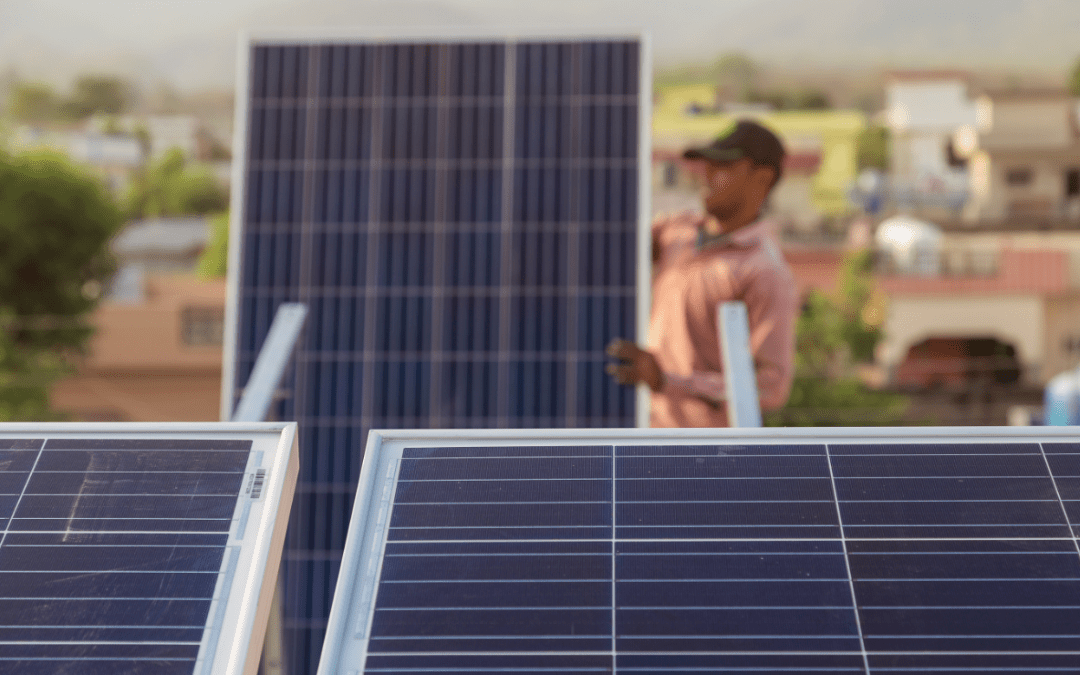
According to the Institute for Energy Economics and Financial Analysis (IEEFA), India installed 7.8GW of solar capacity in Q1 of 2025.
This is the country’s second-highest quarterly total for the last 13 quarters.
Q1 saw India install 7,782 of solar power capacity which, according to figures from IEEFA, is an 8.4% decrease from the highest record, which was set during the same period in 2024.
Overall, India’s total installed capacity rose 106GW.
The states of Rajasthan and Gujarat installed the most renewable energy during Q1 2025, acquiring 1,973 and 1,910 respectively.
The states of Maharashtra and Karnataka added 1,780MW and 1,316MW, respectively, and Andhra Pradesh added 940MW after introducing its Integrated Clean Energy Policy in October 2024.
“While total tendered capacity increased to 40 GW in 2018 and 2019 (and dipped during Covid-19 years), it crossed 50 GW in 2023 and 2024, tendered capacity has been increasing since 2023,” explained the IEEFA in its findings.
“(This has been) driven by India’s ambition to add about 50 GW of non-fossil fuel power capacity every year from 2023 to achieve 500GW of the said capacity by 2030.
“However, delays in signing power supply agreements and in receiving permits and approvals, and hurdles in gaining grid connectivity continue to hinder capacity installations.”
by Emily Ashley | Apr 28, 2025 | Asia, Commercial & Industrial Solar, Everything Installer
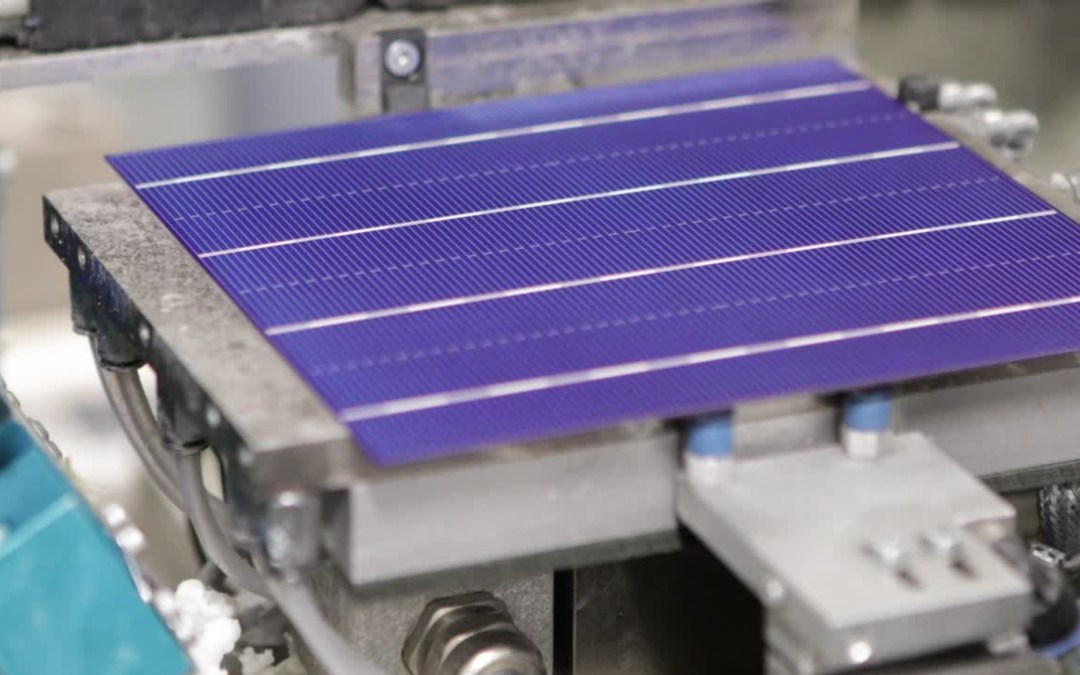
Reliance Industries Ltd has commissioned its first gigawatt-scale solar module production line, the company announced following its FY25 earnings.
The fully automated line, located in Jamnagar, India, produces HJT panels with up to 720 W output and is certified by the Bureau of Indian Standards (BIS).
“We have commissioned the first gigawatt-scale solar module manufacturing panels that can generate 720 W at peak”, said V Srikanth Venkatachari, Chief Financial Officer of Reliance. “It is possibly the largest panel that we have.”
The facility is initially designed for 10 GW annual capacity, with a modular setup enabling expansion to 20 GW.
“Overall, in each [stage] on the entire solar chain, the engineering is complete, the long lead items and procurements are complete, and construction is going on in full swing,” Reliance said at a recent analyst meeting.
The company aims to create a fully vertically integrated production line covering the manufacturing of polysilicon, ingot, wafer, cell, panel, glass, and polyolefin elastomer (POE).
Reliance is also pursuing 30 GWh of battery manufacturing capacity and has started solar farm development in Gujarat’s Kutch region.
It is building a 2,000-acre green hydrogen ecosystem in Kandla, with electrolyser production through partnerships, including one with Norway’s Nel ASA.
All initiatives support Reliance’s $10bn plan, announced in 2021, to drive renewable energy, storage, and hydrogen growth as it targets net zero emissions by 2035.
According to the firm, domestic solar manufacturing will help India meet its target of 500 GW of renewable energy capacity by 2030.
by Emily Ashley | Apr 23, 2025 | Asia, Commercial & Industrial Solar, Europe, Everything Installer
Britain’s state-owned energy company, GB Energy, will no longer be permitted to use solar panels, wind turbines, or batteries linked to slave labour, following a significant policy reversal by the government.
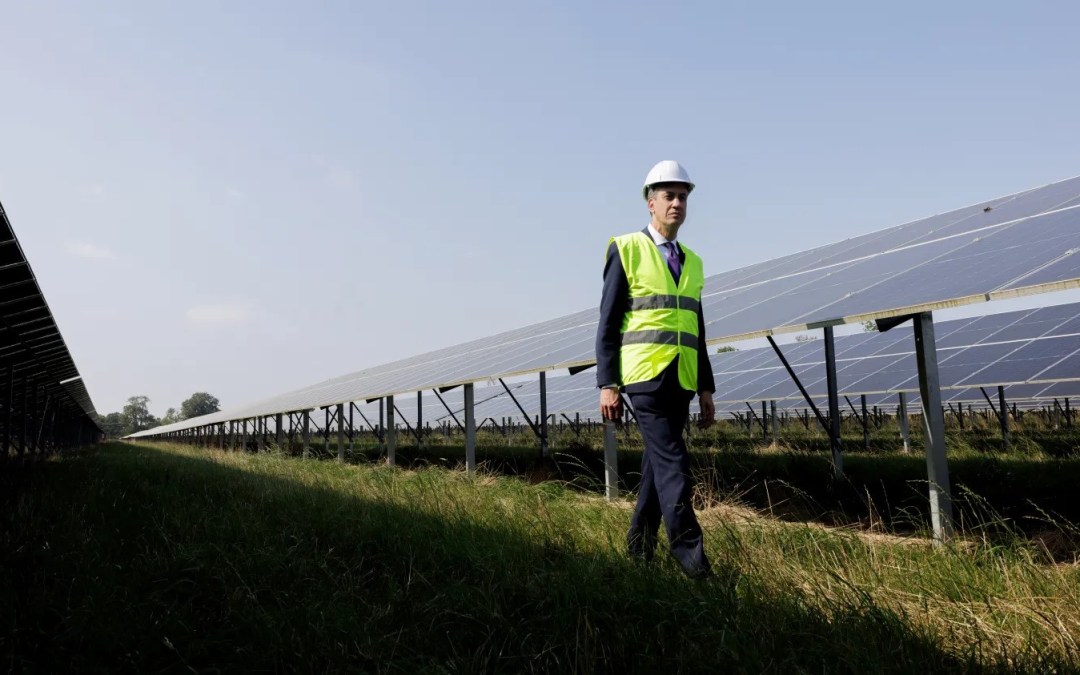
Energy Secretary Ed Miliband will introduce a legislative amendment to ensure that all supply chains involved in clean energy infrastructure are free from slavery and human trafficking.
The move comes after Labour MPs previously blocked a similar amendment to the Great British Energy Bill. Although none voted against the party line, 92 MPs abstained, prompting what a government source described as a “recognition of the strength of feeling.”
Concerns have mounted over the use of polysilicon – an essential material in solar panel production – that is largely sourced from China’s Xinjiang region.
This area has faced international scrutiny for alleged human rights abuses against the Uyghur Muslim population.
Reports suggest up to 97% of solar panels sold in the UK include materials from Xinjiang, placing around 40% of Britain’s solar panel industry at risk of being linked to forced labour.
Campaigners had prepared case studies showing such panels being installed on public buildings. In response, ministers are said to be convinced that GB Energy “needs to be an industry leader” in ethical sourcing.
One government source stated: “We are committed to ensuring Great British Energy is a sector leader in this area, developing resilient, home-grown supply chains free from forced labour.”
While the decision has been welcomed by human rights advocates, it has raised concerns about its impact on the UK’s environmental targets.
Andrew Bowie, acting Shadow Energy Secretary, warned The Times that the policy would cause a “real slowdown in the deployment of solar in the United Kingdom,” and questioned whether Labour’s clean energy goals could still be met.
John Flesher, deputy director of the Conservative Environment Network, called the shift “long overdue,” but stressed: “The government must now act to ensure that this knee-jerk U-turn doesn’t damage our environmental goals and the solar industry.”
Luke de Pulford of the Inter-Parliamentary Alliance on China echoed campaigners’ support, saying: “We cannot build a just transition on the backs of Uyghur slaves.”
[Image credit: Lauren Hurley / DESNZ]
by Emily Ashley | Apr 22, 2025 | Americas, Asia, Commercial & Industrial Solar, Large Scale Utility Solar
The US is preparing to introduce tariffs of up to 3,521% on solar panel imports from Cambodia, Thailand, Malaysia, and Vietnam, following a year-long investigation into alleged unfair trade practices.
The US Commerce Department announced the proposed tariffs after American manufacturers accused Chinese companies of shifting production to Southeast Asia to avoid existing duties and selling subsidised, low-cost products in the US.
Cambodia faces the highest proposed tariff of 3,521% due to a lack of cooperation with investigators.
Jinko Solar’s products from Malaysia face duties of just over 41%, while Trina Solar’s products from Thailand would incur a 375% tariff.
A final decision from the US International Trade Commission is expected in June.
Tim Brightbill, lead counsel to the American Alliance for Solar Manufacturing Trade Committee, welcomed the decision.
“This is a decisive victory for American manufacturing and confirms what we’ve long known: that Chinese-headquartered solar companies have been cheating the system,” he said.
Critics, however, argue that higher tariffs could increase costs for US businesses and consumers reliant on affordable solar technology. In 2023, the US imported nearly $12bn worth of solar equipment from the four countries.
The announcement comes as energy security remains a global concern. Fatih Birol, head of the International Energy Agency, warned that the world has yet to address the vulnerabilities revealed by the 2022 energy crisis fully.
“Lessons from Ukraine have not yet been fully understood,” he said, emphasising the importance of supply diversification, policy stability, and international cooperation.
This week, a 60-country summit hosted in London will address these challenges, though China will not attend.
“We wish everybody was at the table, but the countries attending the meeting make up three-quarters of the world’s GDP, which in my view is not bad at all,” Birol added.
by Emily Ashley | Apr 14, 2025 | Asia, Commercial & Industrial Solar, Everything Installer, Large Scale Utility Solar, Press Release
Press Release
As one of the fastest-growing regions in renewable energy adoption, Southeast Asia – and Malaysia in particular – represents a key strategic market for Deye.
With increasing demand for reliable power and a strong push toward clean energy, this region offers immense opportunities for advanced solar and storage solutions. That’s why Deye was proud to participate in Solar & Storage Live Malaysia 2025, held from April 9-10 at MITEC, Kuala Lumpur.
At Booth K02, the Deye team welcomed a constant stream of visitors. The booth buzzed with interest, especially around our Commercial & Industrial (C&I) energy storage offerings, such as the 80kW Hybrid Inverter and 100kW–2.5MW energy storage solution.
Many attendees – including installers, developers, and EPCs(especially) —were eager to learn how our solutions could support factories, office parks, remote islands, and data centres in reducing grid dependency and enhancing energy resilience.
Flagship Solutions on Display Among the highlights of the exhibition were:
100kW–2.5MW Energy Storage Solution: This modular and scalable solution is built for C&I and utility-scale projects, featuring Deye’s powerful PCS (Power Conversion System) and flexible BOS-B battery integration.
With multi-machine parallel support, and both on-grid and off-grid modes, it ensures seamless performance even in complex energy environments. Ideal for peak shaving, backup power, load shifting, and microgrid applications, it’s a smart investment in long-term energy independence.
Deye Wireless Energy Management System: Our intelligent energy management system enables real-time data tracking, automatic load adjustment, and efficient energy usage across homes and businesses.
Compatible with Deye smart plugs, switches, CT, TX, and EV chargers, this system makes smart energy control accessible and scalable—whether you’re managing a small household or a multi-site enterprise.
Off-grid Inverter + RW-L5.1 Battery Solution: Perfect for rural areas, remote sites, and backup power scenarios, this solution delivers stable, off-grid power supply with high efficiency and safety.
The RW-L5.1 battery features IP65 protection, >6000 cycle life, 10-year warranty period and Max. 32 units in parallel in terms of scalability, making it easy to integrate and expand based on different user needs.
L430 Solution Series – Coming Soon: During our brief on-site presentation, we also introduced the L430 solution series, a flexible and integrated approach to residential and small commercial storage. Its modular design allows easy adaptation to various usage scenarios – from villas to community centres – ensuring both scalability and cost-effectiveness.
Our participation in this exhibition not only showcased Deye’s cutting-edge technology but also reaffirmed our commitment to empowering the Southeast Asian market with practical, reliable, and intelligent energy solutions.
The enthusiastic response from attendees proves that demand for clean and decentralised energy is growing rapidly, and Deye is ready to meet that demand.
We thank every visitor, partner, and friend who joined us in Kuala Lumpur. If you missed the show or want to dive deeper into our solutions, feel free to reach out Deye official media platforms – we’d love to connect and support your energy transition journey.
Missed Solar & Storage Live Malaysia 2025, or want to attend an event closer to home? Check out the global range of Solar & Storage Live shows
Want to publish a press release? Submit your content here for review by our editorial team.
by Emily Ashley | Apr 14, 2025 | Asia, Large Scale Utility Solar
Octopus Energy has announced a new investment in South Korea as it continues expanding its renewables portfolio in Asia.
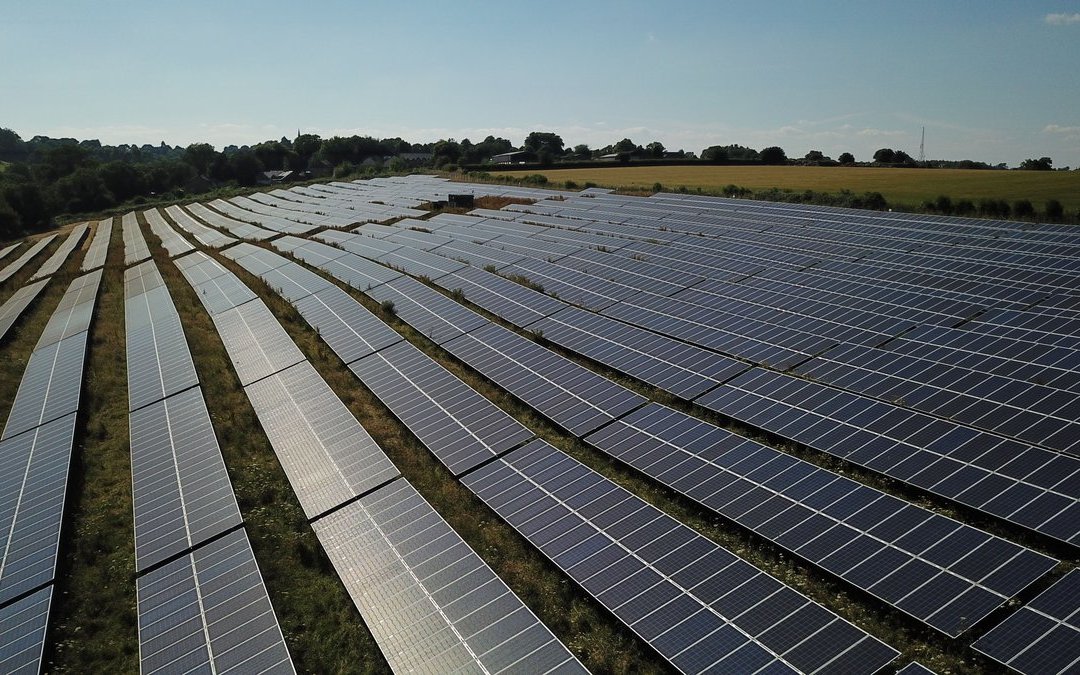
The company is backing Skygreen Energy, a local developer, to build up to 20 small- to medium-scale solar farms over the next two years.
The projects are expected to deliver a combined capacity of 140 MW, generating enough electricity to power around 45,000 homes annually.
Skygreen plans to grow its portfolio to 500 MW in the future and may diversify into energy storage and onshore wind.
Initially, the focus will be on the mid-western regions of South Korea, with clean power supplied to technology, manufacturing, and heavy industry firms aiming to reduce their carbon emissions.
South Korea currently sources about 30% of its electricity from coal but is targeting a significant rise in renewables, aiming to grow its share from 10% to 33% by 2038.
The country’s energy transition goals present considerable opportunities for solar development.
This latest move follows Octopus Energy Generation’s investments in Japan’s Yotsuya Energy and offshore wind projects in South Korea via Deep Wind Offshore. The deal was made through Octopus’ Sky fund (ORI SCSp).
Zoisa North-Bond, CEO of Octopus Energy Generation, says: “After our first steps into investing in Asian renewables in Japan, we’re now switching on our latest venture in South Korea.
“With a huge appetite for clean power and a heavy reliance on fossil fuels, there’s vast potential to make a real impact.”
Jae Choi, CEO of Skygreen Energy, adds: “South Korea’s renewable energy sector holds immense potential to address the urgent challenges of climate change while also enhancing energy independence, job creation and technological progress.”
[Image credit: Octopus Energy]
by Emily Ashley | Apr 11, 2025 | Asia, Europe, Large Scale Utility Solar
SolarPower Europe and the National Solar Energy Federation of India (NSEFI) have signed a Memorandum of Understanding (MoU) aimed at strengthening collaboration between the EU and India on solar manufacturing and supply chain diversification.
India, one of the world’s most dynamic solar markets, hosts a growing presence of European solar firms offering technical support and high-performance solutions.
Meanwhile, India continues to expand its own domestic solar manufacturing base.
The new agreement sets out plans to identify business and financing opportunities for joint manufacturing projects and promote knowledge sharing and capacity building.
Both organisations will also work to address regulatory barriers to solar equipment market access and facilitate engagement with policymakers to support cooperation.
The MoU aligns with the goals of the India-EU Clean Energy and Climate Partnership (CECP) and follows a recent pledge by Indian Prime Minister Narendra Modi and European Commission President Ursula von der Leyen to strengthen collaboration on clean energy and supply chains.
“The EU and India are important partners in clean tech,” said Máté Heisz, Chief Operating Officer at SolarPower Europe. “Our renewed partnership with NSEFI will help unlock market opportunities for European companies… and support India in delivering on its solar growth goals.”
Subrahmanyam Pulipaka, CEO of NSEFI, added: “India and the EU are natural allies in the global clean energy journey… Our strengthened partnership with SolarPower Europe will unlock new pathways for innovation, cross-border investment, and resilient value chains.”
This renewed partnership builds on SolarPower Europe’s International Solar Manufacturing Initiative (ISMI), designed to promote cooperation between EU-based solar manufacturers and partners such as India.
by Emily Ashley | Apr 9, 2025 | Asia, Commercial & Industrial Solar
Indian solar module manufacturer and installer Solex Energy has announced plans to invest INR 2bn ($23m) to expand its production capacity by an additional 2.2 GW.
The move comes in response to increasing global demand for solar panels within the country and beyond.
The new production line will feature tunnel oxide passivated contact (TOPCon) technology and is designed with scalability in mind – potentially reaching up to 5 GW in the future.
Once operational, the facility will raise Solex’s total manufacturing capacity to around 4 GW. The company is targeting 15 GW of production capacity by 2030.
In a statement issued Tuesday, Solex confirmed it has formed a strategic partnership with Zhuhai Gmee Solar Equipment Company to support the project.
Construction of the new production line is expected to conclude by September 2025. Solex anticipates that commercial operations will begin at the start of the third quarter of its 2025 – 2026 fiscal year, which ends in March 2026.
by Emily Ashley | Apr 9, 2025 | Asia, Europe, Large Scale Utility Solar
Clean electricity met over 40% of global power demand in 2024 for the first time since the 1940s, according to a new report from energy think tank Ember.
The milestone was largely driven by solar power, which has doubled in capacity over the past three years and has been the world’s fastest-growing electricity source for 20 consecutive years.
“Solar power has become the engine of the global energy transition,” said Phil MacDonald, Ember’s managing director. “Paired with battery storage, solar is set to be an unstoppable force.
As the fastest-growing and largest source of new electricity, it is critical in meeting the world’s ever-increasing demand for electricity.”
Last year, solar energy generated 7% of the world’s electricity, behind wind energy at 8%, nuclear energy at 9%, and hydropower at 14%. Hydro, the oldest and largest source of renewable power, has remained relatively steady for decades.
More than half of new solar electricity in 2024 came from China, while India also made major strides.
“The future of the global power system is being shaped in Asia, with China and India at the heart of the energy transition,” said Professor Xunpeng Shi, president of the International Society for Energy Transition Studies.
Despite clean energy’s growth, fossil fuel generation rose 1.4% last year due to surging electricity demand, particularly from heatwaves, air conditioning, and increased use of electric vehicles, AI, and heat pumps. Global power sector emissions reached an all-time high, rising by 1.6%.
MacDonald remains optimistic: “The world is watching how technologies like AI and EVs will drive electricity demand.
“It’s clear that booming solar and wind are comfortably set to deliver, and those expecting fossil fuel generation to keep rising will be disappointed.”
Ember’s report can be found here
by Emily Ashley | Apr 8, 2025 | Asia, Commercial & Industrial Solar
Press Release
SINEXCEL a global pioneer in modular energy storage, EV charging and power quality solutions, unveils the World’s First Grid-Forming Energy Storage System (ESS) for Low-Altitude Logistics Station with Shenzhen Qihay, a prominent technology firm specialising in intelligent vehicles and low-altitude economy.
This milestone validates the feasibility of grid-forming energy storage in low-altitude logistics, setting a new benchmark for integrating next-generation power systems with emerging low-altitude infrastructure.
A Global First: Grid-forming energy storage powers drone logistics
As the industry’s first public service hub, this station features a parcel locker alongside a “Lithium + Sodium” hybrid grid-forming ESS.
The locker enables AI-driven drone dispatch, smart warehousing, and efficient data processing, enabling 5kg deliveries within a 15km radius. Additional commercial pilots for low-altitude logistics hubs and bases are anticipated to commence in June.
Technical breakthrough: Lithium-sodium hybrid grid-forming energy storage
This ESS is a key achievement under Guangdong Province’s major R&D initiative on grid-forming energy storage converters. It offers high reliability, long lifespan, and enhanced energy density, delivering robust support for next-gen urban power systems.
Energy & operation challenges in the low-altitude economy
Drone delivery stations encounter critical challenges; most small drones possess a flight time of only 15–20 minutes, requiring frequent recharging. In remote areas, inadequate power infrastructure disrupts operations, while high electricity costs at rural stations constrain large-scale commercialisation.
Integrated energy hub for low-altitude applications
This grid-forming ESS can seamlessly integrate with solar and charging stations to create a mobile, all-in-one “solar-storage-charging” energy hub, delivering timely and reliable power for remote logistics and agricultural scenarios.
Flexible and cost-effective deployment
Easily re-deployable, the ESS can be swiftly relocated, minimising redundant infrastructure investments and accommodating rural or emergency applications. Its long lifecycle further reduces depreciation and operational costs.
Leading innovation in the low-altitude economy and beyond
SINEXCEL will persist in driving technological innovation, accelerating the deployment of grid-forming energy storage and charging infrastructure in the low-altitude economy. We will also explore new frontiers, contributing to the global energy transition and empowering the growth of emerging industries.
[Image credit: SINEXCEL]
Want to publish a press release? Submit your content here for review by our editorial team.