by Catie Owen | Nov 3, 2025 | Commercial & Industrial Solar, Middle East
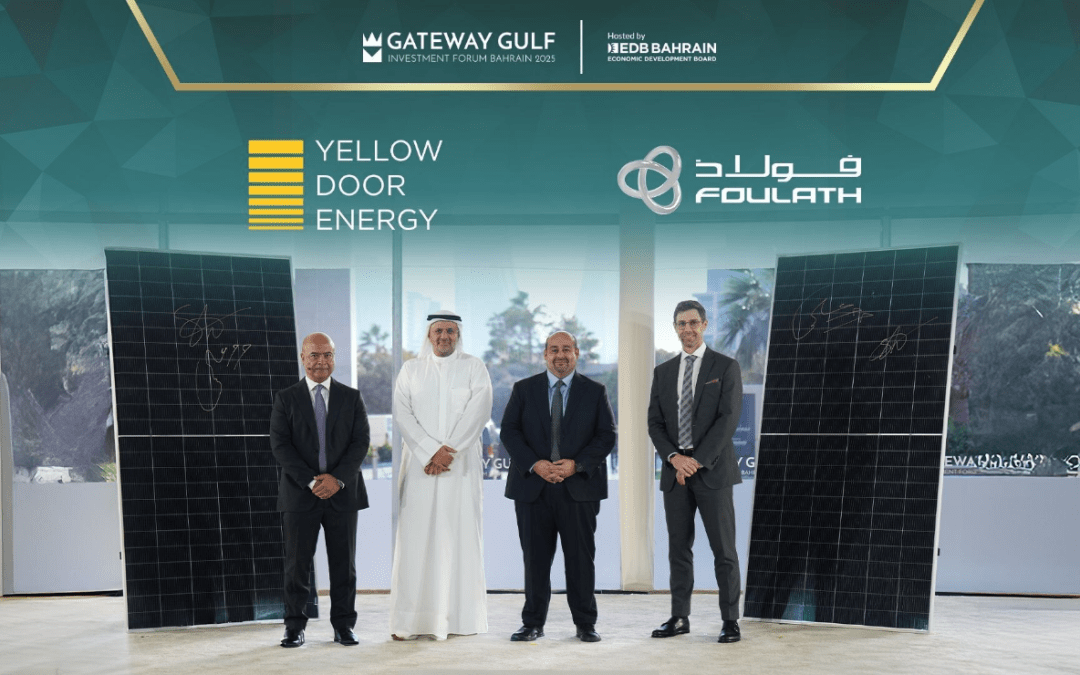
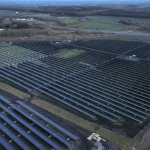
Bahrain has announced plans for what it describes as the world’s largest single-site rooftop solar power plant.
The 123-megawatt-peak (MWp) project is being developed through a partnership between Foulath Holding, an industrial group with major steel investments, and Yellow Door Energy, a regional solar developer.
Under a power-purchase agreement, the project will include 50MWp of rooftop installations on a new 262,000 m² stockyard shed, featuring around 77,000 solar panels.
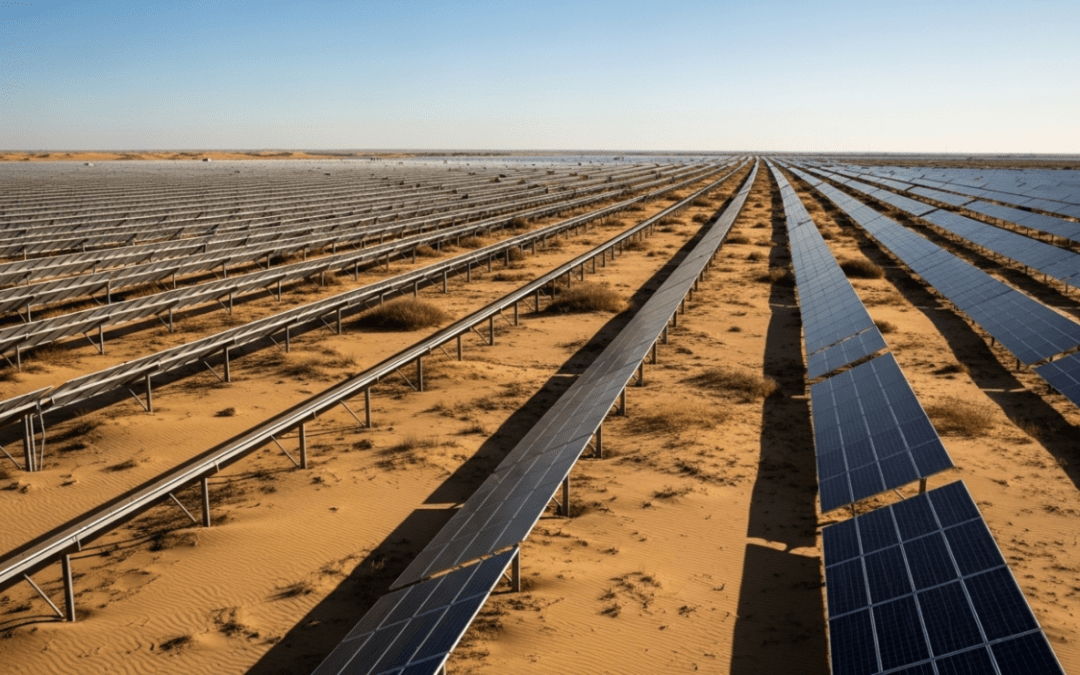
Unveiled during the Gateway Gulf investment forum in Manama, the full development will comprise ten rooftop and four ground-mounted systems, totalling over 189,000 solar panels across 707,000 m².
It is expected to generate 200m kWh of clean energy in its first year and cut carbon emissions by 90,000 metric tons. The scheme supports Foulath’s sustainability goals and Bahrain’s national target of reaching net zero by 2060.
Noor bint Ali Alkhulaif, Minister of Sustainable Development, said: “Today, the island nation of Bahrain stands at the forefront of sustainable global innovation. We are incredibly proud of this transformative project – marking the largest rooftop solar plant in the world.
“This milestone not only strengthens our position as a regional leader in clean energy, but embodies our dedication to build a resilient, sustainable future.”
Meshary Al-Judaimi, Chairman of Foulath Holding, added: “Over the past several years, Foulath has invested approximately $250m in various sustainability projects. These investments are a testament to our commitment to responsible operations, environmental stewardship and protecting the health and well-being of our community.”
Sherif ElKholy, Chairman of Yellow Door Energy, said: “This project proves how cost-competitive, clean energy can drive forward industry and set a new global benchmark for decarbonising steel production.”
[Image credit: PRNewsfoto/Bahrain EDB]
by Catie Owen | Oct 30, 2025 | Europe, Large Scale Utility Solar, Middle East
A consortium comprising France’s TotalEnergies and Saudi Arabia’s Aljomaih Energy & Water (AEW) has been awarded a contract by the Saudi Power Procurement Company (SPPC) to develop, build, and operate a 400MW solar power plant in As Sufun, Saudi Arabia.
The project was granted following a competitive tender process and will sell its electricity to SPPC under a 25-year Power Purchase Agreement (PPA). Expected to connect to the grid in 2027, the As Sufun plant will provide clean power to more than 68,400 homes.
Part of Round 6 of the National Renewable Energy Program (NREP), overseen by the Ministry of Energy, the project supports Saudi Vision 2030. The initiative aims to reduce reliance on liquid fuels in power generation and increase the share of renewable and energy storage capacity to up to 50% by 2030, depending on demand growth.
“Together with our partner Aljomaih Energy and Water Co, we are thrilled to contribute to Saudi Arabia’s target of increasing the share of renewables in its energy mix,” said Olivier Jouny, SVP Renewables at TotalEnergies.
“This project marks the second success for our consortium in the Saudi National Renewable Energy Program. TotalEnergies is a close partner of Saudi Arabia, where we are deploying our multi-energy strategy, notably through our participation in major refining and petrochemical assets.”
Ibrahim Aljomaih, Chairman of Aljomaih Energy and Water Company, commented: “We are proud to lead the development of the 400MW As Sufun Solar PV Project in partnership with TotalEnergies.
This milestone reflects our unwavering commitment to supporting the Saudi Green Initiative and advancing the goals of Saudi Vision 2030.”
Adnan Buhuligah, Acting CEO of Aljomaih Energy and Water Company, added: “The 400MW As Sufun Solar PV Project in Hail region demonstrates our ongoing efforts to expand our renewable energy investments in the Kingdom.”
The As Sufun project builds on TotalEnergies’ growing presence in the Kingdom, where it already operates the 119MW Wadi Al Dawasir solar plant and is constructing the 300MW Rabigh 2 project.
by Catie Owen | Oct 21, 2025 | Large Scale Utility Solar, Middle East
The Electricity & Water Authority (EWA) of Bahrain has announced the launch of the country’s first solar-power plant for electricity generation, in partnership with the private sector.
According to a statement issued on 7 August 2025, the new facility will have a planned production capacity of up to 150MW.
It forms part of Bahrain’s efforts to enhance reliance on renewable energy sources and supports the national target of reaching net-zero carbon emissions by 2060.
EWA President Eng. Kamal bin Ahmed Mohammed described the project as “among the most strategic initiatives led by the Authority, reflecting EWA’s commitment to building a sustainable energy ecosystem.”
He added that, by strengthening partnerships with the private sector, the project aims to “scale up renewable energy capacity, reinforce energy security, and support the infrastructure required for continued urban and economic development.”
The plant will be in the southern region of Bahrain, near Bilaj Al Jazayer, covering approximately 1.2 square kilometres. It will employ the latest solar-energy technologies to optimise output and efficiency.
To advance development, EWA will launch a Global Market Sounding exercise on 14 August 2026 to invite local and international developers and stakeholders. The competitive tender is scheduled for September 2025, with commercial operations expected in the third quarter of 2027.
A consortium of firms has been appointed to provide advisory services for the project lifecycle. Financial advising will be handled by KPMG Fakhro, technical oversight by WSP Parsons Brinckerhoff and legal advice by Trowers & Hamlins.
Once operational, the plant is expected to generate enough electricity to meet the needs of approximately 6,300 homes and will contribute to an annual reduction of more than 100,000 tonnes of carbon emissions.
It forms part of Bahrain’s National Renewable Energy Plan, which targets a 20 per cent share of clean energy in the national mix by 2035.
The announcement marks a significant step in Bahrain’s transition to cleaner energy and showcases the role of public-private collaboration in delivering large-scale infrastructure projects.
by Catie Owen | Sep 22, 2025 | Market Reports, Middle East
The Middle East is undergoing a rapid shift toward clean energy, with solar, storage, and green hydrogen reshaping power systems across the Gulf and Levant.
This report offers a clear overview of regional trends, from record-breaking solar parks to emerging hydrogen hubs and battery pilots. It covers detailed country profiles – covering the UAE, Saudi Arabia, Oman, Qatar, Jordan, Kuwait, Iraq, Bahrain, and Syria – outlining policies, capacities, flagship projects, and investment drivers.
It also explores corporate PPAs, localisation mandates, and smart-grid initiatives. Designed for developers, policymakers, and investors, this guide maps opportunities and challenges in one of the world’s fastest-growing renewable markets.
Download the report to unlock one of the world’s largest renewable markets.
Download the Report
Solar & Storage Live Middle East 2025 is taking place 9-10 June 2026 in Dubai. Don’t miss your chance to secure a ticket. Or find a Solar & Storage Live event near you.
by Catie Owen | Sep 22, 2025 | Market Reports, Middle East
This report explores Saudi Arabia’s fast-evolving solar and storage market, charting its role in achieving Vision 2030 renewable targets. Inside, readers will find a clear market overview, including capacity goals, investment trends, and policy drivers shaping solar adoption.
It profiles flagship projects such as Sudair, Sakaka, and Rabigh, alongside initiatives encouraging residential uptake. Dedicated sections examine battery energy storage growth, advanced PV and CSP technologies, and opportunities in hybrid systems.
The report also highlights wind developments and localisation efforts – manufacturing, workforce training, and supply-chain integration – helping position the Kingdom as a regional clean-energy hub.
Download the report and tap into the power of Saudi Arabia’s clean-energy revolution.
Download the Report
Join us at Solar & Storage Live Saudi Arabia in Riyadh, taking place 12-14 October 2025. Secure your ticket here, or find a Solar & Storage Live event near you.
by Catie Owen | Sep 19, 2025 | Africa, Large Scale Utility Solar, Middle East
Electricity consumption in the Middle East and North Africa (MENA) is projected to climb sharply over the next decade, with solar PV emerging as a key source of new supply, according to a report published today by the International Energy Agency (IEA).
The Future of Electricity in the Middle East and North Africa finds that electricity demand in the region has tripled since 2000 and is expected to rise by a further 50% by 2035, adding the equivalent of Germany and Spain’s current consumption.
About 40% of this increase is set to come from cooling and desalination, driven by extreme heat, water scarcity, urbanisation and economic growth.
Solar PV capacity is forecast to grow tenfold by 2035, pushing renewables’ share of regional generation to around 25%.
Natural gas is expected to meet about half of the new demand, while oil’s role in power generation could fall from 20% today to 5%. Nuclear capacity is also projected to triple.
“Electricity demand is surging across the Middle East and North Africa, driven by the rapidly rising need for air conditioning and water desalination in a heat- and water-stressed region with growing populations and economies,” said IEA Executive Director Fatih Birol.
“To meet this demand, power capacity over the next 10 years is set to expand by over 300GW, the equivalent of three times Saudi Arabia’s current total generation capacity.”
Birol added: “Based on the policy plans of governments across the Middle East and North Africa, the region is set to steadily shift away from using oil for electricity generation over the next decade, with natural gas, solar and nuclear all expanding.”
The report notes that power sector investment reached $44bn in 2024 and could grow by half by 2035, with nearly 40% directed to grid upgrades.
Modernising networks and strengthening regional interconnections are highlighted as priorities for integrating large-scale solar and other renewables while maintaining electricity security.
by Catie Owen | Sep 3, 2025 | Commercial & Industrial Solar, Middle East
HE Saeed Mohammed Al Tayer, Managing Director and CEO of Dubai Electricity and Water Authority (DEWA), recently conducted a site visit to Phase Six of the Mohammed bin Rashid Al Maktoum Solar Park, which is planned to deliver 1.8GW of new solar capacity under the independent power producer (IPP) model.
The development entails investments of up to AED 5.5bn
The solar park is the world’s largest single-site solar installation using the IPP framework – forming a cornerstone of both the Dubai Clean Energy Strategy 2050 and the Dubai Net Zero Carbon Emissions Strategy 2050.
These initiatives target supplying 100% of Dubai’s power production capacity from clean energy by 2050.
Accompanied by Waleed bin Salman, Executive Vice President of Business Development and Excellence at DEWA, plus senior officials and engineers, Al Tayer received a detailed progress briefing from representatives of Shuaa Energy 4.
Project status stands at approximately 68.59 % complete, with 1,000 MW operational and 800 MW still under construction.
To date, over 2.236m PV panels have been installed; this figure is expected to reach about 3.959m by the project’s anticipated completion next year.
Current cumulative capacity stands at around 3.86GW.
The solar park’s total current generation capacity is approximately 3,860 MW, with another 800 MW under construction. By 2030, total capacity is expected to reach about 7,260 MW – surpassing the original 5,000 MW target – and supply around 34 % of Dubai’s total electricity.
Phase Six employs bifacial solar photovoltaic technology with single-axis tracking. Upon full commissioning, it will deliver clean energy to approximately 540,000 homes and reduce carbon emissions by an estimated 2.36m tonnes annually, across roughly 20 sq km.
by Catie Owen | Aug 20, 2025 | Commercial & Industrial Solar, Middle East
Masdar, alongside GD Power and Korea Electric Power Corporation, has achieved financial close on the 2GW Al Sadawi solar PV project in Saudi Arabia.
The project is part of the National Renewable Energy Program (NREP), overseen by the Ministry of Energy.
Eight regional and international lenders will provide financing facilities to cover a large portion of the estimated US$1.1bn project cost.
Mohamed Jameel Al Ramahi, CEO of Masdar, said:
“Masdar is actively committed to supporting Saudi Arabia’s clean energy objectives and this landmark project will add to our growing portfolio in the Kingdom.
“Today’s announcement marks a significant step in Saudi Arabia’s clean energy journey, with the Al Sadawi plant set to be one of the largest solar power projects in the world.
We look forward to working closely with our partners to achieve full energisation for the project, which will help shape the future of clean energy for the Kingdom.”
The Al Sadawi Independent Power Producer (IPP) Project supports Saudi Arabia’s Energy Mix target of sourcing 50% of its energy from renewables by 2030.
Expected to be among the world’s largest solar plants, it will play a role in reducing carbon emissions and supporting sustainable development in the Kingdom.
Located in the Eastern Province, the project will be developed under a Build, Own, and Operate (BOO) model. A 25-year Power Purchase Agreement (PPA) was signed with the Saudi Power Procurement Company (SPPC) in 2024.
The plant is scheduled to begin generation at full capacity in early 2027, with commercial operations also targeted for that year.
by Catie Owen | Aug 19, 2025 | Large Scale Utility Solar, Middle East
The European Bank for Reconstruction and Development (EBRD) is lending US$150m to Türkiye’s Enerjisa Enerji to support post-earthquake reconstruction and renewable energy projects.
The financing will be used to rebuild and modernise the electricity distribution network in the Toroslar region, which was heavily damaged during the February 2023 earthquakes that killed more than 55,000 people.
The area represents around one-third of Enerjisa Enerji’s total operations.
In addition to reconstruction, the funds will be directed towards the development and construction of solar power plants, enabling the company to provide sustainable energy solutions to its corporate customers.
The EBRD said the project would contribute to reducing distribution losses and carbon emissions while advancing Türkiye’s green agenda.
The initiative also coincides with the launch of the Board Director Nomination Toolkit for Companies in Türkiye, led by the EBRD to promote diverse and effective company boards. Enerjisa Enerji will work with the bank to raise awareness of the toolkit within the energy sector.
Matteo Patrone, the EBRD’s Vice President for Banking, said: “I have seen first hand that reconstruction in the Toroslar region is not a short-term task. It requires long-term commitment, clear strategic direction and the kind of trusted partnership that we have with Enerjisa Enerji.
“Reliable, sustainable power is fundamental to both human well-being and economic recovery.”
Philipp Ulbrich, CFO of Enerjisa Enerji, added: “This long-term financing worth US$150m equivalent in Turkish lira is showing that Enerjisa Enerji is able to finance its profitable growth also within a challenging environment.
“The well established partnership with EBRD is strengthening our strategic steps toward sustainable growth.”
Since 2009, the EBRD has committed more than €22bn to Türkiye through 495 projects and trade finance limits, primarily in the private sector.
[Image caption: Enerjisa signing. Image credit: EBRD]
by Catie Owen | Aug 18, 2025 | Africa, Large Scale Utility Solar, Middle East
UAE-based Global South Utilities (GSU), part of Resources Investment Company, has begun construction on a 50MW solar PV power plant in Sakaï, Central African Republic (CAR).
The project is seen as a significant step in expanding energy access and advancing the country’s clean energy transition.
The plant is expected to provide electricity for more than 300,000 households and reduce annual carbon emissions by over 50,000 tons. It will also feature a 10MWh BESS to improve grid reliability and ensure a steady supply of power.
Beyond energy delivery, the initiative aims to generate jobs in the renewable energy sector and support skills development within the local workforce.
A groundbreaking ceremony was attended by Faustin-Archange Touadéra, President of CAR, Pascal Bida Koyagbele, Minister of State for Strategic Investments and Major Work, senior government representatives, and GSU executives.
“For the Central African Republic, this project will play a key role in expanding energy access to communities across the country,” said Ali Alshimmari, Managing Director and CEO of GSU.
“It represents another milestone in our commitment to delivering clean, scalable energy solutions in places that others may see as difficult – but which we view as gateways to opportunity and sustainable growth.”
The Sakaï solar development follows the Comprehensive Economic Partnership Agreement (CEPA) signed in March 2025 between the UAE and CAR, designed to strengthen bilateral trade and investment.
This project adds to GSU’s growing portfolio of renewable energy investments in Africa, aligning with the UAE’s broader strategy of supporting climate-focused infrastructure and long-term economic cooperation with Global South nations.
by Catie Owen | Jul 28, 2025 | Commercial & Industrial Solar, Large Scale Utility Solar, Middle East
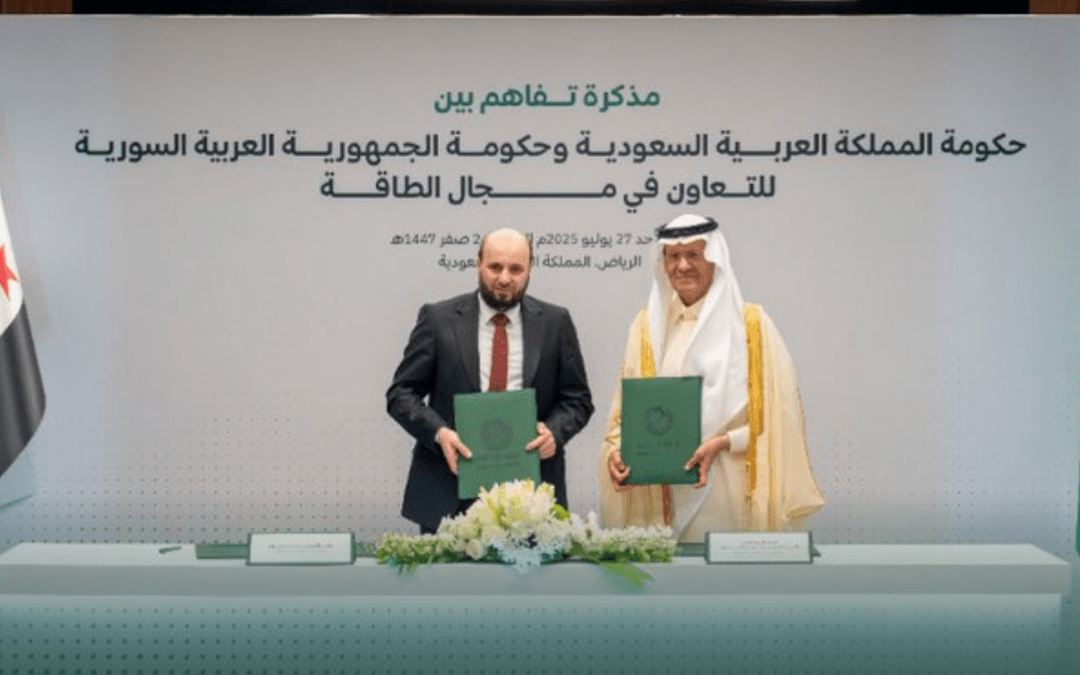
Saudi Arabia and Syria have signed a memorandum of understanding (MoU) to enhance cooperation across a range of energy sectors, following a ministerial meeting held in Riyadh.
The meeting brought together Saudi Arabia’s Minister of Energy, Prince Abdulaziz bin Salman bin Abdulaziz, and Syria’s Minister of Energy, Eng. Mohammad al-Bashir.
Discussions focused on opportunities to strengthen collaboration between the two countries in areas including oil and its supplies, electricity, renewable energy, and energy efficiency.
The ministers also reviewed potential investment opportunities and discussed ways to exchange expertise in the development of energy projects, policies, and regulatory frameworks. These efforts are intended to support the development of Syria’s energy sector.
Following the talks, the two sides signed an MoU outlining plans to deepen cooperation in several key areas. These include oil and gas, petrochemicals, electricity, electrical interconnection, and renewable energy.
The agreement reflects a shared interest in enhancing bilateral ties within the energy field and exploring long-term collaboration to support the development goals of both nations.
Saudi Arabia’s Ministry of Energy commented on the news on X (formerly known as Twitter), describing the meeting between the two ministers as “to discuss topics of mutual interest and explore opportunities for cooperation between the two countries across various energy sectors.”
[Image credit: The Saudi Arabian Ministry of Energy on X]
by Catie Owen | Jul 25, 2025 | Innovation, Large Scale Utility Solar, Middle East
TotalEnergies Jordan has donated over 800 solar panels to support the Jordan Food Bank, Tkiyet Um Ali, and the Dar Abu Abdullah Association.
The contribution is part of the company’s corporate social responsibility strategy and commitment to renewable energy.
Around 115 panels have been designated for the Jordan Food Bank. These will help power its core facilities, including a charity supermarket and administrative offices. Installation will proceed once the necessary funding is secured.
Additionally, TotalEnergies Jordan signed a memorandum of understanding with Tkiyet Um Ali to supply 720 solar panels for future projects implemented by Dar Abu Abdullah in partnership with Tkiyet Um Ali. Deployment will depend on each programme’s needs and timeline.
“Supporting renewable energy is a core pillar of our social responsibility agenda,” said François Decherf, Managing Director of TotalEnergies Jordan. “We are proud to contribute to projects that not only serve humanitarian causes but also advance environmental sustainability.”
Decherf added that the initiative is intended to help non-profits reduce operational costs, enabling them to direct more resources toward community support.
He also noted the importance of private sector involvement in creating development models that combine charity with sustainability.
Dr. Kawthar Al-Qatarneh, Director General of the Jordan Food Bank, said the donation would help expand the organisation’s services and reduce its dependence on traditional energy sources.
“This initiative strengthens our infrastructure and that of our partners, allowing us to adopt clean energy solutions that help ensure the sustainability of our humanitarian mission,” added Samer Balkar, Director General of Tkiyet Um Ali.
The initiative supports Jordan’s Sustainable Development Goals, particularly in promoting clean energy and community development.
by Catie Owen | Jul 18, 2025 | Africa, Americas, Asia, Europe, Large Scale Utility Solar, Middle East, Oceania
Global renewable energy capacity grew by more than 15% in 2024, according to the Renewable Energy Statistics 2025 report released by the International Renewable Energy Agency (IRENA) this week.
However, the agency warns that regional disparities in growth are widening.
Asia accounted for 71% of new capacity additions, maintaining its lead for a second consecutive year. Europe and North America followed, contributing 12.3% and 7.8% respectively.
In contrast, Africa, Eurasia, Central America, and the Caribbean together made up just 2.8% of global additions. Despite its potential, Africa’s renewable capacity increased by only 7.2%.
IRENA Director-General Francesco La Camera said: “The renewable energy boom is transforming global energy markets, driving economies and creating vast investment opportunities.
“However, the growing regional divide highlights that not everyone is benefiting equally from this transition.”
He added: “Bridging the divide and closing the investment gap between countries and regions is critical. It requires targeted policies, international financing, and partnerships that unlock capital and technology where they are needed most.”
UN Climate Change Executive Secretary Simon Stiell echoed these concerns, saying: “The global shift to renewables is increasingly inevitable, but its massive human and economic benefits are not yet being shared across all countries and regions.”
“To deliver on the global agreement at COP28 to triple renewables by 2030, we need to move much further and faster… The investments required will pay huge dividends – cutting emissions, driving economic growth, creating jobs, and supporting affordable, secure energy for all.”
Despite a record-breaking 582 GW being added last year, IRENA notes that the world remains off track to meet the 11.2 TW target needed by 2030.
by Catie Owen | Jul 3, 2025 | Commercial & Industrial Solar, Middle East
Électricité de France (EDF) and Sorbonne University Abu Dhabi (SUAD) have signed a new strategic Memorandum of Understanding (MoU). This agreement aims to promote sustainability-focused education and prepare students for careers in the clean energy sector.
The agreement was formalised on 28 May at the World Utilities Congress at the Abu Dhabi National Exhibition Centre (ADNEC) and announced on 2 July.
The signing ceremony took place at the EDF booth in the presence of Professor Nathalie Martial-Braz, Chancellor of SUAD, and Dr Majed Al Khemeiri, Deputy Vice-Chancellor for Administrative and Financial Affairs.
EDF’s leadership team included Béatrice Buffon, EDF Group Senior Executive Vice-President and Chairwoman & CEO of EDF Power Solutions, and Luc Koechlin, CEO Middle East of EDF Group.
The MoU builds on an existing partnership and outlines collaborative initiatives including joint research, expert-led seminars, guest lectures, internships, and educational site visits to EDF facilities.
These efforts aim to support the UAE’s target of generating 30% of its energy from clean sources by 2030.
Professor Martial-Braz says in an official statement: “We are proud to partner with EDF in a collaboration that empowers our students to make a real-world impact, particularly in the critical field of renewable energy.
“Strong partnerships between academia and industry are essential to driving meaningful change within our communities.”
Luc Koechlin adds: “The partnership with Sorbonne University Abu Dhabi is a concrete step in EDF’s commitment to developing future-ready talent.
“By sharing our expertise and supporting academic collaboration, we are helping to equip the next generation with the critical skills needed to accelerate the energy transition.”
[Image credit: EDF]
by Catie Owen | Jun 25, 2025 | Commercial & Industrial Solar, Middle East, Press Release
Press Release
GameChange Solar, a leading global supplier of solar tracker and fixed-tilt racking technology, announced that it has signed a contract with ACME Greentech Ventures FZCO to supply its Genius Tracker™ 1P Single Row system for a 450 MWp solar project in Duqm, Sultanate of Oman.
The project will power one of the world’s largest green hydrogen and ammonia production facilities and is a key step in Oman’s clean energy transition.
The Duqm project site is located near Oman’s southeastern coastline and is marked by extreme temperatures, high wind speeds, challenging terrain and corrosive conditions. GameChange Solar’s Genius Tracker™ is engineered to perform in such an environment, delivering robust structural strength, fast installation, and optimal energy output.
“We are proud to support ACME on this landmark project that puts Oman at the forefront of green ammonia development,” said Vikas Bansal, President – International, GameChange Solar.
“Our Genius Tracker™ system is designed to perform in the toughest environments, delivering maximum energy yield and reliability. This order also deepens our presence in the Middle East, a region that is fast becoming a global epicentre for clean energy innovation.”
The Green Ammonia Project is a multi-phase development by ACME, aligned with Oman’s national hydrogen framework. Spanning 92 square kilometres, the project will be executed phase-wise. Phase 1, currently under construction, targets 100,000t of green ammonia annually.
The subsequent phases are expected to produce 71,000t of green hydrogen and 400,000t of green ammonia each year. Upon full completion, the facility aims for a total production capacity of 0.9mt of green ammonia annually.
“We are pleased to collaborate with GameChange Solar for this critical project. Their 1P single-row tracker technology is engineered for reliability in high-wind and extreme weather conditions, and we are confident in their ability to deliver with consistency and speed.
As we build one of the world’s largest green ammonia platforms, trusted partners like GameChange Solar are integral to delivering on our vision,” said Vipin Aggarwal, Vice President – Procurement, Green Hydrogen and International Business, ACME Group.
Want to publish a press release? Submit your content here for review by our editorial team.
by Catie Owen | Jun 9, 2025 | Africa, Americas, Asia, Commercial & Industrial Solar, Europe, Middle East, Oceania
The International Energy Agency’s (IEA) PVPS 2025 Snapshot of Global PV Markets reveals record-breaking growth in solar PV worldwide, with over 600GW of new PV capacity added in 2024.
This pushed global cumulative installed capacity to more than 2.2TW, up from 1.6 TW the previous year.
China accounted for nearly 60% of all new PV installations, commissioning between 309GW and a possible 357GW, bringing its cumulative total to over 1TW – almost half the global total.
The rest of the world contributed 244.6GW, with strong growth in Europe (71.4GW), the USA (47.1GW), India (31.9GW), and Brazil (14.3GW).
Expansion and fall
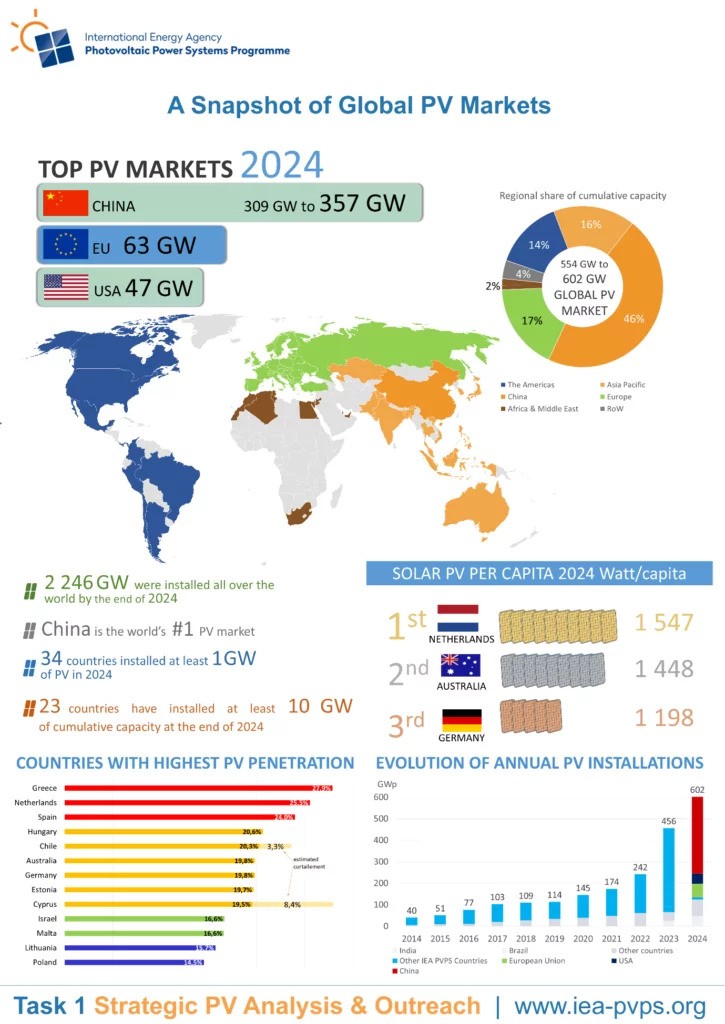 While the global PV market expanded by over 30%, the growth rate fell from 89% in 2023.
Oversupply in module manufacturing has driven prices down but strained profitability for producers. According to IEA’s data, this price drop catalysed market growth, especially in utility-scale segments, which dominated 2024 installations.
PV provided over 10% of global electricity consumption for the first time. In 27 countries – including Greece, the Netherlands, and Germany – solar generation surpassed 10% of national electricity use, though curtailment is increasingly an issue where grid flexibility lags behind deployment.
Policy developments in 2024 focused on energy transition goals, storage integration, and boosting local manufacturing.
However, local production faces challenges amid intense price competition from Chinese imports. The USA, India, Türkiye, and Brazil responded with tariffs and incentives to protect or stimulate domestic PV industries.
Forecast
Looking ahead, the IEA expects steady growth in most markets, though local policy shifts and infrastructure bottlenecks may influence deployment.
As storage, hybrid systems, and new applications like green hydrogen scale up, global solar deployment must exceed 1 TW annually to match manufacturing output and decarbonisation targets.
For stakeholders in the international solar and storage industry, 2024 underscored the urgency of grid adaptation, the risks of supply chain overcapacity, and the continued rise of solar as the dominant renewable power source.
Infographic credit: IEA-PVPs
Explore the international solar landscape through our series of Market Reports, available for free here.
by Catie Owen | May 23, 2025 | Commercial & Industrial Solar, Middle East, Storage
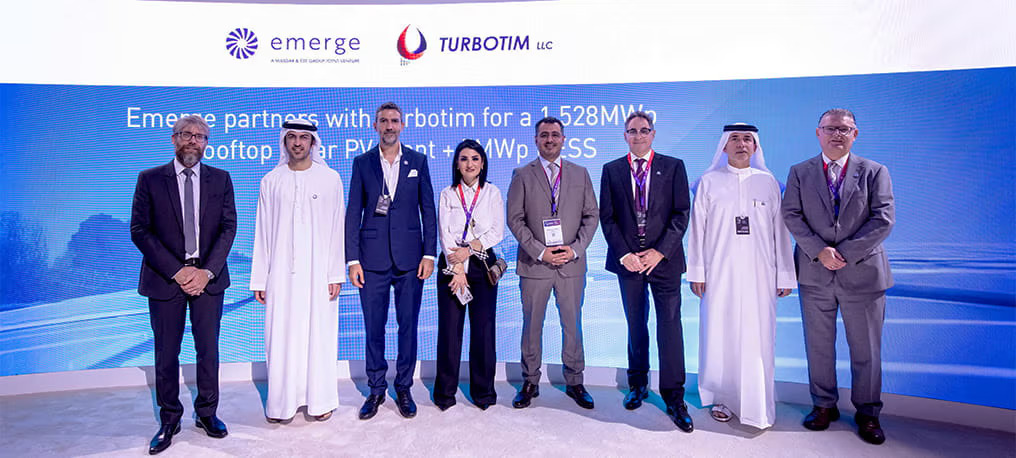
Turbotim, a UAE-based energy solutions company, has signed an agreement with Emerge – a joint venture between Masdar and the EDF Group – to develop a rooftop solar and battery storage project at its facilities in Ras Al Khaimah.
The deal was signed during the 2025 Make it in the Emirates Forum, which ran from 19-22 May.
The project will replace diesel generators with a hybrid energy system, combining 1.52MWp of rooftop solar PV and a 5MWh battery energy storage system.
Split into two identical installations, each will feature 763kWp of solar and 2.5MWh of battery capacity. Emerge will deliver a turnkey solution, covering financing, design, construction, and 20 years of operation and maintenance.
The shift is expected to reduce Turbotim’s annual carbon emissions by over 2,178 tonnes, equivalent to the yearly electricity consumption of 240 homes or removing 474 petrol cars from the road.
Dr Saad Al Tameemi, Turbotim Chairman, said: “This partnership with Emerge marks a major step forward in Turbotim’s journey toward cleaner, more efficient energy solutions.
“By integrating solar and battery storage into our operations, we’re not only reducing our environmental footprint but also creating long-term value through energy cost savings and greater energy independence.”
Michel Abi Saab, General Manager of Emerge, added: “The agreement signed with Turbotim, a leading industrial player, highlights the value of distributed solar and storage installations in reducing reliance on fossil fuels, while promoting cost-effective and sustainable solutions.”
Emerge, launched in 2021, currently supplies clean power to over 40 sites across the GCC.
[Image credit: Masdar]
by Catie Owen | May 7, 2025 | Africa, Large Scale Utility Solar, Middle East, Press Release
Press Release
LONGi, a world-leading solar technology company, has secured a significant agreement with ENGIE, a renowned global energy group, to deploy its advanced Hi-MO 9 modules for major utility-scale solar projects in Middle-East and North-Africa (MENA) region.
This collaboration signifies a pivotal moment in the evolution of large-scale solar energy, highlighting the industry’s increasing recognition of back contact (BC) technology as a game-changing solution for high-performance renewable energy installations.
Why Hi-MO 9 stands apart
LONGi and ENGIE Forge Powerful Partnership to Drive Solar Innovation
This landmark partnership between LONGi and ENGIE underscores the transformative potential of Hi-MO 9 modules, powered by cutting-edge BC technology.
LONGi’s Hi-MO 9 modules with its highest power of 670W, a 24.8% major efficiency and its superior bifaciality up to 80%, represent a leap forward in photovoltaic innovation.
By relocating all cell electrodes to the rear of the module, this revolutionary design eliminates shading losses and maximises light capture, resulting in industry-leading conversion efficiency.
Furthermore, this design enhances temperature coefficient performance, ensuring consistent power output even in challenging environmental conditions.
Combined with LONGi’s stringent quality standards, Hi-MO 9 offers developers unparalleled reliability and optimal long-term returns.
This collaboration between LONGi and ENGIE is set to redefine the standards of efficiency, durability, and sustainability in the solar sector.
“ENGIE’s selection of Hi-MO 9 is a testament to the global energy sector’s recognition of BC technology as the ultimate frontier in solar innovation.” Stated Dennis She, Vice President of LONGi.
“LONGi’s collaboration with ENGIE sets a new benchmark for utility-scale solar deployments worldwide. This partnership reaffirms our commitment to delivering solutions that redefine efficiency, durability, and sustainability.”
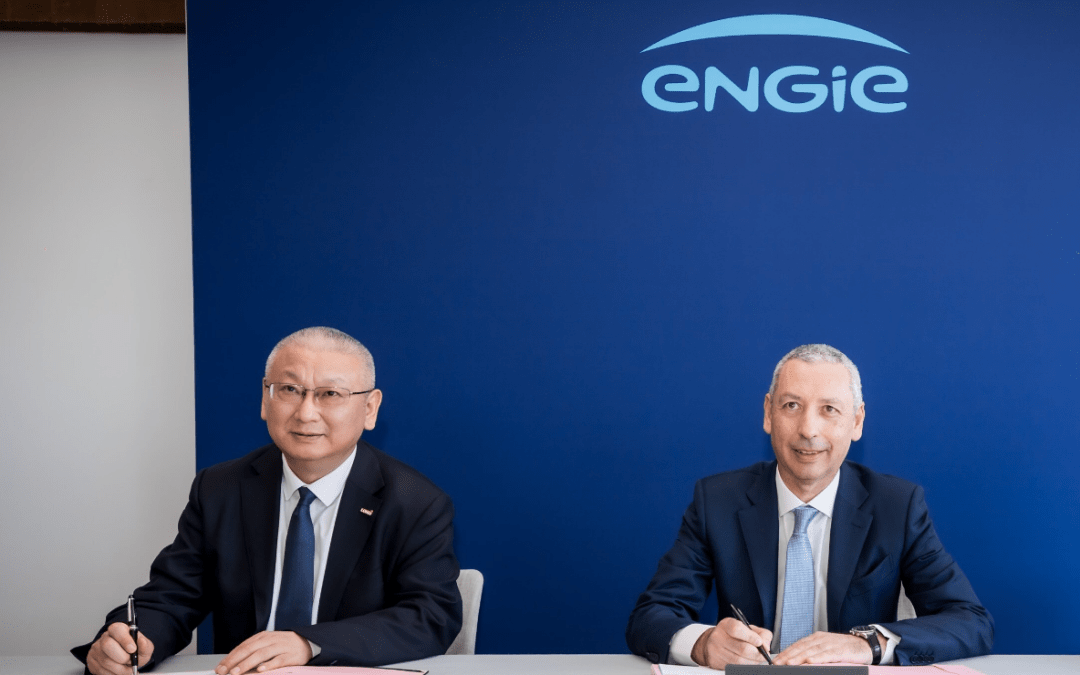
“For ENGIE, this partnership with LONGi reflects our commitment to lead the global energy transition through the adoption of cutting-edge, innovative and sustainable solutions.
This collaboration agreement will serve as a model for large-scale solar development in Middle-East and North-Africa, driving progress toward a carbon-neutral future,” said François-Xavier BOUL, ENGIE Managing Director MENA Renewables & Batteries.
This collaboration reflects LONGi’s dedication to harmonising technological advancement with environmental responsibility.
The high-power density of Hi-MO 9 modules optimises land use, contributing to more sustainable development practices. LONGi and ENGIE are committed to upholding rigorous environmental protocols throughout the project lifecycle.
[Image caption: LONGi and ENGIE Forge Powerful Partnership to Drive Solar Innovation. Image credit: LONGi]
Want to publish a press release? Submit your content here for review by our editorial team.
by Catie Owen | May 1, 2025 | Large Scale Utility Solar, Middle East
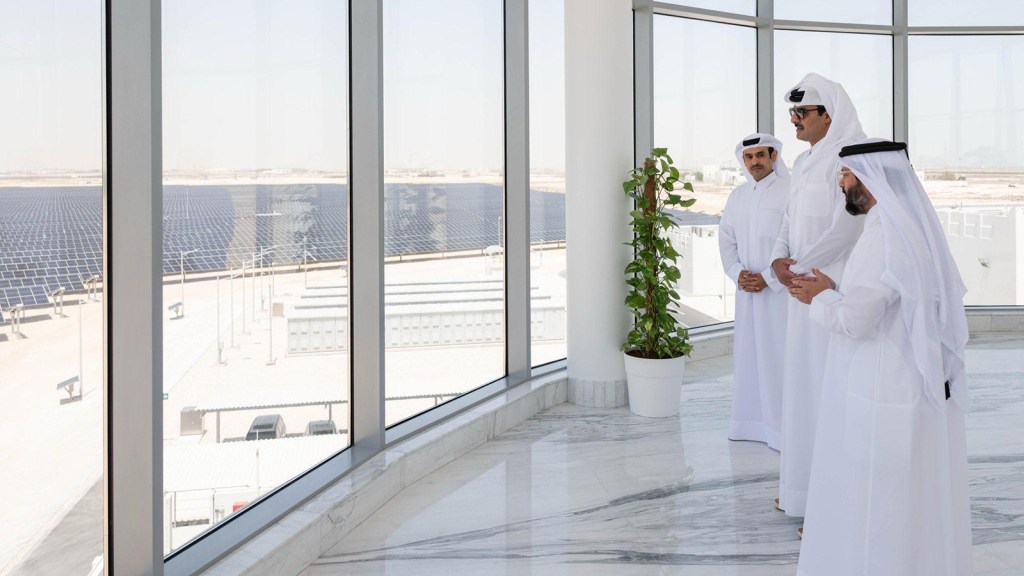
Qatar has officially inaugurated the Ras Laffan and Mesaieed solar PV power plants, which together add 875MW of capacity to the country’s renewable energy portfolio.
The new plants more than double Qatar’s solar energy production, bringing the total to 1,675 MW.
The inauguration ceremony was held at Ras Laffan Industrial City, attended by His Highness Sheikh Tamim bin Hamad Al Thani, the Amir of the State of Qatar, and senior officials, including Minister of State for Energy Affairs and QatarEnergy President and CEO, H.E. Saad Sherida Al-Kaabi.
Describing the launch as “an important step,” Minister Al-Kaabi linked the project to Qatar National Vision 2030, particularly its focus on balancing development and environmental protection.
He noted the plants will “reduce carbon dioxide emissions by about 4.7m tons annually.”
“The construction of solar power plants is one of Qatar’s most important initiatives to reduce carbon dioxide emissions, to develop sustainability projects, and to diversify electricity generation sources,” he said.
With the new facilities and the existing Al-Kharsaah plant, solar is expected to meet around 15% of the country’s peak electricity demand.
This share is projected to rise to 30% by 2029 with the anticipated 2,000 MW Dukhan solar power plant.
Minister Al-Kaabi also highlighted growing national capabilities: “We have moved beyond relying on the expertise of others… and have begun implementing such projects using our own national expertise. We are proud of them and their achievements.”
[Image caption: HH Inaugurates RLIC and MIC Solar Power Plants; Image credit: QatarEnergy]
by Catie Owen | Apr 14, 2025 | Commercial & Industrial Solar, Middle East
JinkoSolar has confirmed it will supply 1.75GW of its N-type TOPCon Tiger Neo photovoltaic modules to two major solar projects in Saudi Arabia.
The AHK2 (500MW) and MAS (1250MW) developments form part of the country’s Fifth Round Renewable Energy Program, led by EDF Renewables and SPIC Huanghe Hydropower Development Co., Ltd., with PowerChina Guizhou Engineering Corporation also involved in the contracts.
This agreement marks JinkoSolar’s second significant collaboration with EDF Renewables, following the 1.8GW PV3 Al Ajban project in Abu Dhabi.
The projects are situated in desertification-prone areas of Medina and Ha’il Provinces, where extreme temperatures, drought, and sandstorms pose ongoing challenges.
JinkoSolar’s N-type TOPCon Tiger Neo modules were selected for their high efficiency and durability under harsh environmental conditions.
Key features include a high bifaciality rate of up to 85%, low degradation rates, and strong resistance to UV damage, wind loads, and dust accumulation.
Empirical studies suggest these modules could boost overall energy yields by approximately 3.38%, with even higher gains in areas of increased ground reflectivity.
In addition to delivering clean energy, the projects aim to support desert restoration efforts by reducing ground temperatures and improving soil quality, creating conditions for vegetation recovery.
The developments align with Saudi Arabia’s Vision 2030 strategy and its National Renewable Energy Program, contributing to regional energy transition and environmental resilience.