by Catie Owen | Apr 29, 2025 | Europe, Large Scale Utility Solar, Storage
On Monday, 28 April, a widespread blackout hit Spain, Portugal, Andorra, and the south of France, with power returning to most of Spain and Portugal on Tuesday morning.
Red Electricia, Spain’s grid operator, was able to restore most of Spain’s electricity demand by the morning, while Portugal’s equivalent, REN, had 89 power substations online again by late Monday night.
The sudden power outage grounded planes, paused public transport, prevented hospitals from providing routine operations, and closed schools and public buildings.
Spanish Prime Minister Pedro Sanchez said that Spain experienced a sharp loss of 15GW of electricity in five seconds, which is 60% of the country’s entire demand.
Finding the cause
Authorities have been investigating the cause of the blackout. Initially, Portugal stated that the problem started in Spain.
Joao Conceicao, a board member of REN, blamed a “very large oscillation in electrical voltage, first in the Spanish system, which then spread to the Portuguese system”
However, Spain laid the blame on a break-up in its connection to France, with REE saying:
“The extent of the loss of power was beyond what European systems are designed to handle and caused a disconnection of the Spanish and French grids, which in turn led to the collapse of the Spanish electric system.”
A cybersecurity attack and sabotage have been widely ruled out as causes. On the broader investigation, Conceicao said: “There could be a thousand and one causes; it’s premature to assess the cause.”
The role of renewables
Despite a return of 61% of power by late Monday night, some outlets and spokespeople have blamed renewable energy for the damage.
Spain receives 56% of its electricity from renewable sources – with solar and wind taking precedence. It is one of Europe’s biggest renewable energy producers.
As the effectiveness of these renewable sources can be impacted by weather, debaters have argued that a reliance on renewables compromised Spain’s power systems and made them more vulnerable to blackouts.
However, it has also been proposed that the Iberian Peninsula’s poor connections to the European electricity market make the “energy island’s” grid less robust than wider Europe’s.
A lack of interconnectivity could make the Peninsula’s grid more vulnerable to internal issues with no external backups.
The Centre for European Reform, an independent think tank, explained that reinforcing interconnectivity across Europe’s energy markets – including the Iberian Peninsula – would allow for easier trading of the region’s abundant renewable energy.
This could, therefore, reinforce international electricity grids against vulnerabilities.
With Spain’s solar market remaining a crucial topic, don’t miss your free ticket for Solar & Storage Live España in Valencia 25-26 June 2025.
by Catie Owen | Apr 25, 2025 | Europe, Large Scale Utility Solar, Storage
Austria’s Ministry of Economic Affairs and Energy has introduced a 20% “Made in Europe” bonus for government-funded PV and energy storage projects using European-made components.
The incentive will apply to projects funded in the second fundraising round of 2025, scheduled for 23 June. It is intended to address the prevalence of cheaper Chinese solar products.
This announcement follows a similar bonus introduced last year for European solar manufacturers. Together, the two initiatives offer support for both the production and deployment of locally made components.
“A central element of this is the ‘Made in Europe’ bonus,” said economic affairs and energy minister Wolfgang Hattmannsdorfer.
“It represents regional added value and a clear commitment to Europe as an industrial location. This course is complemented by the strengthening of hydropower, the targeted expansion of electricity storage and photovoltaics.”
Austria’s 2025 funding priorities will allocate €60m for PV and storage, out of a total €70m for renewables. The remainder will go to hydropower up to €5m, biomass up to €4m, and wind up to €1m.
This represents a significant drop from the €150m distributed last year, including €135m for solar.
“We must use public funds more specifically and effectively,” said state secretary for energy Elisabeth Zehetner. “That is why we are gradually aligning our funding policy more strongly with system service and efficiency.”
From Q4 2025, only PV systems with co-located storage will be eligible for subsidies. No funding will be available during negative pricing periods, and hybrid plants will be prioritised.
These changes align with efforts to enhance system reliability, as Austria continues to experience high levels of energy curtailment.
by Catie Owen | Apr 23, 2025 | Americas, Commercial & Industrial Solar, Europe, Storage
METLEN Energy & Metals, a global industrial and energy company based in Greece, has announced the sale of its solar and BESS portfolio in Chile to Glenfarne Asset Company LLC – a New York-based proprietary investment platform.
The total capacity of the sold assets stands at 588 MW and is combined with co-located BESS with a storage capacity of 1,620 MWh.
Construction of the BESS infrastructure is still underway; however, it is anticipated to be completed within 12 months.
The transaction will be closed once the BESS facilities have been fully constructed, energised, and have the proper regulatory approvals and financing.
All solar farms in the portfolio are operational and, while they are spread across a wide geographic region, benefit from multiple interconnection nodes in Chile’s Sistema Eléctrico Nacional (SEN) grid.
METLEN CEO Evangelos Mytilineos commented in the company statement: “This is a landmark transaction for METLEN, as we pave the growth of M Renewables. We have identified the potential of Chile’s renewables market in 2020 and have successfully overcome market challenges.
“In doing so we have developed, structured – commercially and financially – and constructed these projects at the highest standard.”
Brendan Duval, Founder and CEO of Glenfarne, added, “This transaction represents a significant step in Glenfarne’s commitment to further expanding our presence in Chile’s renewable energy sector and continued growth in our business relationships with METLEN.”
Overall, the acquisition has cost Glenfarne $815m and includes the assumption of debt.
[Image credit: METLEN Energy & Metals]
by Catie Owen | Apr 17, 2025 | Americas, Commercial & Industrial Solar, Storage
Spanish renewable energy company Grenergy has announced the launch of a reverse auction in Chile for the sale of nearly 2 TWh of electricity annually from its solar and battery storage facilities.
The 1.7 TWh per year auction is being managed by GR Power, Grenergy’s energy commercialisation division in Chile.
The initiative is open to generators, retailers, and large-scale consumers seeking energy supply in the coming years. Grenergy described it as “offering an innovative and competitive way of buying and selling energy.”
The auction will supply approximately 1,400 GWh per year of stored energy during nighttime hours, alongside 300 GWh of solar generation. Delivery is scheduled between the first half of 2026 and the first half of 2027.
This marks the second time Grenergy has organised a renewable energy auction of its own. The company made history in March 2022 as the first clean energy producer in Latin America to conduct such a process.
Grenergy says the model allows a wider range of generators, energy marketers, and corporations to participate in Chile’s growing clean energy market.
The auction is being held through Match Energía, the local electricity trading platform. Applications are currently open and will be accepted until 6 May.
Grenergy has operated in Chile for over a decade and holds one of the country’s largest renewable portfolios, including 18.3 GWh of energy storage capacity and 4.1 GW of solar projects.
Among these is its flagship development, Oasis de Atacama – set to become one of the largest battery storage systems globally.
With Spain’s solar market remaining a crucial topic, don’t miss your free ticket for Solar & Storage Live España in Valencia 25-26 June 2025.
by Manas Sahu | Mar 20, 2025 | Commercial & Industrial Solar, Storage
Clean energy developer and operator Fotowatio Renewable Ventures (FRV) Australia has acquired a 140-MW solar project with storage in Victoria, which is in the final stages of permitting.
The vendor, ACEN Australia, is part of the Philippine group Ayala’s ACEN Corp (PSE:ACEN). FRV did not disclose the financial details of the transaction and financed the purchase without external funding.
The Axedale project will feature a photovoltaic (PV) park with a 50-MW/100-MWh battery energy storage system (BESS), located approximately 20 kilometres (12.4 miles) east of Bendigo. Once operational, it is expected to generate nearly 369,500 MWh of electricity annually, enough to power around 80,000 local homes. The integrated BESS will provide two hours of storage capacity.
A grid connection agreement was signed in late 2024 with transmission system operator AusNet and the Australian Energy Market Operator (AEMO).
FRV Australia is a joint venture between Abdul Latif Jameel Energy’s FRV and Canadian investor and asset manager Omers Infrastructure. The company operates eight plants with a combined capacity of almost 1 GW.
by Manas Sahu | Mar 20, 2025 | Storage
In 2024, the United States saw a 66% increase in battery storage capacity, according to the January 2025 Preliminary Monthly Electric Generator Inventory. By the end of the year, the country’s total utility-scale battery storage capacity had exceeded 26 gigawatts (GW). A further 10.4 GW of new battery storage capacity was added during the year, making it the second-largest contributor to new generating capacity after solar energy.
Although battery storage is expanding rapidly, it still represented just around 2% of the total 1,230 GW of utility-scale electricity generating capacity in the United States in 2024. However, the growth of battery storage is set to continue in 2025, with operators planning to add 19.6 GW of utility-scale battery storage to the grid, potentially setting a new record for capacity growth.
Battery storage systems do not generate electricity directly. Instead, they store electricity that has already been produced by power plants or taken from the electrical grid. These systems act as secondary sources of power, storing and supplying energy when needed.
by Manas Sahu | Mar 19, 2025 | Storage
Scottish ministers have approved plans for a 456MW battery energy storage system (BESS) in southern Scotland. The project will be developed by a subsidiary of Gresham House.
The Scottish government’s Energy Consents Unit confirmed the decision on 17 March, following an application submitted by Gresham House Devco Pipeline Ltd in April 2024.
Planning documents indicate that Dumfries and Galloway Council’s Planning Applications Committee did not raise any concerns about the proposal.
Located south of the Gretna 400kV substation, the facility will be developed by Gresham House New Energy, the renewable energy division of Gresham House, the UK’s largest owner of battery storage assets.
The site spans 13 hectares near the England-Scotland border and will be split into two sections: one housing a 56MW battery enclosure and the other a 400MW battery enclosure, each featuring a 132kV substation. This layout accommodates an existing watercourse running through the area.
According to the Energy Consents Unit’s decision letter, there was no opposition from the public. As required by Scotland’s National Planning Framework, the project needed ministerial approval, which was granted unanimously.
The Gretna Green BESS website states that the facility is expected to be operational by late 2025.
by Catie Owen | Mar 19, 2025 | Large Scale Utility Solar, Storage
Press Release
At the Energy Council in Brussels yesterday, EU Energy Ministers debated Europe’s energy security and affordability challenges.
The discussion made one thing clear: renewable energy is energy security. Replacing fossil fuel dependency with secure, homegrown, and affordable renewables is one and the same.
The Ministers also exchanged on the Affordable Energy Action Plan, revisions to the EU’s energy security framework, and preparations for next winter. While there was a strong focus on securing gas supplies, Europe’s priority must be about reducing reliance on all fossil fuels.
SolarPower Europe’s statement
Dries Acke, Deputy CEO of SolarPower Europe, commented:
“The Energy Council rightly focused on affordability and security, but we need to stop treating gas as part of the solution. The real way forward is accelerating renewables, flexibility, and electrification; ensuring that clean energy is available when and where we need it.
Solar PV is already strengthening Europe’s energy security. However, without a flexible grid, we risk curtailing renewables and remaining exposed to fossil volatility.
Investing in flexibility and storage means energy autonomy. A system built on renewables, flexibility, storage and electrification, could save EU taxpayers €30 billion annually on system costs by 2030, and €160 billion per year by 2040.
To make this happen, we call on the European Commission and EU Member States to commit to an EU Flexibility Package, with a dedicated Storage Action Plan, complementing the Grids Package. We know we need to double grid interconnection capacity by 2030.
This is well reflected in the EU Action Plan for Grids and upcoming Grids Package under the Clean Industrial Deal (CID). But we need ten times more battery storage by 2030, at least!
Investing in storage and flexibility is the way to structurally decouple our economy from imported fossil fuels, making energy more affordable, less volatile, and more secure.”
Notes
- In 2024 alone solar PV installed 66 GW in the EU; equal to powering 20 million more homes and businesses with low-cost, safe and clean energy. (SolarPower Europe)
- In 2024, solar overtook coal generation for the first time in the EU. New solar and wind together saved the EU € 59 billion fossil fuel import costs since 2019. (Ember)
- A flexible and electrified energy system based on renewables could save EU taxpayers €30 billion annually on energy system costs savings by 2030, and €160 billion per year by 2040. Discover Mission Solar 2040.
- We need to double grid interconnection capacity and at least multiply by 10 our battery energy storage capacity by 2030. Discover Mission Solar 2040.
Want to publish a press release? Submit your content here for review by our editorial team.
by Catie Owen | Mar 14, 2025 | Storage
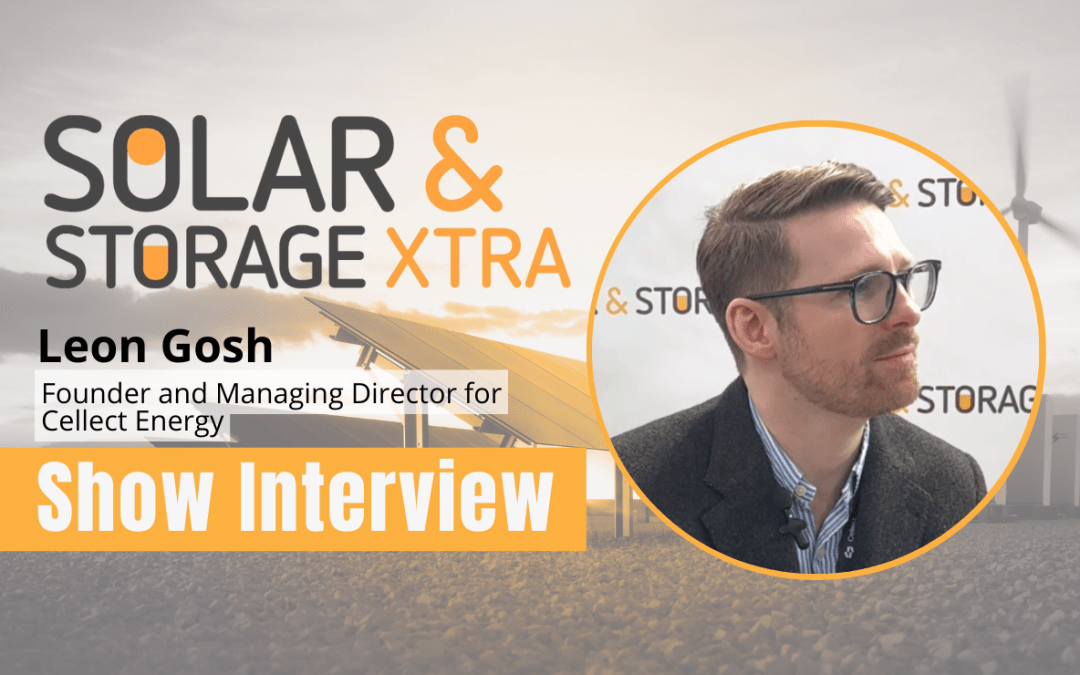
At the inaugural Solar & Storage Live España, Leon Gosh, Founder and Managing Director of Cellect Energy, spoke to Solar&StorageXtra about the evolving role of energy storage in the renewable energy sector.
He also discussed the key challenges of operating battery energy storage systems (BESS) and shared his excitement about the growing Spanish solar market.
“The solar and wind markets have matured over decades, but energy storage introduces complexities that operators and marketers must navigate.”
Interview with Leon Gosh, Founder and Managing Director of Cellect Energy
Xtra: What is Cellect Energy’s role in the industry?
Leon: Cellect Energy focuses on overcoming challenges in operating utility-scale energy storage systems. We believe energy storage is the key to a 100% renewable energy landscape, but its rapid expansion presents new hurdles.
Our approach is to develop innovative solutions, primarily software-as-a-service products, combined with hardware, to simplify operations for asset managers in the energy storage sector.
Xtra: How will your presentation at Solar & Storage Live in Barcelona address the challenges facing the BESS industry?
Leon: My presentation will focus on the challenges of operating battery energy storage assets compared to more established technologies like solar and wind. The solar and wind markets have matured over decades, but energy storage introduces complexities that operators and marketers must navigate.
We’ve identified four key challenges:
Complex site integration: Connecting battery systems to monitoring and management solutions differs vastly from solar and wind. Each technology requires deep technical and IT knowledge to ensure no critical data points are missed.
Diverse stakeholders: Unlike solar and wind, energy storage involves a wider range of players, including direct marketers, O&M service providers, financial asset managers, and now reserve providers and optimisation startups. Multi-market optimisation – combining ancillary services with energy trading – adds another layer of complexity, requiring seamless collaboration between various partners.
Complex warranties: Unlike solar, where operations are dictated by sunlight, battery systems require active management. Poor operation can significantly reduce a battery’s lifespan. Performance warranties are crucial, often spanning 10–20 years, and come with strict operational conditions.
Deviation from these conditions can void warranties, affecting financial viability. At Cellect, we offer a specialised battery performance warranty tracker and forecasting model to automate warranty compliance.
Big data management: Battery storage generates vast amounts of data—billions of data points daily. Traditional asset management platforms built for solar and wind often struggle with this volume. Our solution ensures scalability, economic efficiency, and seamless integration to prevent data overload issues.
Xtra: What products has Cellect brought to the show?
Leon: Our booth highlights our flagship product, the Cellect Platform, a dedicated asset management solution for utility-scale battery storage. Many existing platforms were designed for solar and wind and struggle to adapt to battery storage.
We’ve spent three years focusing exclusively on this niche, ensuring our platform meets the unique demands of the sector.
Alongside the Cellect Platform, we offer:
- Cellect Box – an on-site control cabinet for data aggregation and control.
- Cellect Control – a software-as-a-service product for wholesale and balancing market applications.
We don’t provide multi-market optimisation ourselves but instead build a strong partner network with optimisation companies, ensuring a seamless, plug-and-play experience for our clients.
Xtra: Why has Cellect Energy chosen to attend Solar & Storage Live España?
Leon Gosh: As a Barcelona-headquartered company, we’re excited to have a major industry event in our home city. Though I’m originally from Germany, I’ve lived in Barcelona for six years, and it’s an incredible place for a startup, offering an international and innovative environment.
This event signals the growth of Spain’s solar and storage market. While the UK remains the biggest market, Barcelona’s selection as a host city highlights Spain’s increasing role in the industry.
We’re here to expand our partner network and engage in meaningful discussions about the future of energy storage.
With the London edition of Solar & Storage Live only weeks away, don’t forget to register for your free ticket and join us at the London ExCeL from 2-3 April 2025 – or find a Solar & Storage Live event closer to home.
by Catie Owen | Mar 12, 2025 | Storage
The Office of Gas and Electricity Markets (Ofgem), the UK’s independent energy regulator, has published a Technical Decision Document addressing the long-duration electricity storage (LDES) cap-and-floor scheme.
Ofgem released the document on behalf of the UK Government on 11 March, which explains the scheme’s eligibility requirements and rollout.
LDES scheme
LDES assets that provide continuous rated power for eight hours or more will be eligible for the scheme – an increase from six hours minimum proposed in earlier discussions due to industry feedback.
Notably, most storage projects deployed in the UK are lithium-ion BESS that run for between one to three hours.
The scheme will provide a safety net for LDES projects that might not be otherwise commercially viable, as eligible assets will receive cap-and-floor revenue protection for 20-25 years. Through this, all capital costs can be recovered.
Through the scheme – first announced in autumn 2024 – the UK Government aims to deploy 2.7GW – 7.7GW of LDES capacity by 2035.
The streams
The Technical document introduces several application rounds, with ‘stream 1’ calling for projects with a 100 MW minimum capacity and ‘stream 2’ following with 50 MW.
Established BESS technologies that meet Ofgem’s technology readiness nine (TRL9) criteria will be eligible for stream 1. These technologies are reputable, marketable products – such as lithium-ion batteries.
However, lithium-ion batteries will be assessed differently from lithium-ion battery storage due to the Government’s Clean Power 2030 plan. Ofgem has indicated that the battery applications will be “sufficiently similar” to battery storage.
For stream 2, TRL 8 technologies will be eligible. These include liquid air electricity storage (LAES), compressed air electricity storage (CAES), and flow batteries.
In Ofgem’s Project Assessment in Q2 of 2026, initial assessments of cost will be made and finalised cap-and-floor levels determined.
Applications
Applicants will need to demonstrate that a grid connection application has already been submitted, with planning consent enabling an online date of before 2030. The assessment phase is scheduled for Q3 2025, so projects must have planning permission in place before this.
They will additionally need to provide production cost estimates and proof of upfront engineering.
Applications will open in April 2025.
With the London edition of Solar & Storage Live only weeks away, don’t forget to register for your free ticket and join us at the London ExCeL from 2-3 April 2025 – or find a Solar & Storage Live event closer to home.
by Catie Owen | Mar 10, 2025 | Storage
Press Release
JinkoSolar, the global leading PV and ESS supplier, is proud to announce that 28 units of SunTera energy storage systems have successfully arrived at project sites in Australia for an 84MWh D-BESS project.
This equipment is now being installed and commissioned, marking a significant step forward in the project’s timeline.
As the system integrator, Jinko ESS supplied complete solutions including an Ingeteam medium voltage power station (MVPS), AUX transformer, and industry-leading liquid-cooled containerised ESS systems – customised with noise reduction kits to meet the project requirements.
“The arrival of the first batch of SunTera systems and the commencement of commissioning is a testament to our commitment to delivering advanced, customised and fully compliant energy storage solutions,” said Dan Su, Head of Jinko ESS Australia.
“All systems have undergone rigorous third-party certifications and comply with Australian electrical safety standards, including AS 3000. Additionally, the systems have been pre-commissioned with the Ingeteam PCS to ensure a plug-and-play experience, enabling smooth and efficient on-site commissioning.”
With the project commissioning now underway, Jinko ESS’s local team is on-site providing comprehensive technical support, including assistance with the commissioning process, unloading operations support, and mechanical installation guidance.
This hands-on involvement ensures seamless deployment of the remaining systems and highlights Jinko ESS’s commitment to delivering end-to-end solutions.
Want to publish a press release? Submit your content here for review by our editorial team.
by Catie Owen | Mar 10, 2025 | Storage
Canadian Solar has announced that its subsidiary e-STORAGE has secured Battery Supply Agreements and Long-Term Service Agreements (LTSA) for two major battery energy storage projects in the United States, developed by Aypa Power.
The agreements cover a 160 MW AC/806 MWh DC battery energy storage system (BESS) in California and a 200 MW AC/998 MWh DC BESS in Texas.
These projects will use approximately 370 SolBank 3.0 units, with construction scheduled to start in Q3 2025. Following commissioning, e-STORAGE will oversee maintenance and operations under a 20-year LTSA to ensure performance and reliability.
Colin Parkin, President of e-STORAGE, said: “We are proud to support Aypa Power in delivering utility-scale energy storage projects that will play a pivotal role in enhancing grid flexibility and reliability.
“These projects highlight the increasing role of battery storage in stabilising renewable energy supply, and we remain committed to driving innovation and delivering high-quality solutions that support a cleaner, more sustainable energy future.”
The projects are expected to improve grid resilience and support renewable energy integration in key U.S. markets.
by Catie Owen | Mar 6, 2025 | Storage
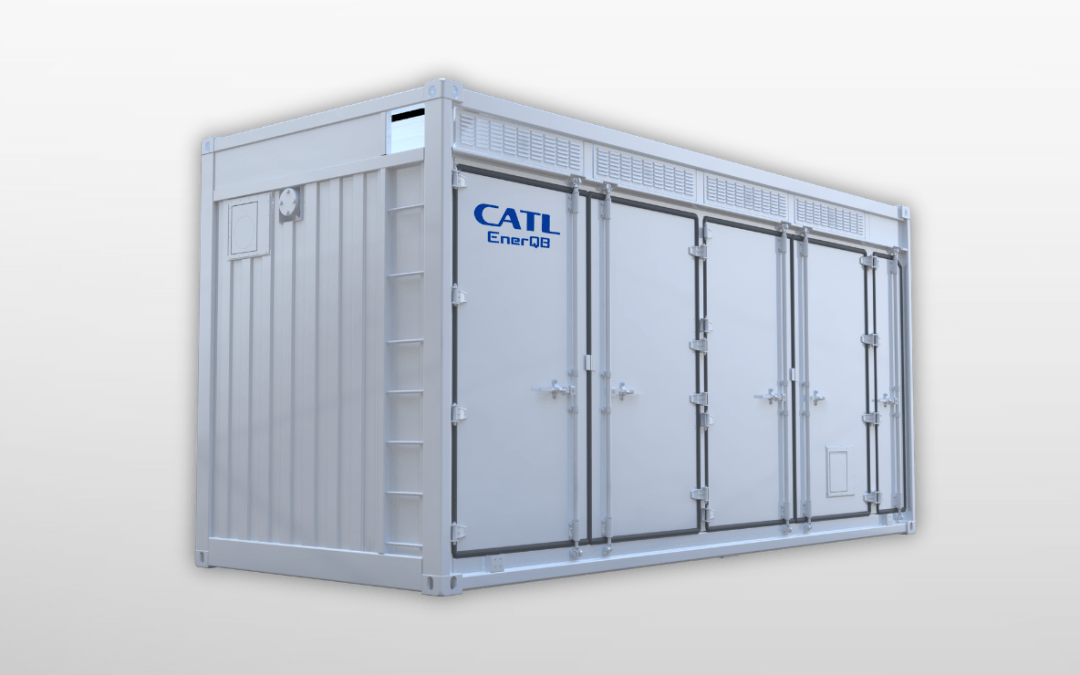
Quinbrook Infrastructure Partners has partnered with CATL, a leading battery energy storage system (BESS) manufacturer, to develop an 8-hour battery storage solution – doubling the current industry standard, according to a joint release.
Developed in collaboration with CATL and Quinbrook affiliate Private Energy Partners, the system will be deployed across multiple sites in Australia.
Quinbrook plans to roll out over 3 GW of long-duration storage capacity for industrial customers.
Advancing renewable reliability
The innovation aims to extend solar power availability, reducing reliance on traditional energy sources. “Projects in high year-round solar locations can already produce power for up to 14 hours a day. Doubling the storage duration improves cost competitiveness to a significant degree,” the company stated.
The system enables industrial customers to run two 8-hour shifts entirely on solar power while lowering grid costs and reducing strain on baseload plants.
“This exciting advance brings us one step closer to 24/7 renewable power,” said David Scaysbrook, Quinbrook Co-founder and Managing Partner.
“We believe we are on the cusp of a solution enabling our Future Made in Australia ambitions.”
Deployment and grid impact
Initial deployment sites include Quinbrook’s Supernode site in Brisbane, Australia’s largest BESS campus, along with locations near heavy industry in Gladstone and the Lansdown Eco-Industrial Precinct in Townsville.
The system is expected to enhance grid stability and reduce power costs.
Quinbrook will also integrate its Quintrace platform to optimise carbon emissions. “Quintrace enables carbon emissions impact to be factored into operational decision-making,” said Brian Restall, Quinbrook Managing Director for APAC.
Quinbrook sees this as a step toward making Australia a leader in clean energy. “Whoever controls critical minerals, controls the energy transition,” said Scaysbrook.
“Australia is well placed to leverage its cost advantages and resource wealth to become a leading host nation for new export industries.”
CATL expressed enthusiasm for the collaboration. “By combining our cutting-edge battery technology with Quinbrook’s vision, we aim to accelerate the global transition to reliable, low-carbon power,” said Tan Libin, CATL Chief Customer Officer.
Quinbrook aims to support Australia’s green energy ambitions while advancing the economic feasibility of renewable energy-powered industrial growth.
[Image credit: Quinbrook and CATL]
Solar & Storage Live Queensland is on the horizon! Don’t miss your free ticket to the Brisbane event on 26-27 March. Or, find a Solar & Storage Live event near you.
by Catie Owen | Mar 3, 2025 | Storage
Aurora Energy Research has released the latest edition of its European Battery Markets Attractiveness Report (BatMAR), ranking Italy, Great Britain, and Germany as the most attractive markets for BESS investment.
The report, covering 28 European countries, also examines market trends and regulatory changes.
Italy tops the ranking, supported by its 50 GWh battery capacity target for 2030 and the opening of ancillary markets to BESS.
The UK follows, with a strong installed capacity of 4.3 GW, projected to more than double to 10.6 GW, and attractive revenue opportunities.
Germany ranks third, overtaking Ireland’s I-SEM, due to its strong market outlook and ambitious renewable energy goals.
Other markets
Beyond these leading markets, Belgium, Hungary, and Greece are emerging as key opportunities, particularly for smaller investors or those with a higher risk appetite, according to Aurora Energy Research.
Europe’s grid-scale BESS capacity, which stood at 10.3 GW as of October 2024, is forecast to grow fivefold to 55 GW by 2030 and reach 126 GW by 2050. These additions represent a €100 billion investment opportunity through 2050, including repowering projects.
“The grid-scale energy storage market continues to be strong, with investment pipelines growing due to promising opportunities,” said Eva Zimmermann, Senior Associate Flexible Energy, Pan European Power Markets at Aurora Energy Research.
However, she noted that market entry varies, as Italy presents greenfield opportunities while Great Britain’s pipeline is already well-developed.
Jörn Richstein, Research Lead at Aurora Energy Research, discussed the importance of flexibility in the energy transition, noting that evolving revenue opportunities make the market complex and require a deep understanding of local power developments.
by Catie Owen | Feb 14, 2025 | Commercial & Industrial Solar, Storage
The Legal & General (L&G) NTR Clean Power Fund has acquired a ready-to-build solar and battery energy storage system (BESS) portfolio from Strategic Power Projects (SPP).
Known as Project Monvallet, the portfolio includes a solar PV power plant and a BESS project with a combined capacity of 211 MW.
Both projects have received planning approval, with construction of the solar PV power plant expected to start later this year and the BESS project scheduled for 2026.
Part of the portfolio, Hazelboro Solar, has secured a contract for difference (CfD) under the Irish Renewable Energy Support Scheme (RESS). L&G NTR is seeking a corporate power purchase agreement (CPPA) partner for the Monvallet project.
This is the third solar transaction for the L&G NTR Clean Power Fund and its second acquisition in Ireland.
The deal brings the Fund’s total capacity in Ireland to over 326 MW, marking its ninth and second acquisition this year.
In January, the Fund also acquired the 115 MW Ballyteige Solar project in County Offaly from RES. Ballyteige, which received planning approval in 2022, is expected to begin construction in 2027.
Anthony Doherty, Chief Investment Officer at NTR, said: “This is a fantastic co-located solar and BESS project in a market we know well and one where we can look to deliver strong results for the Fund’s investors… We are delighted to be working with SPP on this portfolio.”
Bill Hughes, global head of private markets at L&G, added: “The addition of co-located BESS and solar assets further diversifies both the lifecycle stages and geographical spread of our investments.”
by Catie Owen | Feb 11, 2025 | Commercial & Industrial Solar, Storage
At Solar & Storage Live UK 2024 in Birmingham, GreenEnco Founder and CEO Dr Jyotirmoy Roy, and COO Emmanuel Kwafo, discussed the advisory firm’s approach to addressing challenges in the renewable energy sector.
The pair discussed trends in the solar and storage and EV sectors, alongside using solar assets to help the commercial and industrial sector achieve their net-zero goals.
Interview with Dr Jyotirmoy Roy and Emmanuel Kwafo, CEO and COO at GreenEnco
“Every stakeholder in the C&I sector has targets to meet, but we need to ensure that the systems being deployed undergo proper due diligence and risk assessment.”
Xtra: What is GreenEnco’s mission in the industry?
Jyotirmoy: At GreenEnco, we focus on providing solutions rather than just systems or products. We integrate different technologies – like solar, energy storage, and solar EVs – into tailored solutions.
For example, we promote “solar EVs” because traditional EVs might not be powered by green sources. We aim to innovate and bring these solutions to the market.
We also offer technical advisory services like lender and owner engineering, working with developers, funds, and banks on project financing and technical due diligence, whether for new builds or mergers and acquisitions.
Another key service is asset optimisation using our PV Asset Performance Management (PVAPM) technology, which increases solar generation efficiency.
This algorithm, developed during my academic research, has been validated through real-world applications across six markets, including the UK, delivering an average 8% uplift in generation for existing solar assets.
Emmanuel: We’re very passionate about this industry and have been in it for a long time. GreenEnco’s mission is ultimately about creating a better world in a changing climate.
Xtra: Dr Jyotirmoy, can you tell us about your presentation at Solar & Storage Live?
Jyotirmoy: I spoke about how the commercial and industrial (C&I) sector can transition to net zero.
There’s a lot of opportunity in the market, but it’s crucial to approach this carefully. Every stakeholder in the C&I sector has targets to meet, but we need to ensure that the systems being deployed undergo proper due diligence and risk assessment.
The presentation covered the current market landscape, the risks involved in large-scale C&I projects, and how to manage these risks successfully.
Xtra: What trends in the industry should we be paying closer attention to?
Jyotirmoy: One major trend is the rapid growth of utility-scale and commercial projects. Project sizes are getting bigger, and the overall scale of the industry is expanding quickly.
We’re also seeing significant improvements in the efficiency of products like solar modules, inverters, and battery storage. Battery storage, in particular, is becoming a critical component in the net-zero transition.
Even though we’ve made progress, we’re still just scratching the surface of what battery storage can do – whether it’s supporting grid infrastructure or enabling more renewable energy integration into the network.
The market is evolving fast, and the increasing complexity brings exciting new challenges.
Emmanuel: The way we deliver projects has changed. Traditional methods don’t always work in today’s market – you need to be more flexible and adaptable. The industry is moving so fast that it’s an exciting time to be involved.
Xtra: Who have you met at Solar & Storage Live?
Emmanuel: We’ve met a great mix of people (at the show). We’ve spoken to investors, developers, EV charging companies, and even people who are completely new to the industry.
Some attendees are here just to explore renewable energy and learn about the latest technologies, which has prompted great conversations.
Jyotirmoy: What’s particularly interesting this year (2024) is the number of new faces. This event has been around for a long time. It started in 2010 in a much smaller venue with only 10 exhibitors. I was working for a different company back then, and it’s amazing to see how much it has grown.
In those early days, the UK solar market was booming thanks to feed-in tariffs and ROC schemes. After that, we saw some major changes in the industry.
But now, it feels like there’s a resurgence. There’s a lot of energy and excitement again, and it’s great to see people from such diverse backgrounds getting involved.
Xtra: Emmanuel, as a long-time visitor and exhibitor at Solar & Storage Live, how has the journey been for you?
Emmanuel: I’ve been coming here for over a decade, and it’s been amazing to watch the event grow. Last year was our first time exhibiting, and the Birmingham venue was already much bigger than it used to be. This year, it’s grown even more, and the level of interest has been incredible.
It’s great to connect with people, share knowledge, and see how the industry has evolved. The conversations are getting more sophisticated, and the technology is advancing rapidly. It’s been fantastic to be part of this journey.
Missed out on Solar & Storage Live, or want to come back for more? Don’t miss the London edition from 2-3 April 2025 – or find a Solar & Storage Live event closer to home.
by Catie Owen | Feb 10, 2025 | Storage
Freyr Battery has cancelled its plans to build a battery manufacturing facility in Coweta County, Georgia.
Initially announced in 2022 as “Giga America,” the first phase of the project was expected to deliver 34 GWh of battery capacity with an investment of $1.7bn.
The multi-phase project was projected to create more than 720 jobs and attract a total investment of $2.6bn by 2029.
Freyr cited rising interest rates, declining battery prices, and a change in leadership as reasons for abandoning the project.
“We made this decision after thorough consideration of market conditions and internal priorities,” said Jason Peace, Freyr’s senior vice president of business development, in a letter to the Coweta County Development Authority.
The company plans to sell the 368-acre site for $50m, with the transaction expected to close in February 2025. Net proceeds are estimated at $22.5m after repaying state and local grants.
Despite this shift, Freyr remains focused on expanding in the U.S. The company announced it is relocating its global headquarters to Austin, Texas, and recently acquired U.S. solar manufacturing assets from Trina Solar for $340m.
These assets include a 5 GW solar module facility in Wilmer, Texas, which began production in late 2024 and will ramp up this year. Freyr also plans to build a 5 GW solar cell facility, with construction expected to start in Q2 2025 and production beginning in 2026.
Freyr continues constructing its flagship Giga Arctic factory in Norway, which will have a nameplate capacity of 29 GWh. The company sees these efforts as key steps toward building a vertically integrated manufacturing footprint in the renewable energy sector.
by Catie Owen | Feb 10, 2025 | Large Scale Utility Solar, Storage
Masdar, a UAE-based clean energy company, announced its preferred suppliers and contractors for the world’s first “around-the-clock” large-scale solar and storage project.
JA Solar and Jinko Solar have been selected as preferred PV module suppliers, each providing 2.6GW of capacity using TopCon technology.
Battery manufacturer CATL will supply its TENER battery energy storage system (BESS) technology, offering 19 gigawatt-hours (GWh) of storage capacity.
Larsen & Toubro and POWERCHINA were named preferred Engineering, Procurement, and Construction (EPC) contractors.
Masdar, in collaboration with Emirates Water and Electricity Company (EWEC), is developing the 5.2GW solar PV plant with 19GWh of battery storage, reportedly making it the largest project of its kind globally.
“This record-breaking project is a giant step in overcoming the intermittency challenges of renewables, enabling clean energy dispatch 24/7,” said Abdulaziz Alobaidli, Chief Operating Officer for Masdar.
The initiative supports the UAE Energy Strategy 2050 and aligns with the nation’s climate action commitments under the COP28 UAE Consensus.
by Catie Owen | Feb 7, 2025 | Large Scale Utility Solar, Storage
Somalia’s Ministry of Energy and Water Resources has issued a tender for a hybrid solar-plus-storage project at Mogadishu’s Jazeera Power Plant.
The project involves the design, supply, installation, testing, and commissioning of a 55 MW solar plant with a 160 MWh battery energy storage system (BESS) as part of the Accelerating Sustainable and Clean Energy Access Transformation in Somalia program, funded by the World Bank.
A pre-bid conference will be held on March 13, with applications due by April 14.
Additionally, a separate tender has been launched for a 10 MW solar plant with a 20 MWh BESS, with a February 10 deadline.
In January, the government opened bidding for off-grid solar systems with BESS to power 28 educational facilities across two regions. Applications for that tender are due by March 12.
Somalia’s cumulative installed photovoltaic (PV) capacity reached 51 MW in 2023, up from 47 MW in 2022, according to the International Renewable Energy Agency (IRENA).
by Catie Owen | Feb 7, 2025 | Commercial & Industrial Solar, Storage
Enel North America has launched its Estonian Solar project in Texas, featuring 202 MW of solar capacity paired with a 104 MW BESS, the company announced Thursday.
The company is one of the largest renewable energy operators in Texas, with about 5 GW of installed wind and solar capacity and 1.3 GW of battery storage. It has signed over 100 PPAs in North America, totalling 7.3 GW of contracted capacity.
The Estonian Solar Project is expected to generate approximately 499 GWh of electricity annually in Delta County. It is supported by power purchase agreements (PPAs) with BXP Inc (NYSE: BXP) for 21 MW and Capri Holdings Limited.
“The Estonian project illustrates how the private sector will continue to lead the way in the American energy transition,” said Stephen Pike, head of Enel Green Power North America.
Enel emphasised its commitment to providing clean power and flexible storage to help commercial and industrial clients achieve their decarbonisation goals.