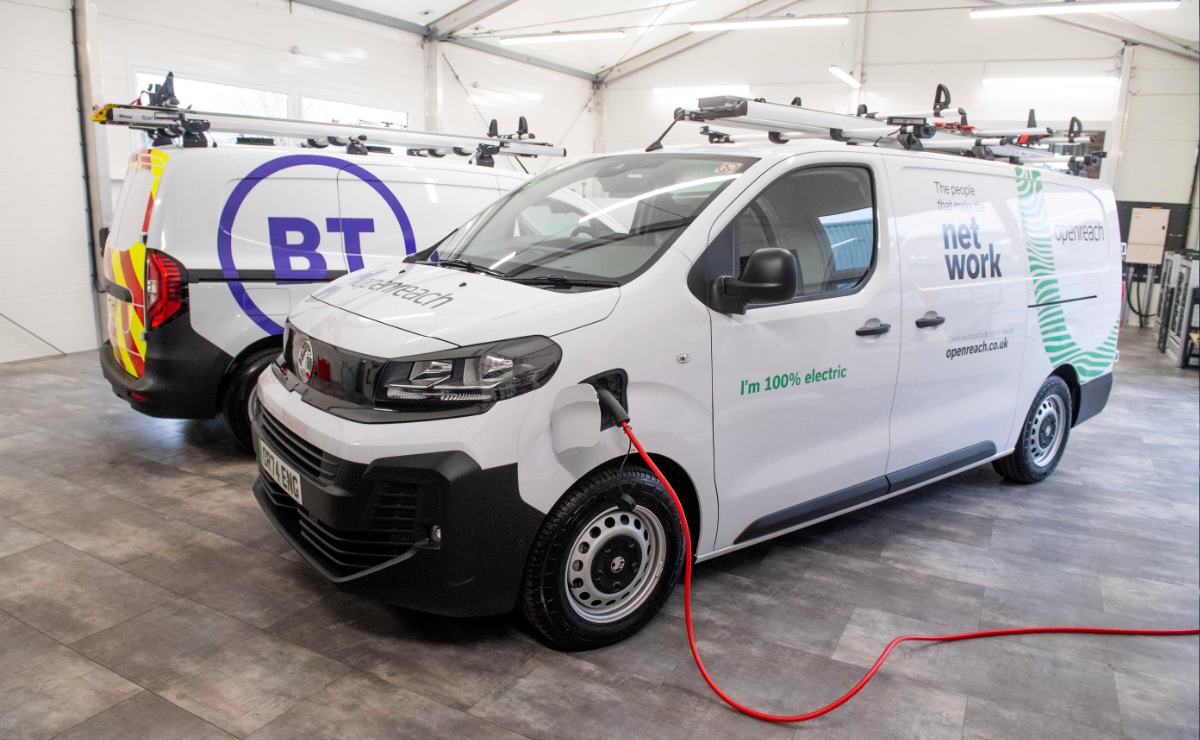
Islington Council, the body responsible for the London Borough of Islington in the UK, has been hard at work decarbonising its fleet vehicles.
Following the Council’s climate emergency announcement in 2019, it has been making concerted efforts to reduce its measured annual CO2 emissions from its transport through decarbonisation.
Measuring at 109,884 tonnes, the borough’s transport accounted for 16% of the entire borough’s total emissions.
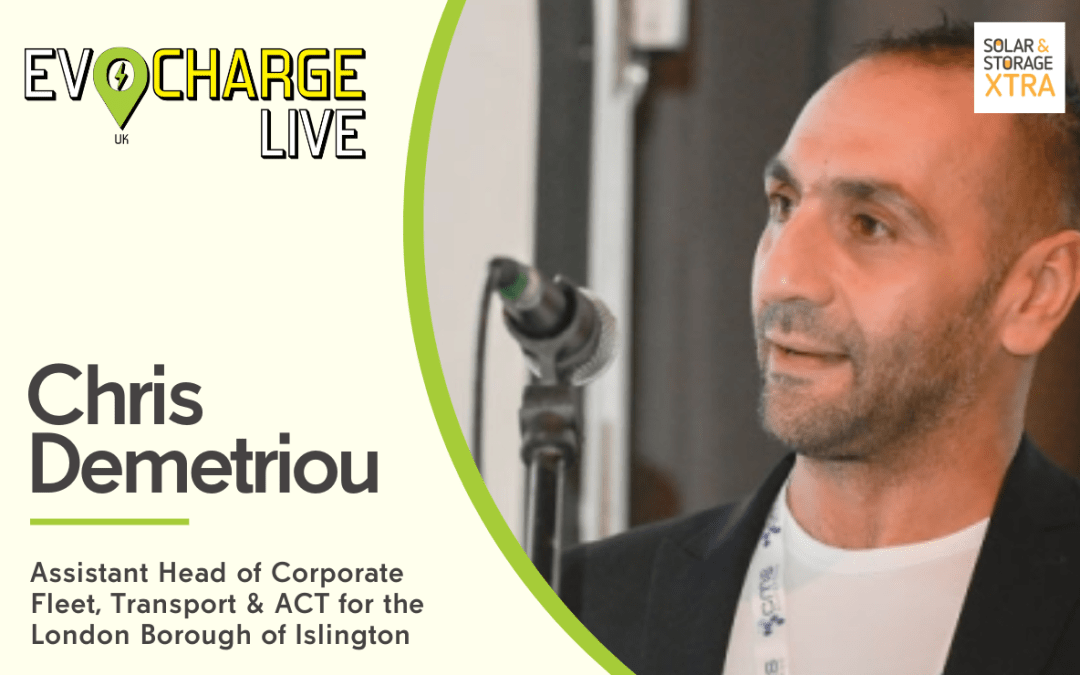
We visited the Islington Waste and Recycling Facilities Office to speak to Chris Demetriou, Assistant Director of Corporate Fleet, Transport and Accessible Community Transport at the London Borough of Islington, about the Council’s fleet decarbonisation project.
What is Islington Council’s overarching strategy for decarbonising its fleet?
Chris: Islington Council declared a climate emergency in 2019, like many other councils, and we’re actively addressing it. Our Vision 2030 strategy, titled Building a Brighter Future, outlines our approach to decarbonising all aspects of the council – from transport to buildings.
We have a fleet of 550 vehicles, and we aim to fully decarbonise it by 2030. We’ve already transitioned about 130 vehicles, including not just cars and vans, but larger ones like refuse collection vehicles, cage tippers, cargo bikes, and sweepers.
While we’re making good progress, we’re also working to reduce the size of the fleet, recognising that we’re a compact borough of just six square miles.
Over the years, service insourcing has expanded the fleet significantly, and our challenge now is to green a diverse set of vehicles and meet that 2030 goal.
Have there been any logistical challenges in implementing EVs, and is the Council anticipating any?
Chris: Absolutely! Transitioning a large and varied fleet is complex. It’s easier to electrify cars and vans, especially those housed at our main depot with charging infrastructure.
 The heavy-duty vehicles, like refuse trucks and buses, are a bigger challenge due to reliability concerns. Many are first- or second-generation EVs, and they need to match the reliability of the diesel ones they replace.
Power infrastructure has been a major hurdle. We quickly maxed out our original 1250 kVA capacity when we had only about a dozen EVs.
It took four years to install a new high-voltage substation. Each site we deploy EVs at needs new meters and power upgrades – no small task in London, where we’re all fighting for energy.
Currently, we have three and a half megawatts available at our depot, which should be enough, but we’ll need to smart-charge vehicles as the fleet expands.
Cost is another issue. Smaller EVs are becoming affordable, but large electric vehicles are still pricey.
What benefits will Islington’s residents see in the future?
Chris: While we often talk about the climate crisis, we’re also facing a health crisis, particularly in urban areas like Islington.
Air quality is poorer in less affluent wards, and we’ve seen rising rates of respiratory disease, especially among children. Decarbonising the fleet will help tackle this.
Our 550 vehicles produce around 3,000 tonnes of CO₂ annually, and eliminating that by 2030 will make a huge difference.
There are also financial benefits. An electric refuse vehicle costs around £3,500–£4,000 per annum to charge, compared to £26,000–£27,000 in diesel fuel costs. Maintenance costs are also lower for EVs.
Over time, taxpayers will see the savings. While upfront costs remain high, EVs are expected to last longer than their diesel counterparts, making them a smart investment.
What has the feedback been from staff, and what schemes are in place to support their transition to EVs?
Chris: Drivers love the EVs! Sure, there was hesitation at first, as with all new things, but that quickly turned into appreciation. They’re fully on board with the change.
We’ve had drivers tell us they no longer permanently suffer from migraines from the diesel and don’t go home stinking of petrol, especially those who previously drove noisy, smelly sweepers. Those were benefits we hadn’t expected, so it has been powerful feedback to receive.
 Reliability is still a concern, particularly for the bigger vehicles. They’re essential frontline machines, and we can’t afford service disruptions. But when the EVs work well, staff really get behind them.
Our technicians are adapting too. All are trained to EV Level 1 to 3, though none yet have Level 4 high-voltage certification – that’ll be coming soon.
Fortunately, long vehicle warranties mean manufacturers are still involved in maintenance. As EVs become more common, our team will gain more high-voltage expertise.
We’ve got a mix of older and younger staff. The newer recruits are seeing the transition from diesel to electric systems and will soon be experts in both.
How will the council measure the impact of its fleet decarbonisation?
Chris: Our key metric is the reduction of the 3,000 tonnes of CO₂ we measured back in 2019 – that’s the big target.
But we’re also focused on reducing particulate matter (PM2.5) and nitrogen oxides (NOx), which still come from tyres and brake wear, even with EVs.
We’ve partnered with a company called CASI (Capacity-building Alliance of Sustainable Investment) whose platform lets us track emissions data across our fleet. This helps us compare traditional and electric vehicle performance in real-time.
We’re also looking at air quality data in deprived areas. That’s where we’re deliberately deploying EVs first – to help the people who are suffering the most from pollution.
What advice would you provide other local authorities – or even businesses – considering similar projects?
Chris: Start small. Identify your low-hanging fruit, such as the vehicles doing short trips or light work, and transition them first. Use your telematics data to understand vehicle usage and build from there. That’s what we did.
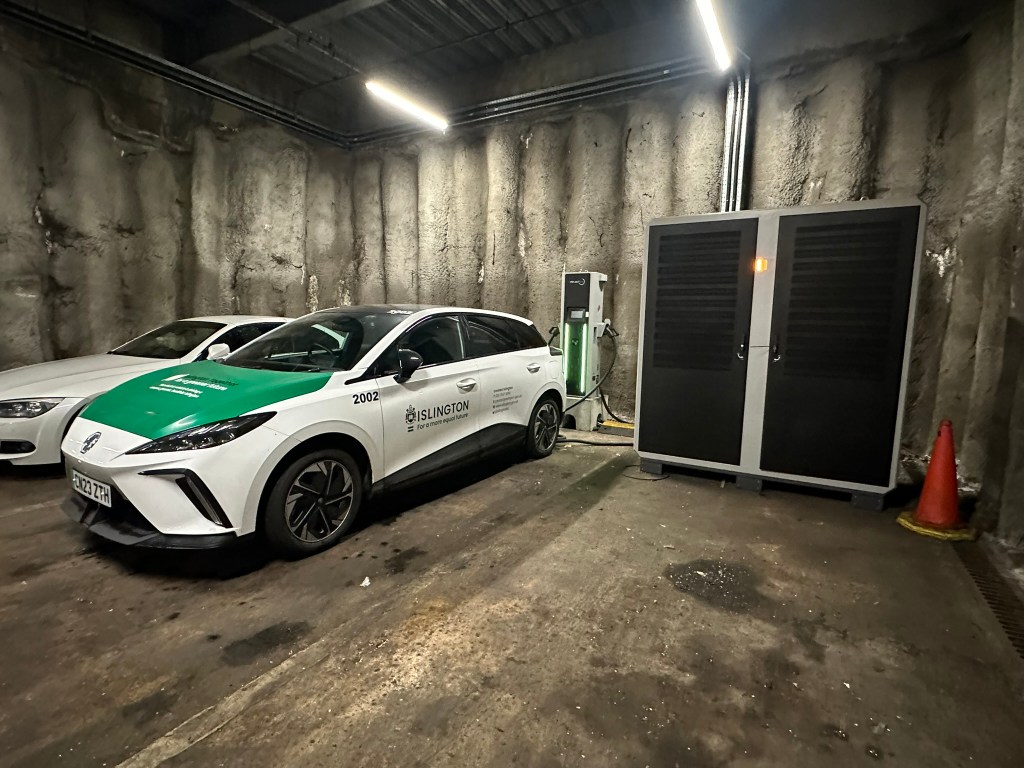 Next, get your charging infrastructure in place early. Across our sites, we’ve installed more than 140 AC and DC charging sockets.
Once you’ve started, don’t shy away from the heavy-duty vehicles. They’re responsible for most of your emissions. Yes, they’re costly and more complex, but that’s where the biggest impact to the climate and public health lies. We kept this in mind.
Notably, our borough is only six square miles, so range anxiety isn’t an issue. For us, electrification works, and we’re fully committed to it. While range anxiety might be more pressing in rural areas, we believe the principles still apply.
Can you give us a brief preview of what your presentation at EVCharge Live 2025 will include?
Chris: My presentation will cover the real story of our electrification journey – what we did, how we did it, and the hurdles we faced.
It wasn’t easy. From installing our own substation to sourcing and maintaining our vehicles, we’ve done everything in-house. That’s given us a solid understanding of what works and what doesn’t.
We’re now looking ahead to future-proofing our fleet. A big focus for us is vehicle-to-grid (V2G) technology. We’ve got two refuse trucks capable of discharging energy back into our buildings and, potentially, the grid. We’re exploring the idea of turning our depot into a microgrid that can generate and trade energy.
At the show, I’ll be emphasising that electrification isn’t just about swapping vehicles, it’s about energy as a resource. Done right, it can transform how local authorities operate and deliver long-term benefits beyond just cutting carbon.
EVCharge Live 2025, co-located with Solar & Storage Live UK, is the central hub for the EV charging revolution. Join the community of industry leaders by securing a free ticket to the September event.