by Catie Owen | Jan 6, 2026 | Americas, Commercial & Industrial Solar, Everything Installer
The return of Donald Trump to the White House created seismic changes to the geopolitical energy landscape throughout 2025.
To many onlookers, it seems that 2026 will continue in kind; the USA’s strikes on Venezuela indicate an escalation of the administration’s pro-fossil fuel agenda.
Background overview
January 3rd 2026 saw the US enact a military and economic takeover of Venezuela – arresting controversial president Nicolás Maduro – with Trump stating that the USA will “run” the country for an indefinite amount of time.
Pundits argue that the move is most likely a play at obtaining Venezuela’s oil reserves, which are the world’s largest. Notably, Trump’s press conference following the incursion focused heavily on Venezuela’s “badly broken” oil infrastructure alongside his desire to stabilise the country.
Why Venezuela?
Venezuela sits on more than 300 billion barrels of oil, which make up almost one-fifth of the world’s stock. However, since the 1970s, production has declined from 8% of global supply (around 3.5m barrels per day) to under 1% as of 2026 (under 1m bpd)
As such, increasing oil production in the country offers lucrative benefits for stakeholders.
Trump’s self-proclaimed plan is to introduce US oil companies to Venezuela’s reserves to “revitalise” the infrastructure: “The oil business in Venezuela has been a bust, a total bust for a long period of time,” he claimed at the press conference.
“We’re going to have our very large United States oil companies, the biggest anywhere in the world, go in, spend billions of dollars, fix the badly broken infrastructure, the oil infrastructure, and start making money for the country.”
A spotlight shines on US oil companies
Currently, one US energy company is operating in Venezuela – Chevron. “We continue to operate in full compliance with all relevant laws and regulations,” the company commented in response to the news.
US oil and gas producer ConocoPhillips stated that it is “monitoring developments in Venezuela and their potential implications for global energy supply and stability,” but that it would be “premature to speculate on any future business activities or investments.”
Eyes are on both major US and international energy companies to see if they make their stance on the oil-driven incursion clear.

The US goes “all-in” on fossil fuels
Xtra has previously reported that re-prioritising fossil fuel production is a clear pillar of Trump’s domestic policy. In the president’s inaugural speech, his intention to reinforce the US’ oil industry was encapsulated by his line “we will drill, baby, drill”.
Oil was at the core of 2025’s “Big Beautiful Bill”, which was followed by a tightening of clean energy tax credits and cancellation of grants for renewable projects. The US’ solar industry found itself particularly targeted.
By securing Venezuelan oil, Trump will receive ample fuel for the US’ future power projects and reduce the price of oil domestically. The US will additionally be able to control international access to Venezuela’s oil, to the benefit and detriment of other nations.
Impact on renewable energy
The implications for the renewable sector will be top-of-mind for international developers for several reasons.
American market volatility
Domestically, the “Big Beautiful Bill” continues to create a climate of extreme uncertainty. The US renewable industry relied heavily on the long-term certainty of the now-repealed Inflation Reduction Act (IRA), which provided major clean energy tax credits.
If more subsidies are gutted in favour of a “fossil-first” policy supported by cheap oil imports from Venezuela, many capital-intensive solar and wind projects may no longer be bankable.
International market changes
Internationally, a surge in Venezuelan production could lead to a global oil overabundance. Countries may find it more politically and economically convenient to invest in cheap oil rather than in more expensive green infrastructure.
Should oil begin to undercut the cost of clean energy in this way, the industry will likely see an increase in the cancellation or defunding of green projects worldwide.
Additionally, if the US retreats from clean energy production and manufacturing, the resulting market vacuum will be open to another major renewable power. Nations with an ever-expanding clean technology manufacturing industry, such as China, may be poised to increase their foothold further.
What now?
While Trump’s takeover of Venezuela may offer short-term relief for the US’ petrol prices, it places the global renewable industry at a crossroads.
The current US administration’s aversion to renewable energy is not new news to the industry; however, it leaves time for companies and countries alike to adapt to the situation.
While it presents an opportunity for oil and gas companies to capitalise on new supply, it also offers renewable stakeholders a chance to demonstrate leadership in pursuing renewables amid adversity.
It also serves as a reminder of the benefits of investing in renewable energy infrastructure: energy independence and security, and a cleaner climate.
[Header caption: Donald Trump delivers a press conference after ‘Operation Absolute Resolve’. Image credit: The White House]
by Catie Owen | Jan 5, 2026 | Americas, Commercial & Industrial Solar, Innovation
Alphabet, the technology conglomerate behind Google, has announced an agreement to acquire Intersect, an independent power producer that provides industrial-level projects with hybrid power generation.
The acquisition is for $4.75bn in cash plus the assumption of debt.
Google’s acquisition of Intersect is designed to increase the speed at which data centre and generation capacity come online. The deal includes Intersect’s workforce and several gigawatts of energy and data centre projects currently under construction or in development through an existing partnership with Google.
The news comes as companies expand their data centres to keep up with the increasing demand for accessible AI, with some looking to renewables to manage the technology’s vast energy consumption.
At the end of 2025, Google entered into a 21-year Power Purchase Agreement with multi-energy company TotalEnergies to supply renewable energy to Google’s Malaysian data centre.
Sheldon Kimber, CEO and Founder of Intersect, noted that “Modern infrastructure is the linchpin of American competitiveness in AI. We share Google’s conviction that energy innovation and community investment are the pillars of what must come next.”
Operational structure
Intersect will work closely with Google’s technical infrastructure team on joint initiatives, including a co-located data centre and power site currently under construction in Texas.
Sundar Pichai, CEO of Google and Alphabet, said: “Intersect will help us expand capacity, operate more nimbly in building new power generation in lockstep with new data centre load, and reimagine energy solutions to drive US innovation and leadership.”
Specific assets are excluded from the transaction, including Intersect’s existing operating assets in Texas and its operating and in-development assets in California.
These will continue to function as an independent company supported by its current investors, TPG Rise Climate, Climate Adaptive Infrastructure, and Greenbelt Capital Partners.
[Image credit: Intersect]
by Catie Owen | Dec 12, 2025 | Americas, Storage
Press Release
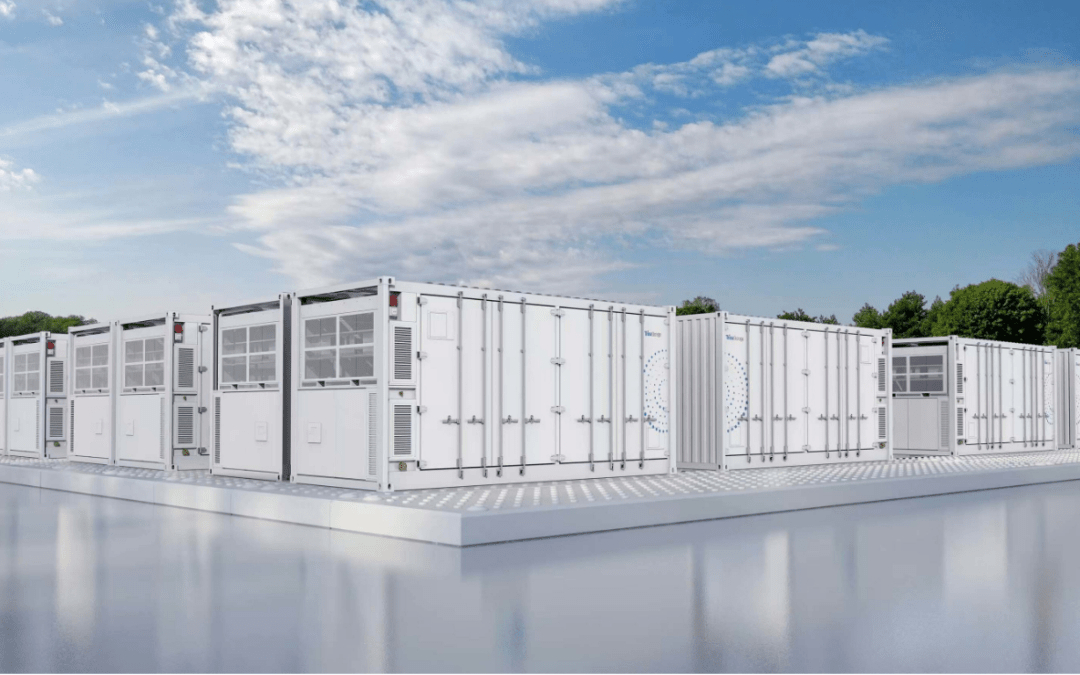
Trina Storage, a global leader in energy storage, announced its expanding strategic partnership with Lightshift Energy (Lightshift), a leading US developer, owner, and operator of energy storage systems. This partnership will deliver a portfolio of energy storage projects totalling more than 1GWh across the United States.
The portfolio will utilise Trina Storage’s Elementa 2.0 & 2.5 energy storage solution, which is engineered for high efficiency, intrinsic safety, and dependable performance under diverse operating conditions. These installations will support utilities and local communities through enhanced grid stability, peak-load management, and flexible capacity, as increased power demand and extreme weather threaten grid stability nationwide.
The partnership will strengthen Lightshift’s unique position deploying fleets of distribution-connected batteries, enabling fast, scalable delivery and direct support for load growth while improving reliability and generating significant savings for Lightshift’s customers.
Trina Storage and Lightshift have previously demonstrated successful collaboration and strong execution, including four projects in Groton, Holden, and Paxton, Massachusetts in 2024. During a Northeast heatwave, Trina Storage commissioned two sites ahead of schedule, providing critical capacity to local utilities during periods of elevated demand.
These results highlighted the effectiveness of coordinated planning, responsive delivery, and consistent system performance in the field.
The continuing partnership and large GWh portfolio highlight Trina Storage’s expertise in US energy storage project engineering, certification, commissioning, and operations. Supported by regional teams and partners, the company delivers local system integration, EMS coordination, grid testing, and onsite commissioning, ensuring efficient project execution and reliable performance.
“We are pleased to continue our collaboration with Lightshift through this significant milestone,” said Doug Alderton, Head of Sales, Trina Storage North America. “Our earlier joint projects demonstrate what our strong partnership can accomplish under demanding conditions.
Trina Storage is dedicated to delivering more reliable, flexible energy storage to communities across the US and we look forward to supporting Lightshift in making our shared vision a reality.”
“Lightshift is committed to scaling high-value storage assets that support the reliability and evolution of the US power system,” said Mike Herbert, Managing Partner at Lightshift Energy.
“We are proud to continue our work alongside Trina Storage on projects that advance our strategy and reflect our continued focus on delivering solutions that strengthen grid resilience, address load growth, and provide consistent, high-quality performance for the customers and communities we serve.”
As Trina Storage further grows its presence in North America, this expanded partnership highlights the company’s long-term commitment to supporting secure, efficient, and resilient energy infrastructure for the future.
[Image credit: PRNewsfoto/Trina Storage]
Want to publish a press release? Submit your content here for review by our editorial team.
by Catie Owen | Dec 9, 2025 | Americas, Large Scale Utility Solar
The US solar industry installed 11.7GW of new capacity in the third quarter of 2025 – its third-largest quarter on record – pushing total 2025 installations past 30GW.
According to the U.S. Solar Market Insight Q4 2025 report by the Solar Energy Industries Association (SEIA) and Wood Mackenzie, solar and storage accounted for 85% of all new power added to the grid in the first nine months of the Trump Administration.
The report highlighted that 73% of all capacity installed this year was built in states won by President Trump, including eight of the top ten states (Texas, Indiana, Florida, Arizona, Ohio, Utah, Kentucky, and Arkansas). Utah surged into the top ten with over 1GW of capacity coming online.
This market growth occurs despite federal actions, such as a U.S. Department of the Interior (DOI) memo, that have created significant business uncertainty for utility-scale projects.
SEIA president and CEO Abigail Ross Hopper said the “record-setting quarter for solar deployment shows that the market is continuing to turn to solar to meet rising demand.”
She warned that unless the administration “reverses course, the future of clean, affordable, and reliable solar and storage will be frozen by uncertainty… America’s manufacturing surge, our global competitiveness, and billions of dollars in private investment are on the line.”
The US has added 17.7GW of new module manufacturing capacity in 2025, with new facilities in Louisiana and South Carolina. With a new Michigan wafer facility, the US can now produce every major component of the solar module supply chain.
However, due to the lack of clarity from the DOI on permitting, the report’s forecast for utility-scale deployment through 2030 remains unchanged.
Michelle Davis, Wood Mackenzie’s head of solar research, stated, “We expect 250 gigawatts of solar to be installed from 2025 – 2030. But the US solar industry has more potential.”
She concluded the industry is “well positioned to meet more of this new demand if existing constraints were alleviated,” referencing the over 73 GW of permitted solar projects vulnerable to politically motivated delays.
by Catie Owen | Nov 27, 2025 | Americas, Large Scale Utility Solar, Storage
RWE has commissioned the Stoneridge Solar project in Texas, introducing 200MW of solar power alongside 100MW (200 MWh) of battery storage capacity to the state’s grid.
This development aims to provide reliable, cost-competitive, and locally generated electricity to meet Texas’s growing energy needs and support US energy dominance.
The Stoneridge Solar facility is positioned as a significant economic driver for the region. The project created more than 200 construction jobs and will support permanent operational roles going forward.
Furthermore, it is expected to generate millions in tax revenue for Milam County and the Thorndale Independent School District. These investments are specifically earmarked to benefit local schools and first responders.
Andrew Flanagan, CEO of RWE Clean Energy, highlighted the project’s broad positive influence, stating: “Stoneridge Solar is a great example of the power of local partnership and the positive role energy projects play in economic stimulation.
“We are helping Texas and the nation secure their energy future with scalable, homegrown energy while also delivering meaningful benefits to communities across America’s heartland.”
RWE has engaged directly with the local community, contributing to initiatives such as funding renovations at Thorndale Elementary School and partnering with the local volunteer fire department.
Stoneridge Solar reinforces RWE’s overarching goal to accelerate energy independence and secure power for the grid.
The company’s total energy capacity across the US now exceeds 11GW, cementing its position in delivering affordable power solutions to American homes and businesses.
[Image credit: RWE]
by Catie Owen | Nov 20, 2025 | Americas, Commercial & Industrial Solar
First Solar has announced plans to establish a new solar module production facility in Gaffney, South Carolina, USA.
Dedicated to the final production processes for its Series 6 Plus modules, the company expects to invest approximately $330m in the new plant. The new facility will take thin film solar cells produced by First Solar’s international fleet and transform them into fully completed modules.
Commercial operations are scheduled to begin in the second half of 2026 and is anticipated to offer an average manufacturing salary of $74,000 per year.
South Carolina Governor Henry McMaster commented: “South Carolina is proud to be a destination for innovative energy companies that are powering our country with American technology.
“First Solar’s investment will create 600 new jobs in Cherokee County, which will greatly strengthen the local economy and help advance America’s energy independence.”
The decision was reportedly driven by demand for domestically produced energy technology, which was catalysed by the One Big Beautiful Bill Act, signed into law in July 2025.
This move is intended to increase First Solar’s capacity for American-made solar technology that is fully compliant with anticipated Foreign Entities of Concern (FEOC) guidance.
“The passage of the One Big Beautiful Bill Act and the Administration’s trade policies boosted demand for American energy technology, requiring a timely, agile response that allows us to meet the moment,” First Solar CEO Mark Widmar added.
“We expect that this new facility will enable us to serve the US market with technology that is compliant with the Act’s stringent provisions, within timelines that align with our customers’ objectives.”
It expands the company’s existing South Carolina presence, which includes a distribution centre and a partnership with Inland Port Greer.
This new plant will become part of the largest solar technology manufacturing and research and development (R&D) footprint in the Western Hemisphere. According to the company’s official statement, First Solar expects to directly employ over 5,500 people in the US by the end of 2026.
The Gaffney plant is expected to add 3.7GW to First Solar’s annual nameplate capacity, reaching 17.7GW by 2027.
by Catie Owen | Nov 14, 2025 | Americas, Europe, Everything Installer
Press Release
Stäubli and Create Energy announce strategic partnership to revolutionise PV connector technology for the renewable energy industry.
The Swiss-based Stäubli Electrical Connectors, market-leading in connecting PV DC systems, and Create Energy, a US-based leading innovator in renewable energy solutions, are proud to announce a strategic manufacturing partnership.
Together, the companies will produce a next-generation PV DC connector designed to transform the solar and renewable energy industry and address long-standing challenges in the tracker market. This will set a new benchmark for safety, reliability, and performance.
The collaboration combines Stäubli’s legacy of excellence in electrical connectivity with Create Energy’s agile innovation and advanced manufacturing capabilities.
“We’re excited to collaborate with Create Energy to bring this innovation to life and contribute to increasing safety and performance in the PV tracker systems. Together, we’re setting a new benchmark for PV connectivity in the renewables space, and we are excited about this future collaboration!” says Matthias Mack, Vice-President Renewable Energy at Stäubli.
The new connector is specifically designed to withstand the dynamic mechanical stresses and environmental conditions unique to solar tracking systems.
By leveraging Stäubli’s high-quality materials, electrical design expertise, and Create Energy’s precision engineering, the new product promises to enhance system longevity, reduce maintenance costs, and improve overall energy yield.
“The misuse of PV connectors in the tracker market has been a persistent issue, compromising system integrity and long-term performance. I have had a close association with the North American Staubli unit for over two decades. This partnership with Stäubli allows us to deliver a purpose-built solution that not only solves this problem but also pushes the industry forward.” says Dean Solon, Founder and CEO at Create Energy.
The new connector solution will be introduced to the market in 2026, with distribution across North America and international markets.
Want to publish a press release? Submit your content here for review by our editorial team.
by Catie Owen | Nov 3, 2025 | Europe, Large Scale Utility Solar, Storage
Distributed Energy Infrastructure (DEI) has completed a 7.1MW solar and 4MW battery storage project in Massachusetts, USA, on a site formerly occupied by a chemical manufacturing facility.
The land had been classified as an EPA Superfund site due to severe soil contamination, including asbestos.
The project, owned by Syncarpha Capital with racking provided by Terrasmart, was named a finalist in Solar Builder’s 2025 Project of the Year Awards in the 1–10MW category.
To ensure safe construction on the contaminated site, DEI implemented a series of environmental and health safeguards. Crews trained in hazardous materials handling followed specialised safety protocols, and excavation was kept to a minimum.
Most electrical infrastructure was built above ground to avoid disturbing the soil, while the system was designed around existing structures, such as old concrete slabs, to reduce site disturbance.
The company also worked with six regulatory agencies and developed contingency plans in case of hazardous material discoveries. When asbestos was found, certified specialists managed its removal under regulatory oversight.
“Projects like Acton show what it takes to responsibly bring clean energy to communities while addressing the challenges of building on historically contaminated land,” said Sean Harrington, President and CEO of Distributed Energy Infrastructure.
“By transforming a brownfield into a productive solar and storage site, we’re expanding access to renewable energy, strengthening the local grid, and putting otherwise unusable land back to work.”
The Acton project is expected to deliver long-term environmental and community benefits by repurposing contaminated land, preserving open space, and creating nearly 40 local jobs during construction.
The community solar model paired with battery storage will enhance grid resilience and generate new tax revenue for the town, supporting Massachusetts’ SMART and Clean Peak Standard programmes.
“Brownfield redevelopment is a powerful way to expand clean energy access while addressing the legacy of industrial contamination,” said Graeme Dutkowsky of Syncarpha Capital.
“This project demonstrates how … building brownfield solar projects can turn an underutilised site into a long-term source of reliable power and local economic value.”
[Image credit: Distributed Energy Infrastructure]
by Catie Owen | Oct 27, 2025 | Commercial & Industrial Solar, Europe
Meta has announced new power purchase agreements (PPAs) with ENGIE North America, expanding their collaboration to over 1.3 GW across four solar projects in Texas.
The latest agreement covers ENGIE’s 600MW Swenson Ranch Solar project in Stonewall County, southeast of Lubbock.
Once complete, Swenson will be ENGIE’s largest solar asset to date within its 11GW North American portfolio of solar, wind and battery storage facilities. Meta will contract 100% of the project’s output to power its data centre operations in the United States.
“We are excited to continue the expansion of our relationship with Meta,” said Dave Carroll, CEO and Chief Renewables Officer at ENGIE North America.
“Our objective is to bring reliable, cost competitive power to the grid as rapidly as possible, and projects like Swenson demonstrate the importance of solar to meet the timely needs of our customers.”
The $900m investment is expected to generate more than $158m in tax revenues for Stonewall County and its hospital district over the project’s lifetime. Construction will employ over 350 skilled workers, with Swenson scheduled to begin operations in 2027.
Urvi Parekh, Head of Global Energy at Meta, said: “We are thrilled to bring an additional 600MW of solar energy to the grid, and expand our partnership with ENGIE to 1.3GW. Our collaboration with ENGIE enables us to continue matching 100% of our electricity use with clean and renewable energy to support our data centre operations.”
ENGIE stated that the partnership with Meta underscores the growing role of large-scale renewable energy projects in supporting both corporate sustainability goals and regional economic development.
by Catie Owen | Oct 20, 2025 | Americas, Large Scale Utility Solar
Over 20 US states have filed legal action against the U.S. Environmental Protection Agency (EPA), disputing the agency’s decision to cancel a $7bn programme designed to expand solar power access for low-income households.
The scheme, known as “Solar For All”, was introduced under the 2022 Inflation Reduction Act and had allocated grants to support rooftop and community solar projects.
This was part of a drive to reduce carbon emissions and make solar power more accessible to households.
The EPA cancelled the programme in August and withdrew roughly 90% of the funds granted to states that had been awarded, according to the lawsuit.
EPA administrator Lee Zeldin commented in July that such actions would be part of the Trump administration’s “One Big Beautiful Bill” spending cuts, which sought to end many Biden-era renewable initiatives as a supposed cost-saving measure.
Challenged by the states
The states behind the legal challenge argued the funding would boost solar deployment, cut greenhouse-gas emissions tied to electricity production and lower energy bills.
“Congress passed a solar energy program to help make electricity costs more affordable, but the administration is ignoring the law and focused on the conspiracy theory that climate change is a hoax,” said Washington State Attorney General Nick Brown.
Demonstrating the impact of this per state, the release noted that the EPA’s decision “jeopardises” about $156m for Washington state.
Leading the complaint are Brown and the attorneys general of Arizona and Minnesota, joined by the attorneys general of
California, Colorado, Connecticut, the District of Columbia, Hawaiʻi, Illinois, Massachusetts, Maine, Maryland, Michigan, New Jersey, New Mexico, New York, North Carolina, Oregon, Rhode Island, and Vermont.
The governors of Kentucky and Pennsylvania, as well as the Wisconsin Economic Development Corporation, are also joining the complaint.
Challenged by the industry
Earlier in the month, a coalition of nonprofits and solar installers filed a similar lawsuit, claiming the EPA had “unilaterally and illegally terminated” the programme.
The claim notes that this is in breach of the Administrative Procedure Act and its “constitutional authority” by cancelling a Congress-approved programme.
A separate lawsuit – filed in Rhode Island by labour unions, solar firms, and community groups – argues the EPA’s action will result in nearly a million people losing access to affordable solar power, and that “hundreds of thousands of good-paying, high-quality jobs will be lost.”
Just as the states’ legal action against the EPA cites, the Rhode Island lawsuit states that many of the grants had already been awarded before the cancellation and asserts that the agency lacked authority to reclaim them.
As lawsuits continue to roll in, complainants hope to end the Trump administration’s continued rollback of Biden-era renewable initiatives.
by Catie Owen | Oct 16, 2025 | Americas, Large Scale Utility Solar
The U.S. Bureau of Land Management (BLM) has cancelled the planned 6.2GW Esmeralda 7 solar project in Nevada, ending what would have been one of the country’s largest solar complexes.
The project was due to spread over roughly 118,000 acres of public land near Tonopah and consist of seven utility-scale facilities developed by NextEra Energy Resources, Leeward Renewable Energy, Arevia Power and Invenergy.
Each site would have included battery storage systems, although storage capacity and duration were not disclosed.
Its National Environmental Policy Act (NEPA) review had been stalled since President Trump took office, and the cancellation has now been made official on the BLM’s internal listing.
The cancellation aligns with a broader trend under the Trump administration of imposing stricter scrutiny on renewable projects, with the President himself posting “We will not approve wind or farmer destroying Solar” to his social media platform, Truth Social, in August.
Earlier in 2025, the Department of the Interior announced an “elevated review” for solar and wind projects on public lands.
Kabir Green of the Natural Resources Defence Council characterised the policy as creating “unfettered obstruction of wind and solar projects that create jobs, cut pollution, lower costs and strengthen communities.”
Additional federal actions have included heightened qualification criteria for tax credits, reclaiming $7bn in Solar for All grants, ending USDA’s REAP funding for solar, removing “preferential treatment” for renewables, and imposing tariffs on key energy components and materials.
Despite such headwinds, new solar capacity in the U.S. has continued to grow. In the first half of 2025, the country added 17.92GW of solar capacity, although the pace slowed in Q2 amid policy uncertainty.
by Catie Owen | Oct 14, 2025 | Americas, Commercial & Industrial Solar, Europe
American technology giant Apple has announced a major expansion of its clean energy initiatives in Europe, adding 650MW of renewable energy capacity through new solar and wind developments across the continent.
The projects – located in Greece, Italy, Latvia, Poland, and Romania — are part of Apple’s efforts to match the electricity used by European customers to power and charge their devices with renewable energy.
A recently completed solar farm in Spain also contributes to the expansion, bringing the company’s total European portfolio to over $600m in financing and generating more than one million MWh of clean electricity annually by 2030.
The move forms part of Apple’s wider Apple 2030 goal to become carbon neutral across its entire footprint by the end of the decade.
“By 2030, we want our users to know that all the energy it takes to charge their iPhone or power their Mac is matched with clean electricity,” said Lisa Jackson, Apple’s vice president of Environment, Policy, and Social Initiatives.
“Our new projects in Europe will help us achieve our ambitious Apple 2030 goal, while contributing to healthy communities, thriving economies, and secure energy sources across the continent.”
In Greece, Apple has signed a long-term agreement to source power from a 110MW solar project owned and operated by HELLENiQ ENERGY. In Italy, it is supporting the development of a 129MW portfolio of solar and wind projects, with the first in Sicily due online this month.
In Poland, the company has backed Econergy’s 40MW solar array, while in Romania’s Galați County, it will procure power from a 99MW wind farm developed by Nala Renewables and OX2. In Latvia, Apple has signed one of the country’s first corporate power purchase agreements with European Energy for a 110MW solar farm.
These developments form part of Apple’s strategy to address emissions from product use, which accounted for 29 per cent of its total greenhouse gas emissions in 2024.
Globally, Apple and its suppliers now support more than 19GW of renewable energy capacity across operations and manufacturing.
[Image caption: Apple’s renewable energy projects include the newly operational Castaño solar array in Spain. Image credit: Apple]
by Catie Owen | Oct 10, 2025 | Americas, Commercial & Industrial Solar, Storage
Nexamp has secured a three-year, $330m Construction Warehouse Facility (CWF) from a consortium of financial institutions to support the development and construction of around 20 new distributed generation projects.
The financing will provide flexible construction capital for Nexamp’s near-term solar and energy storage pipeline, with completed assets expected to transition into long-term financing structures such as tax equity or refinancing.
The company said this will help sustain renewable energy growth and strengthen domestic energy resources.
MUFG led the facility with a $200m commitment, serving as Mandated Lead Arranger and Administrative Agent. ING followed with $100m, taking on roles including Mandated Lead Arranger, Lender, Hedge Provider, and Green Loan Structuring Agent.
Siemens Financial Services contributed $30m as Joint Lead Arranger, while U.S. Bank National Association acted as Collateral Agent.
Zaid Ashai, CEO of Nexamp, said the transaction marks a major milestone in the company’s growth. “This facility underscores the strong confidence leading financial institutions have in our proven national platform,” he said.
“By securing flexible construction capital, we are better positioned to deliver the clean energy projects that communities across the country urgently need as demand rises. Solar continues to be the most cost-effective and easy-to-deploy source of new electricity, outpacing all other sources by a wide margin already this year.”
The lenders also emphasised the importance of the collaboration in supporting the clean energy transition.
“MUFG is proud to partner with Nexamp on this important financing, which advances our shared commitment to accessible, affordable energy,” said Takaki Sakai, Managing Director, Project Finance, MUFG.
“We are proud to support Nexamp with this innovative and sustainable financing solution,” added Filipe Barreto, Director, Renewables and Power, ING Americas.
Jim Fuller, Head of Project Finance at Siemens Financial Services, Inc., said: “At a time of increasing power demand, these projects will provide local communities with resilient clean energy.”
Nexamp said the transaction highlights the key role construction warehouse financing plays in expediting renewable energy deployment across the US.
by Catie Owen | Oct 7, 2025 | Americas, Commercial & Industrial Solar, Everything Installer, Large Scale Utility Solar
A coalition of labour unions, nonprofits and solar companies has filed suit challenging the Trump administration’s decision to rescind $7bn in grants awarded under the Solar for All programme.
The complaint, lodged in federal court in Rhode Island, argues that the U.S. Environmental Protection Agency (EPA) and its administrator, Lee Zeldin, unlawfully revoked grants that had already been awarded to states, tribes and nonprofits.
Zeldin announced in July that this would be part of the Trump administration’s “One Big Beautiful Bill” spending cuts, which seek to end many Biden-era renewable initiatives to “level the playing field” for fossil fuels.
The plaintiffs include the Rhode Island AFL-CIO, the Rhode Island Centre for Justice, Solar United Neighbours, and several solar installers and community organisations.
Serving households
Having been part of the previous President Joe Biden’s $27bn “green bank” (the Greenhouse Gas Reduction Fund), the Solar for All programme was established during the passing of a climate law in 2022.
According to the lawsuit, it was designed to serve over 900,000 households in lower-income communities.
Additionally, it was projected to save recipients about $400 annually on electricity bills while reducing or avoiding more than 30m metric tonnes of carbon dioxide equivalent in greenhouse gas emissions.
The Conservation Law Foundation (CLF) briefly notes that across the country, Solar for All “is expected to save an estimated $350m annually on energy bills and generate 200,000 new jobs.”
“This program would provide families with low incomes access to clean, affordable solar power: energy that lowers bills, improves air quality, and keeps people safer during extreme heat,” Kate Sinding Daly, Senior Vice President for Law and Policy for the CLF, commented in a statement.
“Stripping those benefits away is unlawful and betrays communities.”
In response, the EPA has declined to comment on pending litigation.
Rescinding the programme
In a previous social media statement from July, Zeldin had defended the cancellation by asserting that “the bottom line is this: EPA no longer has the statutory authority to administer the program or the appropriated funds to keep this boondoggle alive.”
Plaintiffs contend that stripping away the grants would deprive communities of access to clean energy, worsen energy insecurity, and stall job growth in the renewable energy sector.
“The Trump administration’s rollback of the Solar for All program is a shameless attempt to prop up fossil fuel companies at the expense of families,” Daly added.
The lawsuit seeks a judicial order to reinstate Solar for All and restore its funding; it can be read here.
by Catie Owen | Oct 3, 2025 | Americas, Large Scale Utility Solar, Storage
The Trump administration has announced the cancellation of $7.6bn in grants for clean energy projects across 16 states.
The funding supported more than 200 initiatives, including battery plants, solar farms, hydrogen projects, electric grid upgrades, and carbon capture efforts.
The decision was disclosed on Wednesday in a post by White House budget director Russell Vought, who said: “Nearly $8 billion in Green New Scam funding to fuel the Left’s climate agenda is being cancelled.”
The move comes amid an ongoing standoff between President Donald Trump and congressional Democrats over the federal government shutdown.
Cancelled projects
According to the Department of Energy (DOE), 223 projects were cancelled following a review that concluded they did not sufficiently advance US energy needs or were not financially sustainable.
The department stated the grants came from the Office of Clean Energy Demonstrations, the Office of Energy Efficiency and Renewable Energy, and other divisions.
One of the most significant cancellations involves $1.2bn allocated to California’s planned hydrogen hub. Governor Gavin Newsom’s office said the hub had attracted $10bn in private investment and warned that cutting the project could endanger over 200,000 jobs.
“Clean hydrogen deserves to be part of California’s energy future – creating hundreds of thousands of new jobs and saving billions in health costs,” Newsom said.
Senator Alex Padilla of California called the cancellation “vindictive, shortsighted and proof this administration is not serious about American energy dominance.”
Environmental groups expressed concern over the cuts. Jackie Wong, senior vice president at the Natural Resources Defence Council, said: “This is yet another blow by the Trump administration against innovative technology, jobs and the clean energy needed to meet skyrocketing demand.”
The states affected include California, Colorado, Connecticut, Delaware, Hawaii, Illinois, Maryland, Massachusetts, Minnesota, New Hampshire, New Jersey, New Mexico, New York, Oregon, Vermont and Washington.
Previous blows to solar
The news comes over a month since the administration’s August announcement that eligibility rules for clean energy tax credits were being tightened, threatening the country’s upcoming renewable projects. Solar, in particular, was highlighted.
August also saw the cancellation of the $7bn Solar For All programme, which was set to provide easier access to solar power for over 900,000 low-income households.
These targeted blows to the solar – and wider renewable energy – sector are part of a policy shift heralded by the signing of Executive Order 14315, Ending Market Distorting Subsidies for Unreliable, Foreign-Controlled Energy Sources, and the implementation of the One Big Beautiful Bill Act.
The motivation behind this shift is to re-prioritise fossil fuels, according to the US Department of the Interior.
by Catie Owen | Oct 1, 2025 | Americas, Commercial & Industrial Solar
TotalEnergies has agreed to sell a 50% stake in a 1.4GW North American solar portfolio to insurance vehicles and accounts managed by global investment firm KKR.
The deal values the portfolio at $1.25bn and alongside refinancing arrangements, will provide TotalEnergies with $950m upon closing.
The portfolio consists of six utility-scale solar projects with a combined capacity of 1.3GW, plus 41 distributed generation assets totalling 140 MW.
These assets are primarily located in the United States, with their electricity either contracted to third parties or to be marketed by TotalEnergies.
Following completion, subject to customary conditions, TotalEnergies will retain a 50% share and continue to operate the assets.
“We are pleased to enter into this new strategic partnership with KKR in North America, a key deregulated electricity market to expand our integrated business model,” said Stéphane Michel, President of Gas, Renewables & Power at TotalEnergies.
“Aligned with our strategy, this transaction unlocks value from newly commissioned assets and further strengthens the profitability of our Integrated Power business.”
Cecilio Velasco, Managing Director at KKR, added: “TotalEnergies is a renewable energy industry leader globally, and we are thrilled to establish this joint venture with the TotalEnergies team to support their renewables business.
“We have long been investors in renewables through our infrastructure platform, having committed more than $23bn to date in energy transition investments.”
The transaction reflects TotalEnergies’ Integrated Power business model, which combines renewables such as solar and wind with flexible assets including storage and combined-cycle gas turbines.
To reach its 12% profitability target, the company divests up to half of its renewable projects once they begin operation and risk levels are reduced. This strategy enables TotalEnergies to extract value from its assets while managing financial exposure.
by Catie Owen | Sep 29, 2025 | Americas, Storage
The United States added 5.6GW of battery energy storage from April to June, marking a record quarter, according to the American Clean Power Association (ACP) and Wood Mackenzie.
Utility-scale projects led with 4.9GW installed, a 62% year-on-year increase. The ACP said this is enough to power 3.7m US homes during average peak-demand hours. California, Texas, and Arizona each added more than 1GW, while Wood Mackenzie forecast Florida and Georgia as upcoming growth markets.
Georgia Power, for instance, recently issued a request for proposals for 500MW of grid-scale storage.
Growth may face challenges, said Allison Weis, global head of storage at Wood Mackenzie. “After 2025, utility-scale storage projects must comply with new, stringent battery sourcing requirements to receive the ITC [investment tax credit]. While domestic cell supply is ramping up, supply chain shortages are possible although developers are continuing to consider supply from China to fill in any gaps,” she said.
Weis added: “A rush to start construction under the more-certain near-term regulatory framework uplifts the near-term forecast. Projects that have not met certain milestones by the end of 2025 are at risk of exposure to changing regulations. There is additional downside risk if further permitting delays threaten solar and storage projects.”
The residential market also grew, adding 608MW in Q2, a 132% year-on-year rise. California, Arizona, and Illinois led installations, driven by higher attachment rates and larger-capacity systems.
According to EnergySage, California topped major markets with 79% of quoted projects including batteries, followed by Texas (61%) and Arizona (47%).
“Residential storage is expected to outpace solar due to stronger policy resilience, high attachment rates in key markets like California and Puerto Rico, and continued ITC access through third-party ownership,” said Allison Feeney, research analyst at Wood Mackenzie.
Community, commercial, and industrial storage added 38MW in Q2, up 11%. US storage is forecast to reach 87.8GW by 2029.
by Catie Owen | Sep 15, 2025 | Americas, Commercial & Industrial Solar
Longroad Energy has reached financial close and started construction on 1000 Mile Solar, a 400MWdc (300MWac) project in Yoakum County, Texas. The facility is expected to begin commercial operations in 2026.
The US-based renewable energy developer, owner and operator finalised a long-term offtake agreement with Meta in late 2024.
Under the Environmental Attributes Purchase Agreement, Meta will settle financially for the project’s entire energy output, which will be delivered into the Southwest Power Pool (SPP) grid to support its target of powering data centres with 100% clean energy.
“1000 Mile Solar is our seventh renewable energy project in Texas and a milestone project for Longroad,” said Paul Gaynor, CEO of Longroad Energy.
“1000 Mile is Longroad’s first project in the SPP region and brings us to 2.1 GW of successfully developed utility-scale projects in Texas in all three RTO regions, ERCOT, MISO and SPP. Thank you to Meta, our banking partners, our contractor SOLV, our suppliers, and to Yoakum County officials for their roles in helping us advance 1000 Mile.”
Morgan Stanley Renewables has committed tax equity financing, while debt was led by Societe Generale and CIBC, joined by ANZ, Barclays and Key Bank.
“We are excited to partner with Longroad for the first time on its largest solar project developed – a landmark transaction for the company,” said Jorge Iragorri of Morgan Stanley.
“SG is thrilled to have played a lead role … to raise the debt financing for 1000 Mile Solar,” added Ahmed Maqsood of Societe Generale.
CIBC’s Peter O’Neill said the bank’s involvement demonstrated its “commitment to advancing renewable energy and the energy transition in the U.S.”
The project, Longroad’s fifth solar facility in Texas, will use First Solar’s Series 7 photovoltaic modules. SOLV Energy is providing engineering, procurement and construction services, with over 400 jobs anticipated at peak construction. Nextracker will supply tracker equipment.
According to Longroad, 1000 Mile Solar is expected to reduce regional emissions by about 475,000 metric tonnes of CO2 equivalent each year and contribute more than $18m in local tax revenue over its lifetime.
by Catie Owen | Sep 12, 2025 | Americas, Commercial & Industrial Solar
Madison Energy Infrastructure has announced an $800m construction-to-term debt facility to support the rollout of clean energy infrastructure for customers and partners across the United States.
The company said the financing positions it to meet growing demand as it works towards 1 GW of operating capacity. The funding will back project development, construction and long-term operations.
According to Madison, the agreement strengthens its ability to deliver clean energy solutions amid what it describes as a “New Normal” of rising load growth, price volatility and AI-driven infrastructure requirements. The facility draws on new and existing lenders from its previous debt arrangements.
“We believe clean energy infrastructure is a foundational part of our economic future and this facility reflects Madison’s commitment to serving our customers and partners for decades to come,” said Steve Cunningham, co-founder and chief financial officer at Madison.
The funding is backed by several international banks, including Fifth Third Bank, Société Générale, BNP Paribas, KeyBank, Crédit Agricole, TD Bank, Lloyd’s and Natixis. Madison said these partnerships highlight its standing in the clean energy sector and will help it progress a pipeline of distributed generation projects.
“This milestone builds on our enduring alliances with existing lenders who have been with us for many years as well as new banks as we continue to grow,” said Iwona Guier, Executive Vice President of Finance at Madison.
The company plans to use the facility to speed up deployment of clean energy at scale. It aims to serve a broad customer base, including corporate, industrial, K-12, nonprofit, electric cooperative and municipal utility sectors, delivering what it describes as innovative, long-term clean energy solutions nationwide.
[Image credit: Madison Energy]
by Catie Owen | Sep 9, 2025 | Americas, Everything Installer, Storage
The United States added nearly 18GW of new solar capacity in the first half of 2025, according to the latest US Solar Market Insight Q3 2025 report from the Solar Energy Industries Association (SEIA) and Wood Mackenzie.
Solar and storage together accounted for 82% of all new power added to the grid in the first six months of the year.
The growth comes amid a shifting policy environment. The passage of the One Big Beautiful Bill Act (HR1) and subsequent Trump administration measures targeting solar have led analysts to revise deployment forecasts downwards.
The report’s low-case forecast warns the US risks losing 44GW of solar deployment by 2030, an 18% decline compared to earlier expectations. When measured against pre-HR1 projections, the potential loss increases to 55 GW, or 21%.
“Solar and storage are the backbone of America’s energy future, delivering the majority of new power to the grid at the lowest cost to families and businesses,” said SEIA president and CEO Abigail Ross Hopper.
“Instead of unleashing this American economic engine, the Trump administration is deliberately stifling investment, which is raising energy costs for families and businesses, and jeopardising the reliability of our electric grid.
“But no matter what policies this administration releases, the solar and storage industry will continue to grow, because the market is demanding what we’re delivering: reliable, affordable, American-made energy.”
The report notes that 77% of all new solar capacity installed in 2025 has been built in states won by President Trump, including eight of the top 10 states for installations: Texas, Indiana, Arizona, Florida, Ohio, Missouri, Kentucky and Arkansas.
Manufacturing has also expanded, with 13GW of new solar module production capacity added in the first half of 2025. This brings total US solar module manufacturing capacity to 55 GW.
However, no new upstream manufacturing investment was recorded in the second quarter, with federal policies cited as a risk to momentum and private capital inflows.
The forecast indicates solar deployment could fall 4% below the pre-HR1 base case by 2030. Short-term activity remains supported by projects already underway, developers working to meet tax credit deadlines, and rising power demand as gas generation becomes more costly and less available.
Orders from the DOI
The Department of the Interior (DOI) has also issued orders that single out solar for more stringent permitting treatment, which the report estimates could affect 44GW of planned projects, particularly in Arizona, California, Utah and Nevada.
“There is considerable downside risk for the solar industry if the federal permitting environment creates more constraints for solar projects,” said Michelle Davis, head of solar research at Wood Mackenzie.
“The solar industry is already navigating dramatic policy changes as a result of HR1. Further uncertainty from federal policy actions is making the business environment for the solar industry incredibly challenging.”
SEIA has written to DOI Secretary Doug Burgum, warning that if executive actions are not reversed, they could lead to job losses, higher electricity costs, and reduced competitiveness for the US economy.