by Catie Owen | Jun 11, 2025 | Americas, Large Scale Utility Solar, Storage
US-based independent power producer Soltage has closed a $260m financing deal to support the rollout of its distributed solar and energy storage pipeline in the US, which exceeds 2GW in total capacity.
The funding will back near-term construction of 250MW of solar and storage installations.
The financing package includes a revolving construction loan, a tax equity bridge loan, and a term loan facility. It was led by the National Bank of Canada and First Citizens Bank, with participation from BankUnited, Cadence Bank, and Siemens Financial Services.
“This financing marks Soltage’s continued deployment of innovative financial structures that enable efficient capital investment in domestic energy infrastructure,” said Jesse Grossman, CEO of Soltage.
“With the support of National Bank of Canada, First Citizens Bank, and our valued financial partners, this facility will enable construction of the next 250MW of distributed solar and storage projects across our national portfolio.”
Based in New Jersey, Soltage develops and operates distributed utility-scale clean energy projects, supplying power to utility, commercial, industrial, and municipal customers.
The company is backed by infrastructure investment manager Igneo Infrastructure Partners and has delivered over 125 clean energy projects totalling more than 500MW.
The financing marks a deepening of relationships between Soltage and its financial partners.
by Catie Owen | Jun 10, 2025 | Americas, Commercial & Industrial Solar, Storage
According to the Solar Energy Industries Association (SEIA)’s US Solar Market Insight Q2 2025 report, the US added 8.6GW of new solar module manufacturing capacity in Q1 2025.
This makes Q1 the third largest for new manufacturing capacity to date, and overall, the US installed 10.8GW of new capacity in Q1. Solar and BESS account for 82% of all new generating capacity.
The report also notes that US solar cell production capacity doubled to 2GW in the same time frame, due to a new factory in South Carolina coming online.
SEIA’s report hails Texas as a returning winner in the US’ solar race, as it added more capacity in Q1 than any other state. Florida overtook California to reach second place.
“Solar and storage continue to dominate America’s energy economy, adding more new capacity to the grid than any technology using increasingly American-made equipment,” said SEIA president and CEO Abigail Ross Hopper.
Uncertain horizons
“The 10.8 GW of solar capacity installed in Q1 2025 represents a significant portion of new US electricity generation, highlighting solar’s growing dominance in the energy mix,” said Zoë Gaston, Principal Analyst at Wood Mackenzie – who worked with SEIA on the report.
However, the report also highlights increasing legislation that could hinder the sector’s growth. It cites economy-wide tariffs, new anti-dumping and countervailing duties (AD/CVD) on cells and modules from Southeast Asia, and shifts in renewable energy policies (such as the reconciliation bill) as culprits.
SEIA warns that these hindrances could result in lost jobs, energy shortages, rising energy bills, factory closures, and a fall in national energy production by 173TWh.
“The proposed changes to federal tax incentives, along with ongoing tariff concerns, could significantly impact this growth trajectory and potentially lead to energy supply challenges,” adds Gaston.
“It’s important to consider the critical role of solar in America’s energy landscape.”
by Catie Owen | Jun 10, 2025 | Americas, Asia, Commercial & Industrial Solar, Innovation
Qcells, a solar manufacturer based in Seoul, South Korea, has launched ‘EcoRecycle by Qcells’ – the company’s new solar panel recycling arm.
In a company statement, Qcells explained that EcoRecycle “addresses the growing challenge of solar panel waste”, thus reducing the solar industry’s environmental footprint as the volume of end-of-life panels begins to rise.
EcoRecycle will begin operations at the company’s facility in Georgia, USA, as the first foothold in what the company plans to be a nationwide network.
According to Qcells, the Georgia facility will be able to recycle around 250MW of panels per annum – equal to 500,000 panels – retrieving materials including glass, silver, copper, and aluminium.
“With this new business, Qcells will emerge as the first-ever crystalline silicon (C-Si) solar panel producer to possess a full value chain, conducting both solar panel manufacturing and recycling on US soil,” comments Kelly Weger, Senior Director of Sustainability at Qcells, in the company’s statement.
“Effectively managing solar waste is essential to ensure the long-term sustainability and resilience of the clean energy sector.”
Qcells also provides PV and BESS products, large-scale solar projects, and renewable energy contracting across Europe, North America, Asia, South America, Africa, and the Middle East.
by Catie Owen | Jun 9, 2025 | Americas, Europe, Storage
Daiwa Energy & Infrastructure (DEI) has acquired a minority stake in two BESS projects developed by Enfinity Global, an independent power producer.
Announced on 4 June, the deal gives DEI a 49% equity interest in 380MW of BESS developments.
These include a 250MW/500MWh project located in the ERCOT market in Texas, US, and a 130MW/520MWh project in Veneto, northeast Italy.
As reported in February, Enfinity’s two Texas projects are due to begin construction in the second and fourth quarters of 2025. The Italian project is expected to come online in Q4 of 2027.
Founded in 2018 by Japanese investment bank Daiwa Securities, invests in infrastructure projects such as solar PV, wind, data centres and battery storage.
The company entered the Texas BESS market in April 2024 through a partnership with Stella Energy Solutions to co-develop the 200MW/480MWh Thomas Cameron BESS project, expected to go live in 2026.
DEI has also partnered with Gotion High-Tech, a Chinese battery manufacturer, to pursue 1GWh of BESS projects in Japan.
Enfinity Global was founded in 2019 and manages a 35.5GW global portfolio of operational, in-construction and planned renewable energy and storage projects. This includes 1.1GW of operational capacity.
Interested in Italy’s solar market? Don’t miss your free ticket to Solar & Storage Live Italia – taking place 8-9 October at the Veronafiere exhibition centre.
by Catie Owen | Jun 5, 2025 | Americas, Storage
Energy Vault Holdings Inc. has signed a new agreement with Jupiter Power to deliver another battery energy storage system (BESS) within the ERCOT (Electric Reliability Council of Texas) grid.
The project follows the successful commissioning of a 100MW/200MWh BESS in July 2024 and will match its predecessor in capacity.
Construction on the system is underway, with commercial operation expected by the end of summer 2025. The BESS will use Energy Vault’s X-Vault integration platform and UL9540-certified B-VAULT product and be operated through the company’s VaultOS Energy Management System.
This system supports both AC- and DC-coupled configurations and is designed for flexible integration of battery and inverter suppliers.
“As one of the largest battery storage developers and operators in the U.S., we look for partners who can keep pace with our ambition and scale,” said Michael Geier, Chief Technology Officer, Jupiter Power.
“With more than 2,500MWh in operation or construction, we’re excited to continue building with Energy Vault at this critical site and appreciate their ability to deliver solutions tailored to our needs,”
Marco Terruzzin, Chief Commercial and Product Officer at Energy Vault, added, “Today’s expansion of our partnership with Jupiter Power stands as a testament to the strength of our team’s collaborative approach to delivering reliable, safe, and efficient energy storage solutions to customers.”
The new system forms part of a broader partnership between the two companies, which began in 2022 and includes 2.4GWh of integrated supply chain equipment and services.
Energy Vault’s B-VAULT portfolio currently represents more than 2 GWh of operational or development projects.
by Catie Owen | May 23, 2025 | Americas, Storage
Governor Wes Moore, Maryland, USA, has signed two energy-focused bills into law – the Next Generation Energy Act and the Renewable Energy Certainty Act – supporting battery energy storage and renewable energy development in the state.
The legislation directs the Maryland Public Service Commission (PSC) to procure 800MW of energy storage by October 2026 and establishes clearer siting rules for solar projects.
The Next Generation Energy Act also includes provisions to retain revenue from energy and ancillary services for storage projects and requires siting and design guidelines to be submitted by mid-2026.
Additionally, it reallocates approximately $200m from a state fund to ratepayers, averaging around $80 per household.
Local advocacy group Chesapeake Climate Action Network said the bill “gives battery storage specific, time-bound financial support,” and expressed support for its focus on clean energy.
The Renewable Energy Certainty Act, filed in tandem with the Energy Act, seeks to simplify permitting for solar projects, at times superseding local zoning decisions.
Ceres, a nonprofit organisation working with businesses on sustainability, welcomed the new laws.
“The legislation signed by Gov. Moore proves that states can take action to reduce electricity bills without compromising ambitious climate goals,” said Jeff Mauk, director of Eastern state policy at Ceres.
However, Governor Moore vetoed two related bills, citing concerns about redundancy and inefficiency.
The Data Centre Impact Analysis and Report, designed to study the impact of the state’s data centres on the environment and grid, was vetoed as well.
by Catie Owen | May 6, 2025 | Americas, Everything Installer, Storage
Panasonic has announced it will discontinue its solar and battery storage business in North America, marking the end of a decades-long presence in the solar sector.
In a letter sent to installation partners on April 28 and shared publicly, Naoki Kamo, president of Panasonic Eco Systems North America, said,
“This was a strategic decision – not a reflection of the technology’s performance or the commitment of our partners like you. While we continue to believe in the potential of solar and energy storage, it is no longer the right business fit for us at this time.”
Panasonic will continue to support customers, pledging to honour all warranties – including for systems not yet fully installed – and provide guidance for third-party warranty coverage.
“We are still very much in business and remain committed to supporting our partners, customers, and installer base,” the company added.
Panasonic entered the solar industry through its Sanyo acquisition in 2009. Sanyo pioneered HIT (Heterojunction with Intrinsic Thin-layer) technology, launching the world’s first commercially available HJT panels in 1997.
These modules, known for high efficiency and performance in real-world conditions, were rebranded under Panasonic in 2011 and expanded to include Evervolt battery systems.
Despite its strong technology, Panasonic began transitioning away from in-house manufacturing in favour of OEM partnerships amid intensifying price competition, especially from Chinese manufacturers. It officially exited panel manufacturing in 2021.
While stepping away from residential solar and storage, Panasonic will continue investing in clean energy technologies, including EV batteries and heat pumps. Its $4bn EV battery plant in Kansas is on track to open in the first half of 2025.
[Image credit: Panasonic]
by Catie Owen | May 2, 2025 | Americas, Commercial & Industrial Solar
US renewables developer Swift Current Energy has brought its 593MWac/800MWdc Double Black Diamond Solar project online in Illinois.
The milestone was marked with a ribbon-cutting ceremony, the company announced on Wednesday.
Located approximately 30 miles west of Springfield, Double Black Diamond is now the largest solar installation east of the Mississippi River.
The project features 1.6m solar modules supplied by First Solar – most of which were manufactured in Ohio – and tracking systems from Nextracker.
According to Swift Current Energy, the solar farm is expected to generate enough electricity annually to meet the needs of about 100,000 households.
Double Black Diamond has attracted notable backing, including tax equity investment from Google. Its output will serve a mix of public and private customers.
Through agreements with Constellation NewEnergy Inc., the City of Chicago and seven additional buyers have contracted to purchase power from the site.
The City of Chicago is sourcing approximately 70% of its municipal electricity from the solar farm. This includes power for major facilities such as O’Hare and Midway airports.
“Double Black Diamond is a landmark project for the Midwest and a key part of our commitment to clean energy,” Swift Current Energy said.
Development of the project began in 2018. Construction financing was provided by a group of lenders led by Mitsubishi UFJ Financial Group (MUFG), Societe Generale, Truist, and eight others.
McCarthy Building Companies Inc served as the engineering, procurement and construction (EPC) contractor.
[Image caption: Swift Current Energy’s ribbon cutting ceremony. Image credit: Swift Current Energy]
by Catie Owen | May 2, 2025 | Americas, Innovation, Large Scale Utility Solar
A new study shared by Lightsource bp has found that grazing sheep on solar farms may improve soil health and pasture quality. Lightsource bp’s research was conducted in part at the company’s Nittany 1 solar site in Pennsylvania.
The findings were published in early 2025 by the American Solar Grazing Association (ASGA), offering insights into agrivoltaics – the practice of combining solar energy production with agriculture.
The 70MW Nittany Solar project spans three sites and powers Penn State University through a 25-year agreement.
All three locations support sheep grazing, and the land is seeded with “Fuzz and Buzz,” a custom mix developed by ASGA, Ernst Conservation Seeds and Pollinator Service to benefit both sheep and pollinators.
Lightsource bp first partnered with ASGA at Nittany 1 in 2022 for a two-year study examining the environmental impact of solar grazing.
The project was one of 28 northeastern US solar grazing sites included in the research, sponsored by the New York State Energy Research and Development Authority and led by American Farmland Trust.
ASGA collected data before and after the 2022 and 2023 grazing seasons to assess soil carbon, compaction, plant nutrition and species diversity. The study reported three key findings:
- Healthier soil: Grazed solar farms had more organic matter and a more neutral pH than non-grazed sites. ASGA noted, “This study is one of the first to publish soil testing methodology for operational solar farms.”
- More nutritious forage: Vegetation beneath solar panels had higher protein content and was more digestible than vegetation in open areas, likely due to shading from the panels.
- Improved pasture conditions: Most pasture health metrics increased between 2022 and 2023. While the 3% rise in pasture condition score was not statistically significant, ASGA said it “shows that grazing may have the potential to improve solar site pasture quality over time.”
Lightsource bp stated it is “proud to provide site data for these important inquiries and to continue measuring the impacts of solar grazing at our operational sites over decades.”
The study can be found here.
[Image credit: Lightsource bp]
by Catie Owen | Apr 30, 2025 | Americas, Commercial & Industrial Solar, Storage
Repsol has announced the sale of a 46.3% stake in a 777MW portfolio of US solar and storage assets to investment firm Stonepeak for $340m.
Including $60m in previously raised tax equity, the transaction values the portfolio at approximately $795m.
The portfolio includes the Frye solar project in Swisher County, Texas – Repsol’s largest operational photovoltaic plant at 632MW – and the Jicarilla solar and storage complex in New Mexico, with 125MW of solar and 20MW / 80MWh of battery storage.
All projects are backed by long-term revenue contracts.
“We are very proud to start a partnership with Stonepeak in our first renewable asset rotation in the US market,” said João Costeira, Executive Managing Director of Low Carbon Generation at Repsol.
“Once again, our portfolio has confirmed its attractiveness to leading investors, validating our strategy on renewables.”
“This investment represents another important step in delivering much-needed cost effective and sustainable electricity to our domestic power grid at a time when communities need it most,” said Anthony Borreca, Senior Managing Director at Stonepeak.
“Repsol is an extremely well-respected company globally, and we look forward to deepening our partnership with them in the coming years.”
This marks Repsol’s sixth asset rotation since November 2021. The company currently has 4,000MW of operating renewable capacity and a global development pipeline of 60,000MW.
In the U.S., Repsol owns the partially operational 629MW Outpost PV project in Texas and is constructing two more facilities – Pinnington (825MW) and Pecan Prairie (595MW).
The Stonepeak transaction is expected to close in Q3 2025, pending regulatory approvals.
[Image credit: Repsol]
by Catie Owen | Apr 17, 2025 | Americas, Large Scale Utility Solar
On April 16, the Texas Senate passed Senate Bill 819 by a 22-9 vote, creating new solar and wind energy development restrictions.
The bill introduces permitting requirements for projects over 10 MW, mandates environmental reviews, enforces setbacks from property lines and homes, and prohibits property tax abatements for large renewable projects.
These regulations do not apply to other forms of energy.
Supporters claim the bill is intended to protect land and wildlife, while opponents argue it unfairly targets clean energy and threatens Texas’ energy security, rural economies, and private property rights.
Texas leads the USA in solar and wind capacity, with renewables representing 93% of new generation added since 2021. Solar alone has become the largest source of new capacity on the Texas grid.
“This bill will kill renewable energy in Texas,” warned Jeff Clark, CEO of Texas Power Alliance.
Industry groups warn that SB 819 will slow renewable development, raise electricity bills, and risk grid reliability at a time when energy demand is surging.
Daniel Giese, Texas Director of State Affairs for the Solar Energy Industries Association (SEIA), said after the vote: “With energy demand rising fast, Texas needs every megawatt it can generate to keep the lights on and our economy strong.
“We cannot afford to turn away from the pro-energy and pro-business policies that made the Lone Star State the energy capital, but that’s exactly what SB 819 does.”
Luke Metzger, Executive Director of Environment Texas, added, “This bill threatens to increase pollution, blackouts and electric bills.
“Under the guise of land and wildlife protection, it would create a discriminatory permitting standard and grind renewable energy development to a halt, harming, not helping, our land and wildlife.”
The legislation now heads to the Texas House of Representatives for consideration. If enacted, critics say it will weaken grid resilience, undermine private property rights, and stall billions in rural economic investment.
The news comes as President Trump’s administration continues political and legislative movements that impact the solar and wider renewable industries.
by Catie Owen | Apr 10, 2025 | Americas, Commercial & Industrial Solar, Large Scale Utility Solar
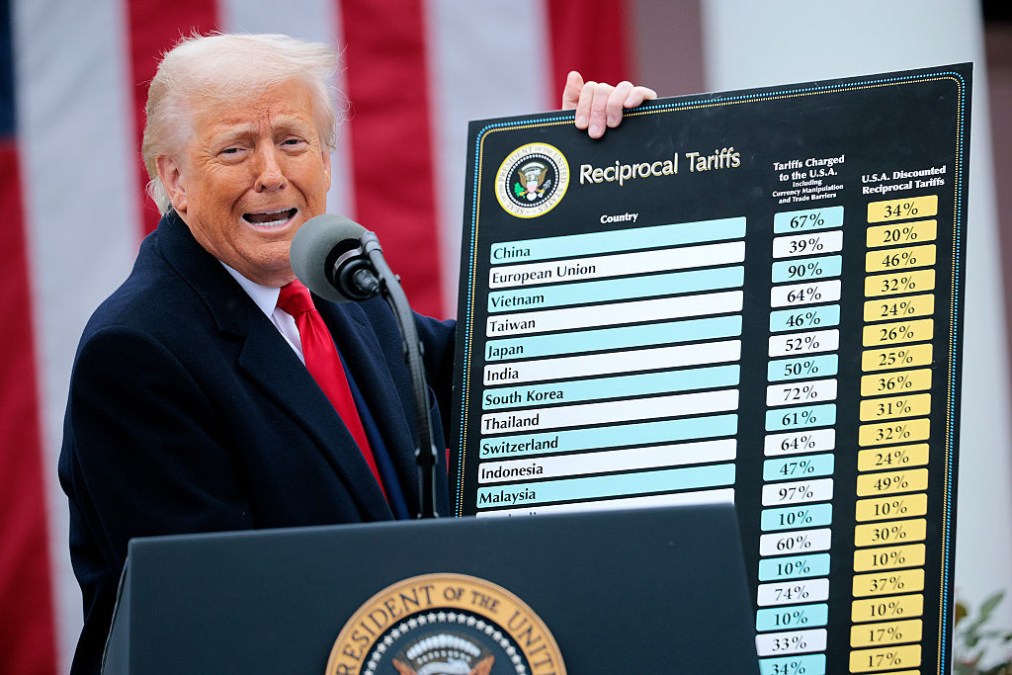
President Donald Trump’s swathe of tariffs this week – ranging from 10% to over 100% on imports from Asia, Europe, and beyond – has created global trade tensions across many industries.
While aimed at protecting American industry the move has wide-reaching consequences, particularly for the clean energy sector, as the new tariff regime reshapes the economics of solar power and intensifies geopolitical frictions.
Domestic short-term pain and uncertain gain
Although the US solar manufacturing sector has grown in recent years, it still heavily depends on overseas imports, particularly from Asia.
In 2024, the country imported nearly 95 million solar panels, the majority of which originated from countries now subject to high tariffs.
Increasing costs
US solar developers face mounting costs due to:
-
- 34% – 82% combined tariffs on Chinese solar and battery imports.
- Tariffs on components for grids and wind turbines from the EU and Canada.
This will drive up electricity prices, reduce profitability, and increase investment hesitancy.
Manufacturing and deployment
While Trump’s tariffs aim to boost domestic manufacturing, the US still lacks the infrastructure to meet demand:
- Most US-made panels still rely on Chinese polysilicon and wafers.
- Domestic production timelines only catching up, and new plants are not yet operational.
The rollback of Biden-era incentives such as the Inflation Reduction Act has compounded industry anxiety. Developers are balancing rising costs, uncertainty about long-term tax credits, and a fragile domestic supply chain.
International disruption and diversification
On 9 April, the European Union votes to pause its retaliatory trade countermeasures for 90 days, as Trump readdressed his tariff rates. But the US’ new tariffs will disrupt global solar supply chains.
Key suppliers like China, Vietnam, Malaysia, and Thailand now face steep levies, impacting exports to the US.
Many manufacturers had already rerouted operations through Southeast Asia to avoid earlier tariffs, but those regions are now targeted. As a result, solar panel prices are expected to rise globally.
However, countries like Turkey, Australia, and Pakistan may benefit from the glut of Chinese solar exports redirected away from the US. This may fast-track their clean energy ambitions, creating a divergence in global adoption.
China in conflict
At the centre of this tariff war lies China: a dominant player in solar manufacturing controlling 80% of the world’s solar panel supply chain. Following his refiguration of tariff rates on 9 April, China’s rate has shot up to 125% “effective immediately”.
Since Trump’s first-term tariffs targeting solar in 2018, Chinese firms have shifted production to Vietnam, Malaysia, and Cambodia to reach US markets. But Trump’s new tariffs have also hit these territories.
In retaliation, China imposed 34% tariffs on US goods – then increased to 84% on 10 April – and is deepening partnerships with Southeast Asian allies to preserve its supply chains.
Meanwhile, Chinese exports, which are already dominant in solar materials, may continue to flood other markets as US demand falls.
Metals and fossil fuels
Despite the slogan “Drill, baby, drill” (repeatedly used by Trump but originally coined at the 2008 Republican National Convention), the fossil fuel industry hasn’t been spared.
Tariffs on steel, aluminium, and uranium have raised costs for drilling and nuclear power projects, and imports from Canada, Kazakhstan, and others are now more expensive.
Regarding batteries, the Financial Times reports that combined tariffs of up to 82.4% are hitting lithium-ion battery imports – 90% of which currently come from China. This could derail US energy storage growth, with 18.2 GW of battery storage capacity planned for 2025 now at risk.
A Western solar power vacuum
Trump’s latest tariffs may have been designed to stimulate US industry, but they risk undermining the nation’s drive towards clean energy hegemony in the West.
Consequences will likely be observed in increased consumer costs and America’s isolation from cheap global supply chains.
While China adapts and even accelerates its dominance, the US faces a critical juncture: invest rapidly in domestic capacity or fall behind in the green energy transition.
[Image credit: Chip Somodevilla / Getty Images]
This article follows on from our coverage of President Trump’s second inaugural address in January. That content can be read here.
by Catie Owen | Apr 1, 2025 | Americas, Large Scale Utility Solar
Enlight Renewable Energy has secured debt financing for the Country Acres solar and energy storage project in California.
Located near Sacramento, the project includes 403MW of solar capacity and 688MWh of energy storage. Construction on the 966-acre site is already underway, with all procurement contracts in place.
The financing package totals $773m in construction loans, arranged through Enlight’s subsidiary, Clenera Holdings LLC.
Once the project begins commercial operations, expected for Q3-Q4 of 2026, the loan is expected to convert into a $376m term loan.
The project has long-term power purchase agreements (PPAs) with the Sacramento Municipal Utility District – 30 years for solar generation and 20 years for energy storage.
The facility is projected to generate enough clean electricity to power approximately 80,000 Californian households.
Renewed relationship
Adam Pishl, president and CEO of Clenera, says: “We are grateful to once again be partnering with leading banks on one of our largest projects.
“The American-generated, reliable energy produced at Country Acres will be fuelling the homes and businesses in central California for decades to come.”
Country Acres is part of Enlight and Clenera’s expanding U.S. portfolio, including Quail Ranch (128 MW/400 MWh) and Roadrunner (290 MW/940 MWh).
“This is the second financial closing we have accomplished with the same group of lenders in the past three months,” adds Enlight USA general manager Ilan Goren.
“We look forward to further deepening this relationship as Enlight and Clenera continue the build-out of our large U.S. project portfolio.”
Upcoming projects include Snowflake (600 MW/1900 MWh) and CO Bar (1211 MW/824 MWh), both nearing the end of their development phase with construction set to begin soon.
Each will feature a 1 GW grid connection, among the largest in the US.
by Catie Owen | Mar 26, 2025 | Commercial & Industrial Solar
Nofar Energy USA and Qcells USA Corp have partnered to develop two large-scale battery energy storage systems (BESS) in Texas, with a total capacity of 350 MW/700 MWh.
These projects aim to support grid stability and accommodate the state’s growing renewable energy needs. Construction is set to begin later this year, with completion expected in 2027.
The Bracero Pecan project, a 230-MW/460-MWh facility in Reeves County, will interconnect with American Electric Power (AEP) in ERCOT West.
The Fairway project, at 120 MW/240 MWh, will be in Freestone County, about 60 miles southeast of Dallas, and will connect to Oncor’s grid in ERCOT North.
Both sites are strategically positioned to improve grid reliability and optimise energy distribution.
“These well-located projects are strategically positioned for rapid deployment, ensuring both a swift time-to-market and strong value creation for our shareholders,” says Allon Raveh, Executive Chairman of Nofar USA.
Developed by Qcells and fully financed by Nofar, the projects are in the final stages of interconnection approvals.
According to both parties, combining Qcells’ development expertise with Nofar’s financial and operational capabilities will ensure efficient project execution and long-term viability.
IP Kim, President of Qcells USA Corp, adds: “These projects will bring a host of benefits to the Texas power grid and to the markets where they will be built. We are proud to collaborate with Nofar USA to advance energy storage solutions in the United States.”
by Catie Owen | Mar 25, 2025 | Commercial & Industrial Solar
Solar energy now accounts for 10.53% of total installed generating capacity in the United States, according to the Federal Energy Regulatory Commission (FERC).
Solar capacity is nearing that of wind energy, which stands at 11.77% of total capacity. FERC projects that solar will surpass wind in the coming years.
However, fossil fuels remain the primary source of power on US grids, with natural gas representing nearly 43% of capacity and coal accounting for 15%. Hydropower contributes 7.6%, according to FERC data.
While natural gas continues to dominate the energy mix, solar leads in new installations.
In January 2025, 2,950 MW of solar was added to the grid, compared to just 60 MW of new natural gas capacity.
Looking ahead, FERC tracks 89 GW of high-probability solar capacity additions through January 2028, significantly outpacing the 16 GW expected from natural gas.
Additionally, 16 GW of natural gas capacity and nearly 25 GW of coal are projected to be retired within the same period, signaling a shift toward emissions-free power sources.
Recent solar projects that have come online include:
Angelo Solar & Storage Project (195.4 MW) – Tom Green County, Texas
Atlanta Farms Solar Project (190 MW) – Pickaway County, Ohio (contracted to AEP Energy Partners LP)
Dunns Bridge Solar Project (435 MW) – Jasper County, Indiana
Eldorado Solar Project (150 MW) – Saline County, Illinois
Porter Solar Project (245.8 MW) – Denton County, Texas
Spanish Peaks Solar Expansion Project (140 MW) – Las Animas County, Colorado (contracted to Tri-State Generation & Transmission Association Inc.)
A complete list of new solar capacity additions can be found in FERC’s Energy Infrastructure Update report.
by Manas Sahu | Mar 20, 2025 | Storage
In 2024, the United States saw a 66% increase in battery storage capacity, according to the January 2025 Preliminary Monthly Electric Generator Inventory. By the end of the year, the country’s total utility-scale battery storage capacity had exceeded 26 gigawatts (GW). A further 10.4 GW of new battery storage capacity was added during the year, making it the second-largest contributor to new generating capacity after solar energy.
Although battery storage is expanding rapidly, it still represented just around 2% of the total 1,230 GW of utility-scale electricity generating capacity in the United States in 2024. However, the growth of battery storage is set to continue in 2025, with operators planning to add 19.6 GW of utility-scale battery storage to the grid, potentially setting a new record for capacity growth.
Battery storage systems do not generate electricity directly. Instead, they store electricity that has already been produced by power plants or taken from the electrical grid. These systems act as secondary sources of power, storing and supplying energy when needed.
by Catie Owen | Mar 17, 2025 | Commercial & Industrial Solar
US project developer and independent power producer (IPP) Catalyze has secured a $400m debt facility to support the construction and aggregation of commercial and industrial (C&I), community solar, and battery storage projects.
The multiyear loan, provided by ATLAS SP Partners, which is majority-owned by Apollo funds, will help finance Catalyze’s growing portfolio.
The company currently operates and is constructing 300 MW of assets, with over 1 GW in development.
“This facility is a critical milestone for Catalyze in our strategy to scale distributed renewable energy solutions for businesses and communities across the United States and will enable us to double in size by the end of the year, reaching 300 MW in operation,” said Jared Haines, CEO of Catalyze.
Catalyze, backed by private equity sponsors EnCap Investments and Actis, continues to expand its renewable energy footprint.
In 2023, it brought online its first standalone BESS: a 4.29 MW/8.58 MWh facility in Bronx, New York.
With the London edition of Solar & Storage Live only weeks away, don’t forget to register for your free ticket and join us at the London ExCeL from 2-3 April 2025 – or find a Solar & Storage Live event closer to home.
by Catie Owen | Mar 12, 2025 | Large Scale Utility Solar
Press Release
The United States installed a record-breaking 50 GW of new solar capacity in 2024, the largest single year of new capacity added to the grid by any energy technology in over two decades.
According to the US Solar Market Insight 2024 Year in Review report released today by the Solar Energy Industries Association (SEIA) and Wood Mackenzie, solar and storage account for 84% of all new electric generating capacity added to the grid last year.
In addition to historic deployment, surging US solar manufacturing emerged as a landmark economic story in 2024. Domestic solar module production tripled last year, and at full capacity, US factories can now produce enough to meet nearly all demand for solar panels in the United States.
Solar cell manufacturing also resumed in 2024, strengthening America’s energy supply chain and cementing its place as a solar powerhouse.
“Solar and storage can be built faster and more affordably than any other technology, ensuring the United States has the power needed to compete in the global economy and meet rising electricity demand,” said SEIA president and CEO Abigail Ross Hopper.
“America’s solar and storage industry set historic deployment and manufacturing records in 2024, creating jobs and driving economic growth.
“It’s critical that lawmakers continue to support an ‘all of the above’ energy strategy that fosters the growth of American energy sources like solar and storage.”
Forecast
Total US solar capacity is expected to reach 739 GW by 2035, but the report forecasts include scenarios showing how policy changes could impact the solar market.
Sudden changes to federal tax credits, supply chain availability, and permitting policy will create uncertainty for investors, increase costs for developers and manufacturers, and cause a slowdown in solar deployment.
The low case forecast shows a 130 GW decline in solar deployment over the next decade compared to the base case, representing nearly $250bn of lost investment.
A slowdown at this scale could leave the US without the electricity needed to meet rising demand, threatening growth in the manufacturing and technology sectors that rely on abundant power.
Many of the fastest-growing solar states such as Texas, Indiana, and Florida would see the largest declines in deployment under the low-case scenario. Texas alone could lose out on over $50 billion of solar investment over the next decade.
“Last year’s record-level of installations was aided by several solar policies and credits within the Inflation Reduction Act that helped drive interest in the solar market,” said Sylvia Levya Martinez, Principal Analyst, North America Utility-Scale Solar for Wood Mackenzie.
“We still have many challenges ahead, including unprecedented load growth on the power grid. If many of these policies were eliminated or significantly altered, it would be very detrimental to the industry’s continued growth.”
Texas led all states for new solar capacity additions last year, replicating a record-setting 2023 with 11.6 GW of new installations. In total, 21 states set new annual installation records, and 13 states added over 1 GW of new solar capacity in 2024.
The utility-scale segment saw historic gains in 2024, growing by 33% year-over-year with a record 41.4 GW of installed capacity. The community and commercial solar markets also set annual records, growing by 35% and 8%, respectively.
The residential solar market experienced its lowest year of installations since 2021 due to state-level policy changes and elevated interest rates nationally. Forecasts show that the market is expected to rebound over the next decade.
Want to publish a press release? Submit your content here for review by our editorial team.
by Catie Owen | Mar 10, 2025 | Storage
Canadian Solar has announced that its subsidiary e-STORAGE has secured Battery Supply Agreements and Long-Term Service Agreements (LTSA) for two major battery energy storage projects in the United States, developed by Aypa Power.
The agreements cover a 160 MW AC/806 MWh DC battery energy storage system (BESS) in California and a 200 MW AC/998 MWh DC BESS in Texas.
These projects will use approximately 370 SolBank 3.0 units, with construction scheduled to start in Q3 2025. Following commissioning, e-STORAGE will oversee maintenance and operations under a 20-year LTSA to ensure performance and reliability.
Colin Parkin, President of e-STORAGE, said: “We are proud to support Aypa Power in delivering utility-scale energy storage projects that will play a pivotal role in enhancing grid flexibility and reliability.
“These projects highlight the increasing role of battery storage in stabilising renewable energy supply, and we remain committed to driving innovation and delivering high-quality solutions that support a cleaner, more sustainable energy future.”
The projects are expected to improve grid resilience and support renewable energy integration in key U.S. markets.
by Catie Owen | Mar 7, 2025 | Commercial & Industrial Solar
Solar power developer Hecate Energy has begun work on what is expected to be the largest solar farm in the US: located on 10,300 acres at the Hanford Nuclear Reservation in Washington State.
The Hanford site, used for nuclear weapons production and waste storage from 1943 to 1989, has been undergoing a multi-decade decontamination process.
Hecate will install 3.45m photovoltaic panels capable of generating 2,000 MW – enough to power homes in Seattle, San Francisco, and Denver. The $4bn project also includes battery storage for an additional 2,000 MW.
If completed as planned in 2030, it will surpass the country’s largest existing solar farm, the 802 MW Copper Mountain Solar Facility in Nevada.
Former Energy Secretary Jennifer M. Granholm expressed support for the initiative, stating, “I am hopeful that they will see the benefit of being able to reuse these lands for something that is really beneficial to the nation.”
Political changes
The project comes amid shifting federal energy policies. While President Trump has prioritised oil and gas production, project proponents are monitoring whether his administration will intervene, as it did with offshore wind development.
Two Energy Department officials, speaking anonymously, said the administration had not yet acted but called the project’s future “uncertain.”
Despite political uncertainty, Hecate’s director of development, Alex Pugh, described the project’s viability. “The fundamentals of the project are strong regardless of policy direction,” he said. “The region needs the project. There is a huge demand for electricity here.”
However, Hanford’s history as a former nuclear weapons production plant presents challenges. Pugh acknowledged potential risks, stating, “The potential risk at the site is if we find contaminated soil, contaminated water – something nobody knew about.”