
Planning approvals for battery, wind, and solar projects in the UK nearly doubled over the past year, with more than 45GW of capacity approved in 2025.
According to analysis from energy market intelligence service Cornwall Insight, this represents a 96% increase from the 23GW approved in 2024, providing enough potential capacity to power 12.9 million homes.
The growth is primarily due to battery storage, which rose from 14.9GW to 28.6GW in 2024, and offshore wind, whose approvals jumped from 1.3GW to 9.9GW. This shift follows a 400% increase in approvals since 2021.
Factors driving the surge include the maturity of battery technology and developers accelerating the adoption of applications ahead of network connection reforms. Government efforts to streamline planning through updated National Policy Statements have also been credited with reducing delays.
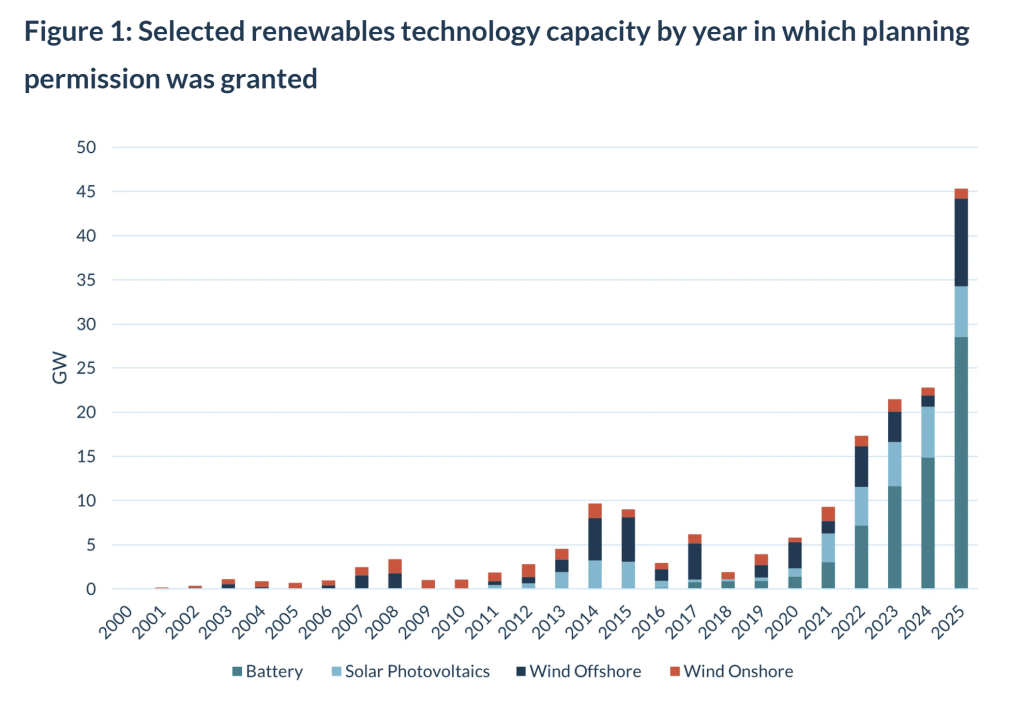
Despite the record numbers, industry experts warn of a gap between planning and delivery. Robin Clarke, Senior Analyst at Cornwall Insight, stated, “On paper, the UK’s renewables pipeline has never looked stronger.
“This record-breaking surge in planning approvals signals real momentum in the UK’s energy transition, with offshore wind and battery storage reshaping what’s possible at scale.”
However, Clarke noted that construction timelines and grid connection delays remain significant hurdles. “Approvals alone don’t generate electricity, and we urgently need to move from ambition to actual delivery of these projects.
“Too much capacity is still stuck in queues or waiting on grid upgrades. Grid bottlenecks remain one of the biggest risks to turning today’s approvals into tomorrow’s power.”
While reforms from NESO and the Planning and Infrastructure Bill aim to address “zombie” projects and legal challenges, Clarke emphasised that further action is required. “The recent grid connection reforms are a significant step forward, and should help clear some of the backlog, but they won’t solve everything.
“We need faster decisions, more investment in the grid, and real collaboration between Government, regulators, and industry. Without that, these record numbers risk becoming just another statistic.”
[Graph credit: Cornwall Insight]