by Solar&StorageXtra Team | Oct 16, 2025 | Europe, Everything Installer
At this year’s Solar & Storage Live UK in Birmingham, industry leaders gathered to showcase the latest technologies shaping the energy transition.
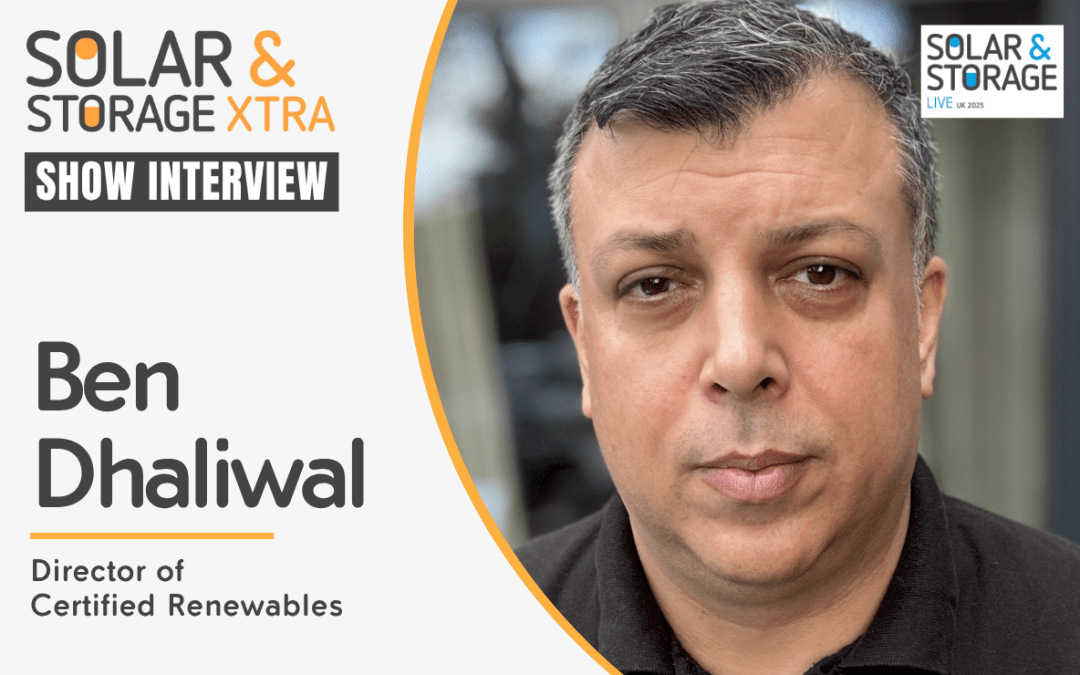
As a young but ambitious company, Certified Renewables is carving out a space in residential and commercial solar, battery storage, heat pumps, and EV charging.
Speaking at the show, Director Ben Dhaliwal discussed the company’s mission, the challenges facing installers, and his vision for scaling nationally while maintaining high installation standards.
Can you walk us through Certified Renewables’ mission and how it’s evolved?
Ben: Sure. In the renewables industry, there are lots of different areas to focus on. In our first year, we concentrated on the domestic market – residential solar, battery storage, and air source heat pumps.
We’ve since moved into EV charging and recently completed our first commercial installations, combining air source heat pumps with solar for business centres and office blocks.
Going forward, we’re focusing more on EV solutions, which is why this show is valuable – it’s great to see the technologies developing in that space. We’ve already received orders for commercial car charging, and events like this allow us to compare solutions side by side, rather than just online.
As we grow, we’re moving further into the commercial sector. Although that can be a challenge for a young company, it’s a welcome challenge for us!
Our long-term ambition is to deliver fully funded large-scale solar projects with storage and potentially enter the data centre sector.
We’re currently building up the right teams, skills, and experience to ensure we can deliver effectively when those opportunities arise.
What are the biggest challenges Certified Renewables sees installers facing today – regulatory, funding, or technical?
Ben: We are very lucky that, on the solar side, capacity isn’t an issue for us. Through my existing network, we can fit five to seven systems a day anywhere in the country. The challenge now is building market presence – making people aware of us, building trust in the brand, and showing the quality of what we deliver.
We’ve recently become a Which? Trusted Trader, and we are actively engaging with other certification bodies to continually enhance the quality and standards of our work. The first year has been focused on gaining those accreditations, which we hope will establish trust and credibility.
On the heat pump side, we’re taking a careful approach, focusing on London and the South East. I personally oversee every installation with my team to ensure standards remain high – because unlike solar, when you’re moving water in someone’s home, a lot can go wrong.
Likewise with solar, you are often dealing with someone’s largest investment, and proper care must be taken to protect the integrity of the roof and ensure the home’s electrical safety.
We’re also looking to grow through partnerships. For example, if a solar company wants to add an air source heat pump division, we can white-label that service. Likewise, if a plumbing company wants to offer solar, we can support them.
We’re also working with builders – we have seven or eight already on our books, providing a steady stream of business. Ultimately, partnerships are key to growth, both for us and for the wider installer community.
What milestones do you want to see Certified Renewables achieving in the next 3–5 years?
Ben: Of course, financial growth is important, but our real goal is to reduce carbon. We aim to expand to a national network for air source heat pumps, just as we have with solar, and to become a trusted brand in renewables – known for customer care and high standards.
That means going beyond the traditional “fit and forget” approach. With solar, we revisit every year to check tariffs and optimise systems remotely.
With heating, we fine-tune after installation and then check in at three, six, and twelve months to ensure customers get the optimised performance. I think we are first in the industry to set the standards.
We also see big opportunities emerging in commercial battery storage. Some of the new products coming to market will make energy storage more affordable and practical for businesses, offering strong payback periods as well as environmental benefits.
That’s an exciting growth area we’re watching closely.
Why is attending Solar & Storage Live UK valuable for industry players?
Ben: For us, the event covers solar, storage, and now EV – all areas we’re active in. On the solar side, updates are incremental, but batteries are advancing quickly, especially for commercial applications.
Stackable and outdoor batteries are coming to market, and for 24-hour operations, the ability to offset night-time energy costs with smart tariffs makes a real difference.
In some cases, commercial solar and storage projects can achieve payback in as little as two to four years – returns you won’t find in many investments – while also helping companies meet ISO standards and sustainability commitments.
Likewise, when I go into a home, I treat it like my own – looking at how all the available technologies can work together to make it as green, self-sufficient, and close to net zero as possible.
Events like this are vital. They bring the industry together, allowing us to share knowledge and pass on the benefits of our experience to homeowners and businesses.
Missed out on Solar & Storage Live UK? Get your free ticket to Solar & Storage Live London – the capital’s most exciting solar event. Or, find a Solar & Storage Live event near you.
by Solar&StorageXtra Team | Oct 14, 2025 | Commercial & Industrial Solar, Europe, Everything Installer
Solar & Storage Live returned to Birmingham this year, bringing together the industry’s leading innovators, investors, and developers to chart the future of the energy transition.
Trina Storage, the utility-scale storage arm of Trinasolar joined the event’s strong line-up of industry leaders.
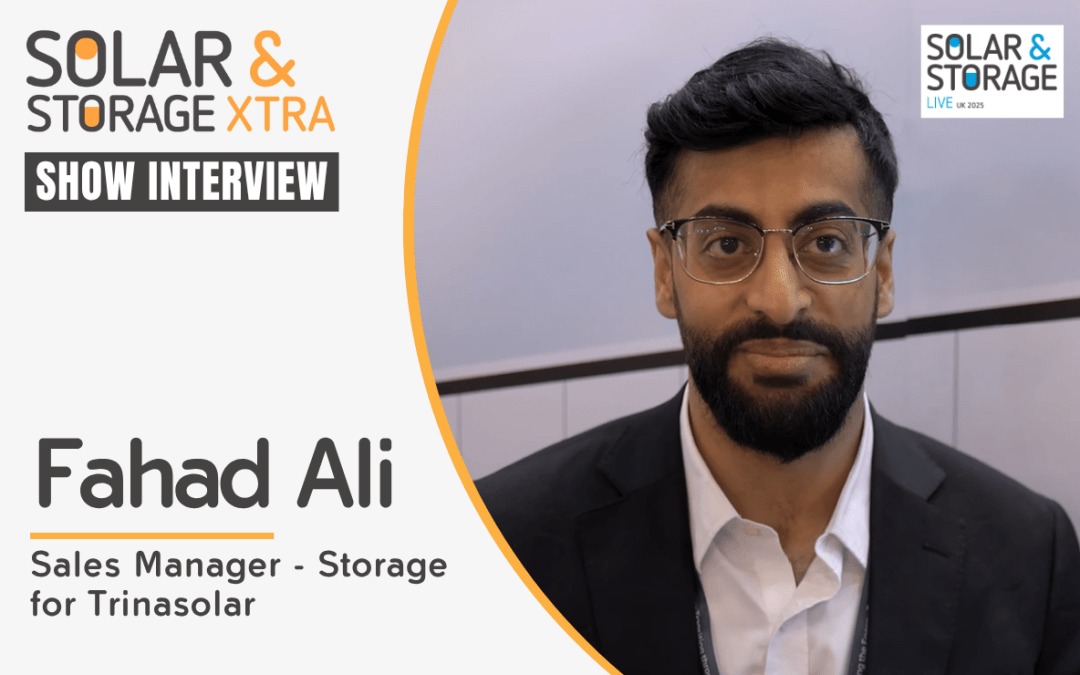
As the company continues to expand its European footprint rapidly, we sat down with Sales Manager Fahad Ali, who shared his perspective on how the storage market is set to evolve over the next three to five years.
How does Trinasolar see the storage market in Europe evolving over the next 3–5 years?
Fahad: It’s clear that we are entering a new phase of product evolution, driven mainly by three things: long-duration storage, higher energy density, and increased system intelligence. Over the next few years, you’ll see Trina respond to this.
We have products in development to deliver long-duration storage tailored to project needs, alongside improvements in energy density for shorter-duration battery systems.
Together with our partners, we’re also developing enhanced software and EMS platforms to support multi-market revenue stacking and optimisation, which is crucial for project finance today.
On top of that, we’re continuously refining the safety and sustainability of our systems to meet both customer expectations and regulatory requirements.
What are the key drivers and obstacles to market growth internationally, and how is Trinasolar addressing them?
Fahad: Globally, the three key drivers for energy storage growth are increasing renewable penetration, grid flexibility, and supportive policy frameworks.
Storage and renewables are inextricably linked, and supportive policies such as capacity markets and storage tenders will continue to drive expansion.
At Trina, we address these challenges by offering flexible and bankable solutions tailored to the specific regulatory and technical needs of each market. Our platform is modular and scalable, so it can be successfully applied across different regions.
We work closely with customers to overcome integration and application challenges, and after commissioning, we support them with local service teams for operations and maintenance.
Right now, we have around 60 people based in Europe, all focused on utility-scale storage projects. That experience translates into over 40 projects signed, representing more than three gigawatt-hours. Importantly, we also manufacture our own LFP battery cells, which gives us tighter control over safety, performance, and supply chain stability.
Our long-term objective is to be the trusted partner for energy storage in Europe, offering end-to-end support and future-ready systems that maximise value and accelerate the clean energy transition.
Can you tell us more about your flagship products that the industry should know about?
Fahad: Our flagship platform in Europe is the Elementa battery cabinet, a high-performance DC-coupled battery energy storage system designed for flexibility, safety, and long lifecycle performance.
Currently, we are deploying the Elementa 2 and Elementa 2 Pro models across Europe. Both use Trina’s own EV-grade LFP battery cells, delivering over 12,000 cycles with zero degradation in the first year.
They also feature an advanced hybrid liquid-air cooling system, flexible installation layouts to boost site energy density, multilayered safety features, and millisecond-level anomaly detection via smart control systems.
The Elementa 2 Pro will be ready for shipment towards the end of the year. It’s ideal for grid services, capacity markets, and renewable integration projects requiring up to eight-hour solutions.
Looking ahead, we will soon launch the Elementa 3, which features 587Ah cells and a very compact 6.25MWh container design. This next-generation system will be even better suited to long-duration applications thanks to optimised thermal control, active cell balancing, higher efficiency, and reduced losses.
What is Trina’s approach to sustainability in storage – for example, sourcing of materials, end-of-life recycling, and second life for battery modules?
Fahad: Sustainability is at the core of Trina Storage’s strategy. The company was founded to accelerate the clean energy transition in solar, and we’ve carried that same ethos into storage.
We produce our own LFP battery cells in-house, which gives us full visibility over material sourcing and supply chain ethics. Our systems are designed for long lifespans, and we support module-level replacement to extend asset life when customers look to repower.
On recycling and second life, we’re actively working with technical partners to develop responsible end-of-life handling programmes that support the circular economy. These efforts are closely aligned with evolving EU regulations and taxonomy frameworks.
What are the advantages of exhibiting at and attending Solar & Storage Live UK?
Fahad: Solar & Storage Live is one of the most relevant events in the UK for energy transition stakeholders. It gives us valuable face time with key customers, developers, and partners, and it helps us stay on top of market trends, regulatory changes, and new technologies in one of Europe’s most dynamic energy markets.
This year, sponsoring the awards dinner gave us a fantastic opportunity to connect and celebrate with our valued partners. Joined by our UK team across battery storage, solar modules, and PV mounting systems, we enjoyed an evening that strengthened our relationships and highlighted the progress we’re achieving together as an industry.
Missed out on Solar & Storage Live UK? Get your free ticket to Solar & Storage Live London – the capital’s most exciting solar event. Or, find a Solar & Storage Live event near you.
by Solar&StorageXtra Team | Oct 9, 2025 | Commercial & Industrial Solar, Everything Installer, Large Scale Utility Solar
Women continue to make up 32% of full-time employees in the renewable energy sector, according to a new report by the International Renewable Energy Agency (IRENA).
While this figure is higher than in fossil fuel industries, it has not increased since IRENA’s first gender analysis in 2019 – signalling little progress towards gender equality.
The second edition of Renewable Energy: A Gender Perspective provides IRENA’s most comprehensive assessment of women’s participation in the renewables workforce and the barriers they face.
It warns that without greater equality, the global energy transition risks being neither fair nor sustainable, citing potential labour shortages and a lack of diverse perspectives.
Disparities in workplaces
The study reveals significant disparities between job types. Women hold 45% of administrative roles but just 28% of science, technology, engineering and mathematics (STEM) positions, and 22% of technical trades such as installation and electrical work.
Representation is lowest in senior leadership, where women account for only 19% of roles.
Private companies were found to have the lowest levels of female participation at 25%, compared with 48% in non-governmental organisations and 37% in government or non-commercial institutions. In off-grid and community-based projects, women account for 35% of employees.
Disparities in sectors
In a SolarPower Europe report for International Women’s Day 2023, the trade organisation cited IRENA’s 2019 report, which demonstrates that the solar industry employs proportionally more women than the traditional energy and fossil fuel sectors.
“Advancing gender equality in the renewable energy sector depends on robust data, targeted policy interventions and active collaboration of all stakeholders,” said IRENA Director-General Francesco La Camera in response to the new report.
“Unfortunately, despite performing better than in fossil fuel industries, little progress has been made. The sector still has a lot of work to do. To realise the energy transition’s full potential, women must be recognised as equal partners and leaders in shaping the renewables-based future.”

Solving a systemic problem
The report attributes the lack of balance to systemic barriers at every stage of professional development. It cites cultural stereotypes, bias in recruitment, difficulties balancing work and caregiving, and limited advancement opportunities as key obstacles.
It also explains that women are often the primary users and managers of household energy systems, which means that they unfairly take on the “greatest burden” of energy poverty in developing countries.
IRENA calls for both top-down and bottom-up action to address the issue. It recommends that governments enforce equal pay and anti-discrimination laws, while employers introduce flexible working, transparent promotion systems and mentorship opportunities.
The agency adds that education providers and civil society groups also have a role in dismantling stereotypes and holding institutions accountable.
The full report can be found here.
by Solar&StorageXtra Team | Oct 7, 2025 | Americas, Commercial & Industrial Solar, Everything Installer, Large Scale Utility Solar
A coalition of labour unions, nonprofits and solar companies has filed suit challenging the Trump administration’s decision to rescind $7bn in grants awarded under the Solar for All programme.
The complaint, lodged in federal court in Rhode Island, argues that the U.S. Environmental Protection Agency (EPA) and its administrator, Lee Zeldin, unlawfully revoked grants that had already been awarded to states, tribes and nonprofits.
Zeldin announced in July that this would be part of the Trump administration’s “One Big Beautiful Bill” spending cuts, which seek to end many Biden-era renewable initiatives to “level the playing field” for fossil fuels.
The plaintiffs include the Rhode Island AFL-CIO, the Rhode Island Centre for Justice, Solar United Neighbours, and several solar installers and community organisations.
Serving households
Having been part of the previous President Joe Biden’s $27bn “green bank” (the Greenhouse Gas Reduction Fund), the Solar for All programme was established during the passing of a climate law in 2022.
According to the lawsuit, it was designed to serve over 900,000 households in lower-income communities.
Additionally, it was projected to save recipients about $400 annually on electricity bills while reducing or avoiding more than 30m metric tonnes of carbon dioxide equivalent in greenhouse gas emissions.
The Conservation Law Foundation (CLF) briefly notes that across the country, Solar for All “is expected to save an estimated $350m annually on energy bills and generate 200,000 new jobs.”
“This program would provide families with low incomes access to clean, affordable solar power: energy that lowers bills, improves air quality, and keeps people safer during extreme heat,” Kate Sinding Daly, Senior Vice President for Law and Policy for the CLF, commented in a statement.
“Stripping those benefits away is unlawful and betrays communities.”
In response, the EPA has declined to comment on pending litigation.
Rescinding the programme
In a previous social media statement from July, Zeldin had defended the cancellation by asserting that “the bottom line is this: EPA no longer has the statutory authority to administer the program or the appropriated funds to keep this boondoggle alive.”
Plaintiffs contend that stripping away the grants would deprive communities of access to clean energy, worsen energy insecurity, and stall job growth in the renewable energy sector.
“The Trump administration’s rollback of the Solar for All program is a shameless attempt to prop up fossil fuel companies at the expense of families,” Daly added.
The lawsuit seeks a judicial order to reinstate Solar for All and restore its funding; it can be read here.
by Solar&StorageXtra Team | Oct 6, 2025 | Commercial & Industrial Solar, Europe, Everything Installer, Large Scale Utility Solar, Storage
Press Release
Terrapinn are delighted to announce the latest addition to their global portfolio, Solar & Storage Live Italia, to be held at the Veronafiere during 8 – 9 October 2025.
Doors open on Wednesday 8th October, with 3,000 solar professionals expected to attend and headlined by a keynote address from Damiano Tommasi, Mayor of Verona.
Solar & Storage Live Italia is set to be Italy’s most exciting dedicated solar & storage trade exhibition, taking place for the first time in Verona, Italy. The event is organised by Terrapinn, with the support and cooperation of Veronafiere and Comune di Verona. It is supported at the highest level by sponsors Contact Italia, Failte Solar and Sunman, as well as renewable energy associations including ANIE Federazione, Kyoto Club, Legacoop, Elettricità Futura and the Global Solar Council.
The launch edition will bring together global and Italian suppliers Forniture Fotovoltaiche, ESPE, WiseGlow, Amara NZero, Chint PVSTAR, Huawei, Energy3000, Shanghai Elecnova Energy Storage Co., SolaX Power, who are among 100 exhibitors and innovative startups showcasing the latest solar and energy storage solutions.
With 3,000 attendees expected from across Italy, and high attendance from Verona and the Veneto region, it provides a one-stop destination for everything needed to deliver Italy’s commercial, industrial and residential solar and energy storage projects.
The event is free to attend and is a must-attend for installers, property owners, developers, landowners, and professionals working in the solar and energy sector who have registered on the website here.
The dynamic event format will provide Italy’s solar community with the opportunity to gather together to find suppliers and partners, and discover first-hand the tools, technologies and insights to grow their business, increase revenues and achieve energy independence.
Sean Willis, Managing Director, Terrapinn UK, comments:
“We’re thrilled to bring our successful Solar & Storage Live event formula to Italy and to launch another renewable energy exhibition that celebrates the technologies at the forefront of industry.
We’re excited to be opening our doors on 8th October, after a year in the planning, working with Veronafiere and our stakeholders, to realise this show. The co-location of events with McTER Expo provides an exciting new meeting place for the renewable energy sector. We are very pleased with the response and level of local support for the show.”
Event highlights
Exhibition: The event will convene key players from across the energy value chain, alongside pioneers and disruptors, to present the technology and service solutions essential for driving change in solar and storage. Headlining the event will be Platinum Sponsor Contact Italia, Gold Sponsors Sunman and Failte Solar, and Storage Theatre Sponsor Huawei.
Programme: The trade fair features four theatres and a comprehensive agenda covering a range of topic,s including large-scale utility solar, commercial and industrial solar, storage and batteries, and residential-scale solar installation.
Other features on the show floor: The Start-up Zone will feature 50 cutting-edge energy sector innovators and experts who can help deliver solar projects and make them a reality.
View more event highlights here.
Agenda highlights
The programme will commence from 10:00, Wednesday 8th October, with a keynote address from Damiano Tommasi, Mayor of Verona.
Over 150 speakers will participate in the extensive agenda across four stages, and you can expect to hear from representatives from some of the biggest and most innovative energy organisations based in Italy and globally. The programme is free to all event attendees registered for the event here
Leaders from the solar & storage industry will share their insights, case studies and expertise on critical subjects impacting the region, such as:
- Powering tomorrow: solar PV in 2025 and beyond, from solar parks to agrivoltaics and floating photovoltaics
- The role of energy storage in combination with other alternative renewable power sources
- Strategies and challenges in solar energy integration
- Financing projects and securing investment in the Italian battery market
- Raising public support for solar
View the full agenda here and speaker line-up here
Co-located with mcTER Expo
Solar & Storage Live Italia is co-located with mcTER EXPO – one location and two unmissable events for the renewable energy industry.
Opening times:
Wednesday 8 October: 09:30 – 17:00
Thursday 9 October 2025: 09:30– 17:00
Find out more about Solar & Storage Live Italia on our website here.
Want to publish a press release? Submit your content here for review by our editorial team.
by Solar&StorageXtra Team | Oct 2, 2025 | Europe, Everything Installer, Storage
Press Release
To celebrate their 15th anniversary, the inverter and smart energy solutions manufacturer GoodWe have announced a cashback campaign for installers in Europe.
The initiative runs for three months, from 1st of October to 31st of December 2025, covering selected residential GoodWe products, including hybrid inverters with batteries, All-in-One systems, EV chargers, heat pumps and carports.
Installers require membership in GoodWe PLUS+, the company’s European installer program, to be eligible, and need to make purchases through an authorised distributor.
Enrolment of the membership is available when making the claim and offers additional advantages, like warranty benefits, free technical training and loyalty awards.
“Installers are at the heart of GoodWe’s success. This campaign is our way of saying thank you as we celebrate 15 years together,” said Jie Zhang, Managing Director of GoodWe Europe GmbH.
“By combining strong cashback incentives with seamless access to our GoodWe PLUS+ community, we are strengthening our partnerships and helping installers grow their business.”
The GoodWe Smart Energy Ecosystem
GoodWe have expanded their product portfolio in the past years, offering smart energy appliances for modern homes, commercial & industrial (C&I) applications as well as utility-scale projects.
Their starting point and ongoing area of strength is in residential applications, where they have established a lineup of connected solutions.
Next to their innovative hybrid inverters and battery systems, the manufacturer produces lightweight solar panels for their solar carports, a line of heat pumps and water heaters under their GoodHeat brand, as well as their second generation of EV chargers.
This variety is reflected in the cashback campaign, covering the following products:
Hybrid Inverters & Batteries (purchased together)
ES G2 (3–6kW) or ES Uniq (8–12kW) with Lynx U G3 / Lynx A G3
ET G2 (6–15kW) or ET (20–30kW) with Lynx D
All-in-One Systems
ESA Inverter Module (3–10kW) with ESA 5–48kWh Battery Module
Residential Energy Products
Balcony ESA 0.8kW + BAT 1.9kWh
EV Charger HCA G2 (7–22kW)
R290 Air to Water Heat Pump
Hot Water Heat Pump
Carport Vela
15 years of renewable energy innovation
GoodWe was founded in 2010 and launched its first PV inverter for residential use in 2011. Within a few years, the company ranked in the top 10 of inverter manufacturers in China, offering multiple series of award-winning grid-tied products.
In 2014, GoodWe launched Asia’s first energy storage inverter and went on to earn a worldwide reputation as a top inverter manufacturer. With rising demand, GoodWe began establishing subsidiaries around the globe, including the GoodWe Europe headquarters in Germany.
Expanding their portfolio, the company funded additional business units for Building Integrated PV (BIPV) in 2020, Smart Energy in 2021, and opened a new factory for heat pump manufacturing in 2024.
In 2025, GoodWe is celebrating 15 years of innovation in solar PV and inverter manufacturing. The company is offering a product portfolio to cover and connect the energy needs of households around the world, transforming any building into a power plant to actively participate in the renewable energy revolution.
Full details, terms & conditions and claims form can be found here: https://emea.goodwe.com/cashback-2025
Want to publish a press release? Submit your content here for review by our editorial team.
by Solar&StorageXtra Team | Sep 29, 2025 | Europe, Everything Installer, Innovation, Press Release
Press Release
Chloris, the AI‑native platform for utility‑scale renewables project developers, will launch its “grid connection” product (Grid Connector) at Solar & Storage Live Italia in Verona on 8‑9 October.
About Chloris
Utility‑scale renewable projects are worth millions of dollars, yet development processes are often fragmented, manual and subjective, with only outdated tools in support of developers.
Furthermore, the common approach is to treat each phase (land acquisition, permitting, grid connection, techno‑economic analysis and PPAs to name a few) in isolation, leading to missed opportunities and sub‑optimal outcomes.
Chloris is building an AI‑first platform that unifies every key step in the utility-scale renewables development journey. Within a single collaborative workspace, developers can test numerous project variants via specialised tools, integrations with other products, and context‑aware agents, allowing them to find the best projects to develop – at scale.
Tackling the grid‑connection bottleneck
In Europe, grid access has become the primary barrier to deploying large‑scale solar and storage projects. Internal research reveals that over 80 % of utility‑scale solar & BESS projects fail because they cannot secure a feasible connection. For some developers, the failure rate reaches 98 %.
Italy illustrates the scale of the challenge: Terna (Italian TSO) reports more than 350 GW of pending connection requests, compared with a national target of only 65 GW of new renewable capacity by 2030 [1].
However, most of these projects will never see the light, being the result of speculative tactics enabled by the current legislation, and are now clogging the connection queue with virtual congestion that will never concretize.
To solve this problem, the Italian authorities are now reforming how grid rights are allocated. Under the new DL Energia decree [2], expected to enter into force soon, Terna is expected to get rid of 60% of the connection queue [3] and get a fresh start through the open‑season mechanism for allocating new grid capacity [4].
Introducing Grid Connector
To help developers navigate this upheaval, Chloris is launching Grid Connector, the first specialised tool within its platform. Grid Connector aggregates and enriches grid‑connection data from open‑source and official sources and overlays proprietary insights, giving solar and BESS developers a comprehensive view of the network. Key features include:
- Comprehensive network mapping: Users will have access to the whole Italian energy infrastructure – cleaned, normalised and enriched – like substations, power lines, power / storage plants and more in operation, under construction and in development;
- Congestion analysis: The tool estimates virtual (and soon real) congestion at the substation level, considering connected, contracted and pending capacity, helping developers to quickly identify nodes with available capacity or potential bottlenecks;
- Cost and timeframe forecasting: Grid Connector forecasts connection costs and timelines based on plant type, configuration and location, helping developers to choose the optimal locations and configurations for their projects.
- Parallel scenario testing: Built‑in AI agents allow users to run multiple connection scenarios concurrently, compare outcomes and iterate rapidly.
Together, these functions give developers the intelligence they need to target projects with a high probability of connection and to avoid wasting time and capital on congested nodes.
Meet Chloris in Verona
Chloris will reveal Grid Connector at Solar & Storage Live Italia in Verona. Visitors to the Start‑up Zone can see it at the stand S20.
To learn more about Chloris or to book a private demo, please visit chloris.ai and leave your email there, or contact one of the founders on LinkedIn (Alessandro | Andrea).
[1] Terna’s Econnextion platform
[2] Article from “Rinnovabili.it” on the DL Energia 2025
[3] Article from “Advant” on the DL Energia 2025
[4] Terna’s “Piano di Sviluppo 2025”
Italy Solar Week marks the leadup to Solar & Storage Live Italia, taking place in Verona 8 – 9 October. Secure your free place here, or find an event near you.
by Solar&StorageXtra Team | Sep 25, 2025 | Everything Installer, Innovation, Press Release
Press Release
DMEGC Solar has won the PV module UVID reliability AQM Award 2025. The TÜV Rheinland awards adhere to rigorous testing standards and an impartial selection process.
The UVID reliability assessment specifically evaluates the extent of power degradation in PV modules caused by prolonged outdoor ultraviolet (UV) exposure, serving as a critical indicator of a module’s long-term power generation performance and reliability.
DMEGC Solar’s INFINITY RT modules demonstrated outstanding performance in these tests, with their resistance to UV ageing far exceeding standard requirements.
This ensures efficient and stable power output even in harsh environments characterised by high temperatures, high humidity, and intense UV radiation, thereby delivering higher energy yields and longer-term investment protection for customers.
This award reflects the company’s profound expertise in material science, cell technology, and encapsulation processes.
By utilising encapsulation materials with superior UV resistance and advanced anti-UV cell technologies, the company has significantly enhanced its modules’ ability to block UV radiation, thereby markedly reducing power degradation associated with UV exposure.
A spokesperson for DMEGC’s PV Technology Quality department stated, “We are greatly honoured to receive this significant award from TÜV Rheinland. This is not only an affirmation of the exceptional quality of our products but also an encouragement for our unwavering commitment to a ‘quality-first’ philosophy.
“Moving forward, we will continue to focus on providing customers with higher efficiency, longer lifespan, and more reliable PV products, promoting the widespread adoption of clean energy, and contributing to the global carbon neutrality goals.”
It is noteworthy that, thanks to their consistently excellent product reliability, INFINITY RT modules have also performed exceptionally well in evaluations conducted by other authoritative third-party testers, Kiwa PVEL and RETC, earning the titles of “Top Performer” and ” Overall Highest Achiever,” respectively.
The company remains committed to leading the high-quality development of the PV industry through technological innovation and reliable quality, effectively navigating market challenges.
Want to publish a press release? Submit your content here for review by our editorial team.
by Solar&StorageXtra Team | Sep 25, 2025 | Everything Installer, Innovation, Press Release
Press Release
SkyVisor, a global leader in drone-based software solutions for the renewable energy sector, announced the launch of SkyVisor Solar Construction, a cutting-edge platform designed to meet the increasing demands of PV plant construction.
As the solar industry evolves at a rapid pace – with larger project scopes, tighter deadlines, and stricter budgets – SkyVisor Solar Construction offers a transformative solution that allows teams to bring inspections in-house and streamline project management from pre-construction to operations.
“Construction projects demand precision and efficiency to ensure timely completion and optimal performance,” says Fabien Sauvage, co-founder & CTO of SkyVisor.
“With SkyVisor Solar Construction, we aim to revolutionise the solar plant construction process by providing advanced tools and technologies that enable real-time monitoring, anomaly detection, and coordination, ultimately enhancing overall project outcomes.”
An all-in-one platform tailored for solar construction
SkyVisor Solar Construction consolidates every aspect of site monitoring and task management into a single integrated system. The platform includes an automatic flight DroneApp, AI-powered Asset Management Platform WebApp and a FieldApp for on-site collaboration.
By syncing seamlessly with existing data and design tools, it enables construction teams to stay on schedule, reduce delays, and ensure build quality across every stage.
Utilising state-of-the-art drone technology, SkyVisor Solar Construction delivers precise orthorectified imagery, seamlessly stitching together images to provide a comprehensive view of the construction site from above.
It offers unparalleled precision in monitoring construction progress, enabling project managers to identify deviations and address issues promptly, thereby minimising delays and optimising built quality.
Furthermore, by harnessing the power of AI algorithms, the solution enables automated anomaly detection and data analysis, allowing for proactive problem-solving and decision-making.
In addition to its technological innovations, SkyVisor also offers personalised consultation, training, and support to ensure clients maximise the benefits of the software.
Real results for renewable energy builders
Early adopters like PHOTOSOL have reported saving up to 42% of project management time per week, thanks to SkyVisor’s streamlined workflows and actionable insights. From solar rooftops to utility-scale PV plants, the software supports teams in delivering faster, higher-quality builds with fewer resources.
Plus, SkyVisor Solar Construction now leverages the DJI Dock 3 to enable fully automated drone-in-a-box operations. This technology allows drones to autonomously take off, perform scheduled inspection flights, and return to the dock for charging and data upload.
By combining SkyVisor’s AI-powered platform with DJI’s reliable Dock 3, construction teams can maintain continuous, real-time site monitoring, accelerate progress tracking, and ensure consistent data quality even on large-scale PV projects. This approach significantly reduces operational constraints, improves safety, and provides teams with instant access to actionable insights anytime, anywhere.
“SkyVisor enabled us to fully digitalise and monitor our PV plant construction independently using drones and software. It eases reporting and high-scale quality control, enabling us to focus on what matters and more custom project supervision,” says Julian Lesly, Maintenance Technician, PHOTOSOL.
For more information, please visit www.skyvisor.ai.
Want to publish a press release? Submit your content here for review by our editorial team.
by Solar&StorageXtra Team | Sep 22, 2025 | Commercial & Industrial Solar, Europe, Everything Installer, Large Scale Utility Solar
Press Release
The UK’s largest solar and energy storage exhibition, Solar & Storage Live UK 2025, opens tomorrow at the NEC Birmingham (23-25 September), bringing together more than 20,000 energy professionals to explore the technologies, solutions, and partnerships driving the UK’s clean energy transition.
With over 500 exhibitors confirmed – including Title Sponsor GivEnergy, Alpha ESS, Anker SOLIX, BYD, DAS Solar, EcoFlow, Fox ESS, GoodWe, Huawei, JA Solar, Jinko Solar, LONGi, SolarEdge, Sungrow, Tesla, Trina Solar, and many more – the exhibition will span the full spectrum of solar, energy storage, and related solutions.
Solar & Storage Live UK is proud to continue its long-standing partnership with Solar Energy UK, the event’s Official Partner. With its policy expertise and industry leadership, Solar Energy UK ensures the event remains the UK’s leading platform for tackling the challenges and opportunities on the road to net zero.
This year, Solar & Storage Live UK is co-located with EVCharge Live UK, expanding the exhibition to showcase the synergies between solar, storage, and EV charging in enabling a resilient, net zero energy system.
Presentation Highlights
Alongside the exhibition, more than 250 expert speakers will deliver insights across policy, finance, technology, and market development. High-profile speakers include:
- Michael Shanks, Minister of State, Department for Energy Security and Net Zero & Department for Business and Trade
- Harry Mayhew, Deputy Director, Department for Energy Security and Net Zero
- Chris Hewett, Chief Executive, Solar Energy UK
- Josh King, Chair, Solar Energy Scotland
- Sharon Thompson, Deputy Mayor, West Midlands Combined Authority
- Alexandra DeSouza, General Counsel – EMEA, Lightsource bp
- Ben Godfrey, Director of Distribution System Operator, National Grid
- Kieron Stopforth, Global Flexibility Manager, Octopus Energy Generation
- Tim Humpage, CEO, British Solar Renewables
- Rob Gilbert, Director of Supply Chain, Great British Energy
- Baroness Luciana Berger, Chair, Energy Storage Association (UK)
- Justin Claxton, Co-Founder & VP, FOXESS CO., LTD.
- Darren Brown, Commercial Director, GivEnergy
- Laura Miranda Perez, Chief Communications & Sustainability Officer, Oxford PV
- Dylan Middleton, ESG Manager – Sustainability and Supply Chain, JA Solar
New for 2025
UK Installer Awards Ceremony & Networking Reception
For the first time in the UK, the EUPD Research Installer Awards will recognise leading solar and storage installers for technical expertise, customer satisfaction, and market leadership. The ceremony will be followed by a networking reception with peers and industry leaders.
📅 Tuesday, 23 September | ⏰ 16:30 | 📍 Energy Storage Theatre
Start-ups Zone & Pitch Competition
The Start-ups Zone will spotlight innovative technologies and new business models from rising companies. The Start-up Pitch Competition, co-hosted with EVCharge Live UK, will see top start-ups compete for the title Start-up of the Year 2025 before a panel of investors.
📅 Thursday, 25 September | ⏰ 14:50 | 📍 Electric Avenue Theatre (EVCharge Live UK)
Other Event Highlights
- Meet the Installers Zone – connect directly with trusted UK-based installers for commercial, industrial, and landowner projects.
- Installer Training Hub – hands-on workshops in solar PV, battery storage, and inverter installation led by top manufacturers.
- Recruitment Zone – discover job opportunities across the sector and connect with hiring companies.
- Networking Events – free sessions with leading industry associations including the Global Solar Council, SolarAid, Sustainability West Midlands, Women in Cleantech & Sustainability, POWERful Women, Solar Nation, Women in Energy Storage, and more.
Driving the UK’s Clean Energy Transition
Rebecca Sloan, General Manager of Solar & Storage Live Europe, said:
“As the UK accelerates its journey to net zero, solar and energy storage are becoming central to the country’s energy transition. Solar & Storage Live UK is not just about business opportunities – it is about enabling the UK to build a cleaner, more resilient energy system.
By bringing together 20,000+ industry leaders, innovators, and policymakers, the event helps drive adoption of technologies and solutions that cut carbon, strengthen grid stability, and secure long-term energy independence.”
Solar & Storage Live in Birmingham opens its doors tomorrow, and there’s still time to get your free ticket to the UK’s largest solar and storage show. Or, find a Solar & Storage Live event near you.
by Solar&StorageXtra Team | Sep 18, 2025 | Europe, Everything Installer, Podcast
What if your home could outsmart the grid?
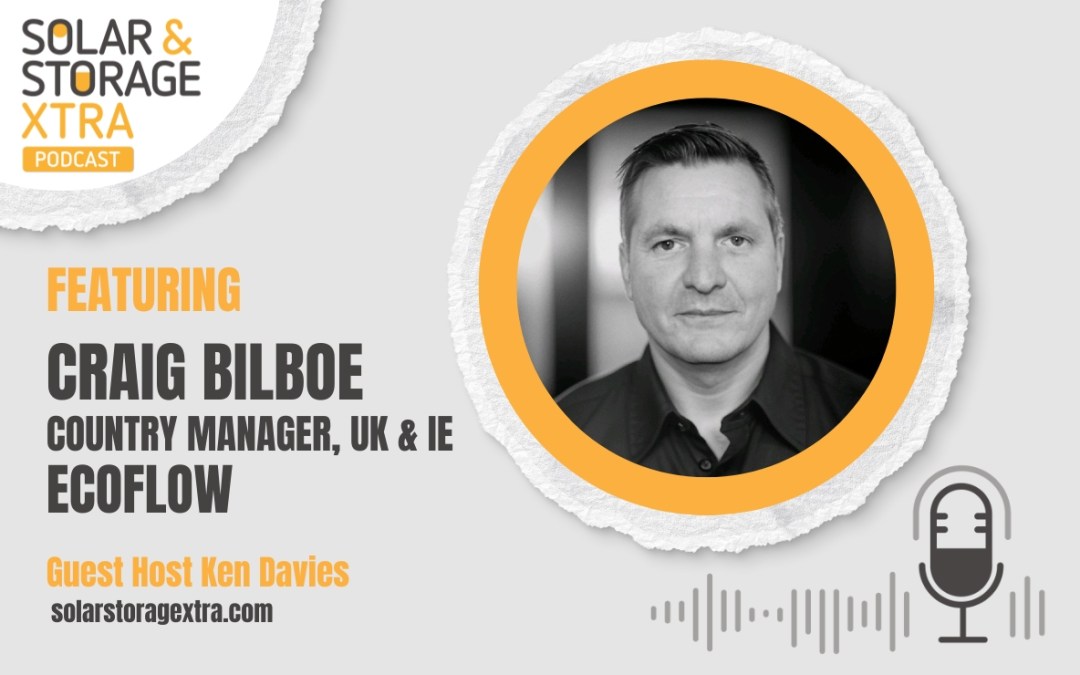
In this special UK Solar Week Solar&StorageXtra podcast episode, Guest Host Ken Davies is joined by Craig Bilboe, Country Manager, UK & IE, from EcoFlow.
Ken and Craig talk about the tech reshaping home energy: from EcoFlow’s meteoric rise in portable power to AI-driven energy management.
Craig reveals how consumers are demanding smarter, safer, and more resilient solutions, and dives into how modularity, safety, and installer-friendly design support both consumers and professionals.
“Environmental factors are happening and becoming more severe – couple that with a huge increase in demand on the grid, and the turning off of certain fossil fuel power stations – the grid really trying to catch up on that demand.”
– Craig Bilboe
Listen to hear more about EcoFlow’s soon-to-launch EcoFlow Gateway, designed for off-grid independence – and EcoFlow’s major new UK investment.
Check out the Solar&StorageXtra Podcast on Spotify, Apple Podcasts, or Amazon Music, and start listening!
UK Solar Week marks the leadup to Solar & Storage Live UK, taking place 23 – 25 September. Haven’t registered yet? Don’t miss out on your free ticket by securing your place here.
by Solar&StorageXtra Team | Sep 11, 2025 | Everything Installer, Press Release
Press Release
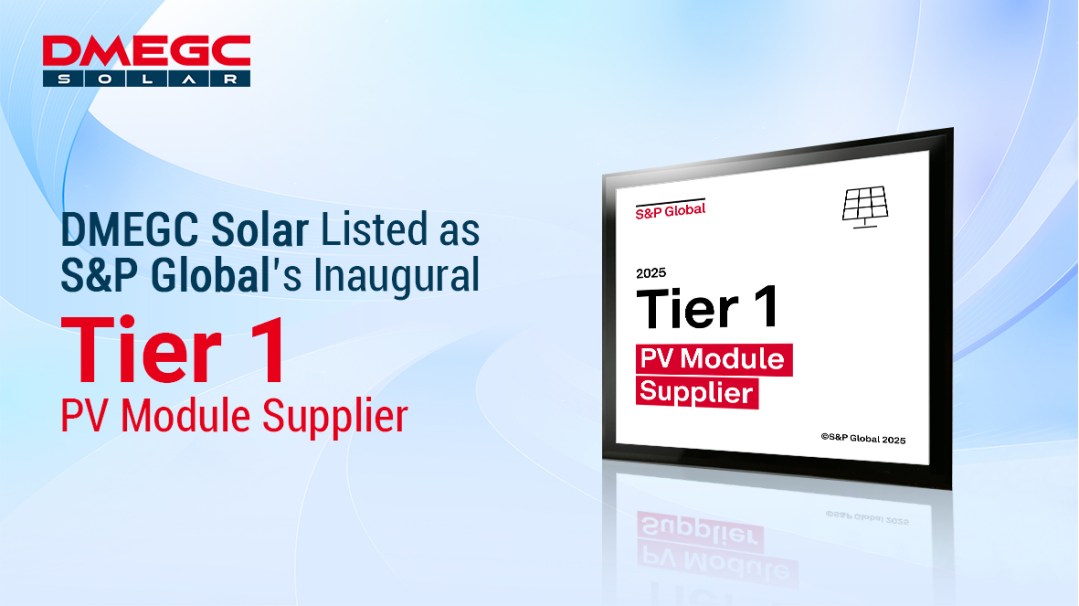
DMEGC Solar has been listed as S&P Global’s tier 1 PV module supplier. The list is based on transparent, data-driven, and long-term credible benchmarks, aiming to identify leading clean technology suppliers that excel across key dimensions such as market share, financial strength, and sustainability.
The Tier 1 rating not only helps technology manufacturers stand out in a highly competitive industry but also serves as an important reference for developers and buyers seeking reliable partners.
As the first Tier 1 clean technology list released by S&P, the evaluation system differs from traditional rankings that rely on narrow metrics or undisclosed methodologies. Instead, it emphasises a comprehensive assessment of whether companies meet strict, objective, and clear criteria.
The 2025 evaluation covers four core clean energy technology segments: photovoltaic modules, inverters, wind turbines, and battery energy storage systems. Manufacturers worldwide were assessed based on six key dimensions, including market presence and share, total capacity and global diversification, financial performance, and sustainability metrics.
To be rated as Tier 1, a company must exceed both absolute thresholds and industry average levels in most dimensions, reflecting the rating’s high standards in rigor and consistency.
DMEGC Solar’s photovoltaic product shipments reached 13.4GW in the first half of 2025, a significant 64% year-over-year increase, maintaining its position in the top ten global module manufacturers.
In addition to S&P’s Tier 1 ranking, the company also holds the Bloomberg New Energy Tier 1 and SMM Tier 1 rankings. DMEGC Solar’s Infinity RT series modules, renowned for their outstanding reliability, comprehensive product portfolio, and high efficiency, have earned the RETC Overall Highest Achiever and Kiwa PVEL PV Module Top Performer awards.
They also pass the stringent VKF hail resistance certification and the prestigious DIBt certification. In Wood Mackenzie’s 2025 Global Solar Module Manufacturer Rankings, DMEGC Solar has leapt to fifth place.
Want to publish a press release? Submit your content here for review by our editorial team.
by Solar&StorageXtra Team | Sep 9, 2025 | Americas, Everything Installer, Storage
The United States added nearly 18GW of new solar capacity in the first half of 2025, according to the latest US Solar Market Insight Q3 2025 report from the Solar Energy Industries Association (SEIA) and Wood Mackenzie.
Solar and storage together accounted for 82% of all new power added to the grid in the first six months of the year.
The growth comes amid a shifting policy environment. The passage of the One Big Beautiful Bill Act (HR1) and subsequent Trump administration measures targeting solar have led analysts to revise deployment forecasts downwards.
The report’s low-case forecast warns the US risks losing 44GW of solar deployment by 2030, an 18% decline compared to earlier expectations. When measured against pre-HR1 projections, the potential loss increases to 55 GW, or 21%.
“Solar and storage are the backbone of America’s energy future, delivering the majority of new power to the grid at the lowest cost to families and businesses,” said SEIA president and CEO Abigail Ross Hopper.
“Instead of unleashing this American economic engine, the Trump administration is deliberately stifling investment, which is raising energy costs for families and businesses, and jeopardising the reliability of our electric grid.
“But no matter what policies this administration releases, the solar and storage industry will continue to grow, because the market is demanding what we’re delivering: reliable, affordable, American-made energy.”
The report notes that 77% of all new solar capacity installed in 2025 has been built in states won by President Trump, including eight of the top 10 states for installations: Texas, Indiana, Arizona, Florida, Ohio, Missouri, Kentucky and Arkansas.
Manufacturing has also expanded, with 13GW of new solar module production capacity added in the first half of 2025. This brings total US solar module manufacturing capacity to 55 GW.
However, no new upstream manufacturing investment was recorded in the second quarter, with federal policies cited as a risk to momentum and private capital inflows.
The forecast indicates solar deployment could fall 4% below the pre-HR1 base case by 2030. Short-term activity remains supported by projects already underway, developers working to meet tax credit deadlines, and rising power demand as gas generation becomes more costly and less available.
Orders from the DOI
The Department of the Interior (DOI) has also issued orders that single out solar for more stringent permitting treatment, which the report estimates could affect 44GW of planned projects, particularly in Arizona, California, Utah and Nevada.
“There is considerable downside risk for the solar industry if the federal permitting environment creates more constraints for solar projects,” said Michelle Davis, head of solar research at Wood Mackenzie.
“The solar industry is already navigating dramatic policy changes as a result of HR1. Further uncertainty from federal policy actions is making the business environment for the solar industry incredibly challenging.”
SEIA has written to DOI Secretary Doug Burgum, warning that if executive actions are not reversed, they could lead to job losses, higher electricity costs, and reduced competitiveness for the US economy.
by Solar&StorageXtra Team | Sep 4, 2025 | Europe, Everything Installer
Trinasolar and French solar manufacturer HoloSolis have signed a patent licensing agreement allowing HoloSolis to use Trinasolar’s Tunnel Oxide Passivated Contact (TOPCon) solar cell technology in Europe.
The agreement gives HoloSolis access to Trinasolar’s patent portfolio, which is widely recognised in the PV sector, and will support the establishment of a European production line for high-efficiency solar panels.
“This partnership with Trinasolar allows us to combine world-class technology with European manufacturing leadership,” said Oliver Schultz-Wittmann, CTO of HoloSolis.
“By obtaining this license, we ensure that our products are both innovative and aligned with global IP standards, offering reliable, high-performance solar solutions made in Europe.”
The planned HoloSolis factory in Hambach, Moselle, is designed to produce 10 million solar panels annually – equivalent to 5GW of capacity, enough to power one million homes.
The facility is expected to create over 2,000 direct jobs and deliver long-term industrial benefits to the Grand Est region.
Trinasolar said its TOPCon portfolio includes “some of the most advanced and foundational patents in the field,” which will enable large-scale, low-carbon panel production in Europe.
Gonzalo de la Viña, President Europe at Trinasolar, said: “This agreement is more than a license – it’s a symbol of how global innovation can fuel local industrial strength.
“By bringing proven, high-efficiency technology to HoloSolis, Trinasolar is contributing to the development of a stronger and more resilient PV manufacturing ecosystem in Europe.”
HoloSolis said it has secured more than €200m in financing and received over 20GW of Letters of Intent from buyers, covering its first five years of production.
“In just over a year, we have secured over €200m in financing and achieved critical milestones, from permits and land acquisition to grid access and industrial design,” said Bertrand Lecacheux, CEO of HoloSolis.
“The partnership with Trinasolar is a strong vote of confidence in our vision to become a European industrial champion in solar, rooted in the region and aligned with European values.”
[Image caption: Trinasolar’s high-efficiency TOPCon technology will be used by HoloSolis to enable large-scale PV manufacturing in Europe. Image credit: Trinasolar]
by Solar&StorageXtra Team | Aug 29, 2025 | Americas, Asia, Everything Installer
High US tariffs and possible anti-dumping duties on Indian solar panel exports are set to deepen a supply glut in India next year as domestic project bidding slows, industry officials and analysts said.
US President Donald Trump’s 50% tariffs on Indian shipments will restrict sales to its largest overseas market, which accounts for 90% of exports.
The situation could worsen if the US Commerce Department imposes anti-dumping duties following a 17 July petition from American solar companies targeting imports from India, Indonesia and Laos.
“The 50% tariff will squeeze margins, and potential anti-dumping duties will make competing in the US even tougher,” said Raj Prabhu, CEO of consultancy Mercom Capital.
India’s awards of new solar projects slowed sharply in the June quarter. “We expect that India will enter overcapacity stage already in 2026, which will feel even worse with the loss of the US market,” said Wood Mackenzie analyst Yana Hryshko.
Government incentives have doubled annual module capacity to 74 gigawatts by March, with forecasts of 190 GW by 2027. Yet factories are running at only 25% utilisation on average, said Vinay Rustagi of Premier Energies.
“Some companies are running at 80%-85% like us, others are running at much lower capacity,” he added.
Finding new export markets will be difficult. Indian modules using Chinese cells are 48% more expensive than Chinese modules, while those made with Indian cells are 143% costlier, Mercom data shows.
India plans to mandate domestic cell use from June 2026, though these are more than three times the cost of Chinese alternatives, said Rystad Energy analyst Fei Chen.
Analysts expect a short-term surge in Chinese imports before the rules take effect.
“Reliance on cell imports is likely to increase in the short term, potentially leading to stockpiling, price spikes, and supply chain pressures,” Prabhu said.
India has seen a solar success in recent months, with the country announcing in July that 50% of its installed capacity now comes from renewable sources – five years ahead of target.
by Solar&StorageXtra Team | Aug 28, 2025 | Americas, Everything Installer, Large Scale Utility Solar
Solar energy supplied nearly 9% of US electricity in the first half of 2025, according to a review of U.S. Energy Information Administration’s (EIA) data by the SUN DAY Campaign.
Figures from the EIA’s latest Electric Power Monthly show that wind and solar combined produced over one-fifth of the nation’s electricity, while renewables overall accounted for 27.7%.
Solar generation set records in June and across the six-month period. Utility-scale solar grew 37.6% year-on-year in January-June, with small-scale systems up 10.7%. Together, solar expanded by 29.7%, providing 8.7% of total generation, up from 6.9% a year earlier.
In June alone, solar supplied 10.2% of national output, rising 25% compared with June 2024. Utility-scale plants grew by 30.1% while rooftop solar rose by 10.5%.
The review found solar produced 45% more electricity than hydropower, and more than hydropower, biomass, and geothermal combined.
Wind power contributed 11.6% of US electricity in the first half of 2025, 2.4% higher than the same period last year. Wind and solar together generated 20.3% of the total, overtaking coal and nuclear.
All renewables increased output by 9.2% year-on-year, compared with 3.0% growth in total US electricity generation. Natural gas remained the leading source, though its output fell 3.7%.
“EIA’s latest data reflect the situation prior to enactment of the Trump/Republican megabill which may adversely future renewable energy growth,” said Ken Bossong, executive director of the SUN DAY Campaign.
On July 7, the US President signed an executive order that scaled back tax incentives for renewable projects, including solar and wind, which is forecasted to negatively impact the nation’s renewable progress.
Bossong adds: “Nonetheless, EIA notes that US developers expect half of new electric generating capacity to come from solar in 2025 and another 13% from wind.”
The EIA released its latest report on 26 August.
by Solar&StorageXtra Team | Aug 27, 2025 | Africa, Everything Installer, Large Scale Utility Solar
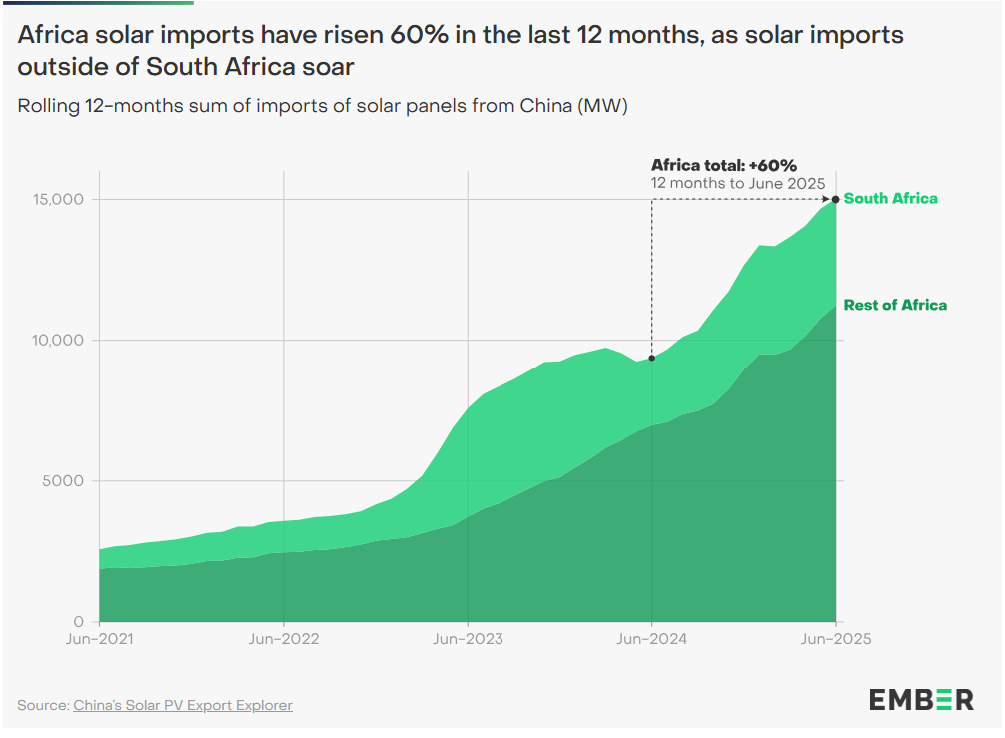
Africa is showing ‘The first evidence of a take-off in solar in Africa’ according to a new report by energy think tank Ember, which points to a sharp rise in solar panel imports across the continent.
Between July 2024 and June 2025, African nations imported 15,032MW of solar panels from China, representing a 60% increase compared with the 9,379MW imported in the previous 12 months.
While South Africa has traditionally led the way, Ember found that imports outside of South Africa almost tripled over the two years to June 2025, rising from 3,734MW to 11,248MW.
The number of African countries importing at least 100MW also rose significantly, from 15 to 25, with 20 countries setting new records during the same period. Ember said the findings suggest “a substantial shift in the landscape of renewable energy adoption across the continent.”
The potential contribution of these imports to electricity generation is striking. In Sierra Leone, for example, if all the panels imported were installed, they could generate electricity equal to 61% of the country’s total output in 2023.
Across 16 African countries, the increase would exceed 5% of 2023 generation levels.
Ember highlighted the economic advantages of the transition away from diesel. “The savings from avoiding diesel can repay the cost of a solar panel within six months in Nigeria, and even less in other countries,” the report stated.
However, the think tank also urged caution. While the data signals strong momentum, it stressed that Africa is “not the next Pakistan – yet,” noting that rapid transformations are possible but require closer monitoring.
[Graph credit: Ember]
by Solar&StorageXtra Team | Aug 22, 2025 | Americas, Commercial & Industrial Solar, Everything Installer
Enphase Energy, a US-based microinverter manufacturer, has signed its second safe harbour agreement this month to secure residential solar tax credits.
The deal will see Enphase supply domestically produced IQ8HC microinverters to a “leading solar and battery financing company”, which will provide third-party ownership (TPO) agreements for home solar and storage systems.
Enphase expects the agreement to generate around $50m in revenue.
Safe harbour provisions will allow the projects to qualify for the 30% 48E Investment Tax Credit (ITC) until its scheduled end in July 2026, following the recent Republican budget reconciliation bill.
The deal will also support access to the 10% domestic content bonus credit for projects using sufficient US-made components.
Ken Fong, senior vice president and general manager of the Americas and APAC at Enphase Energy, said safe harbour agreements “are a critical tool for keeping solar projects on track despite changing policy landscapes”.
He added: “These agreements allow developers and financiers to move forward with confidence, safeguard project economics, and accelerate clean energy deployment.”
Background
The reconciliation bill introduced stricter eligibility requirements for clean energy tax credits.
Both the ITC and the Production Tax Credit (PTC) will be phased out from 4 July 2026. Projects that start before this date have four years to commence operations, while others must be operational by the end of 2027.
New Treasury guidance, following an executive order from President Trump, clarified that residential projects under 1.5MW can qualify by spending 5% of estimated costs and maintaining “continuous construction”.
Larger systems must demonstrate substantial physical work.
Enphase said it plans to expand its safe harbour pipeline. Analyst firm Wood Mackenzie recently noted that while the US residential solar sector may contract in the short term, TPO eligibility for the 48E ITC remains a “major upside” for long-term growth.
by Solar&StorageXtra Team | Aug 21, 2025 | Everything Installer, Large Scale Utility Solar, Oceania
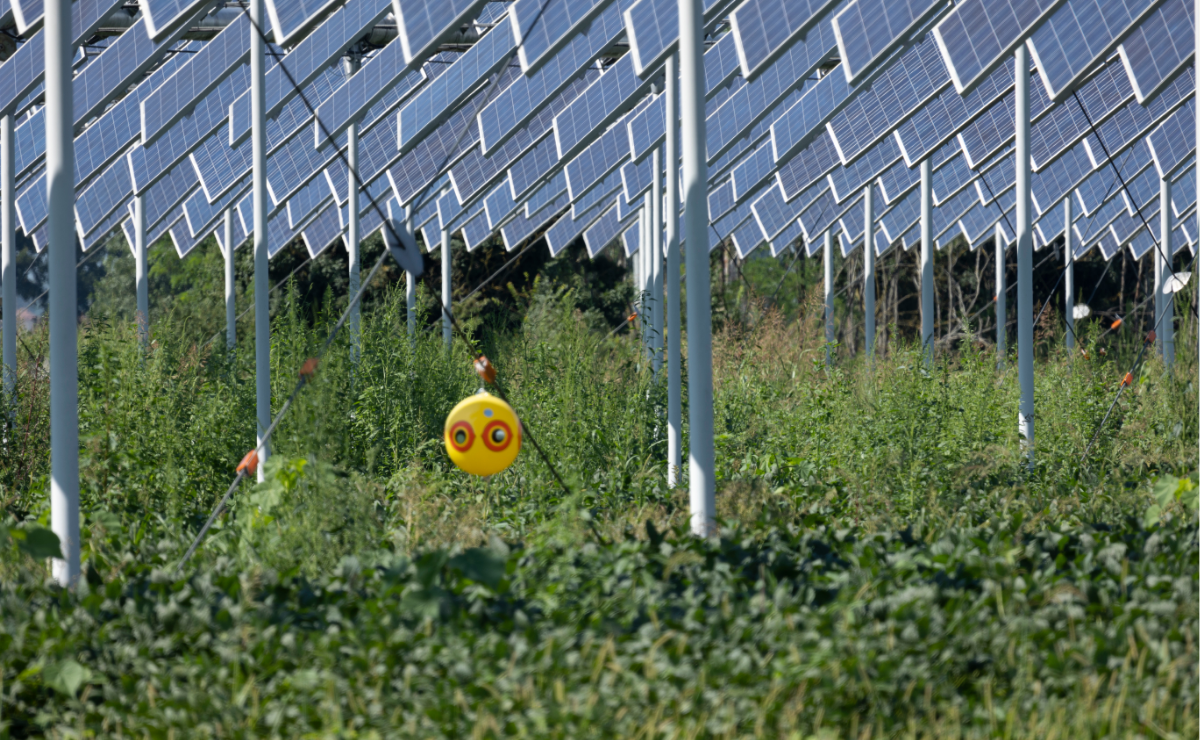
A new handbook on agrivoltaics from EnergyCo sets out how combining agriculture with solar energy can help meet renewable energy targets while supporting food production and rural economies.
Designed for both solar developers and landholders, the handbook contains research from industry leaders and insights from farmers themselves.
“This is the first comprehensive guide to assist developers and landholders to design and plan solar developments for grazing sheep,” explained Farm Renewables Consulting Director Karin Stark, who worked on the report with EnergyCo, on a LinkedIn post sharing the report.
“It also covers considerations for growing crops under solar and outlines case studies for cattle under solar.
By drawing on Australian case studies and international research, the document positions agrivoltaics as a solution with worldwide relevance for balancing renewable energy growth with the protection of farmland.
EnergyCo described the purpose of the handbook in a statement on social media: “The handbook reflects our commitment to informing local communities as we modernise the NSW energy grid.”
Benefits for farmers
The publication highlights the resilience that a secondary income stream provides. “For farmers, a secondary income earned from leasing land to solar developers builds financial resilience,” it states.
Panel shading also offers production benefits. In grazing systems, sheep use panels for shelter from extreme heat and wind, while the microclimates beneath panels help pastures stay green for longer.
Dubbo grazier Tom Warren, who runs around 250 merino sheep on 54 hectares within a solar farm, reports carrying “25% more sheep overall, compared to land without panels, due to increased soil moisture retention and the concentration of moisture in green pasture strips during dry periods.”
Warren has also observed improvements in wool quality, attributing this to reduced dust and burr contamination under panels.
For horticultural systems, panel cover can reduce crop losses. International trials cited in the handbook suggest reduced heat and hail damage for fruit and vegetable growers, as well as greater water efficiency.
Benefits for the solar industry
For developers, agrivoltaics provides an inexpensive way to manage vegetation while strengthening the industry’s “social licence” in rural areas.
The handbook notes that “solar grazing reduces vegetation management costs and increases social acceptance if the land is kept in production.”
The cost savings are significant: slashing vegetation mechanically costs $100 to $250 per hectare, while sheep grazing offers a cheaper and more sustainable alternative.
In addition, community acceptance improves when energy projects retain visible links to farming. “The retention of agricultural production on the same footprint as large-scale solar development is a critical aspect of delivering community benefit and gaining community acceptance for the energy transition to renewables,” the report states.
Towards wider adoption
While the handbook is designed for New South Wales, it draws on local, national, and international case studies. Its practical checklists for developers and landholders – from paddock layout to stocking rates – are applicable worldwide.
Agrivoltaics is already highly discussed internationally as a method for increasing investment in solar. Research from the UK’s University of Sheffield found that the country’s solar expansion goals could be achieved via agrisolar – without sacrificing farmland.
Overall, handbook authors stress that success depends on collaboration. Input from graziers, agronomists, and landholders during the design phase ensures that solar infrastructure supports continued agricultural use.
The report concludes that agrivoltaics is still an evolving practice, but one with clear potential: “Agrivoltaics is not a silver bullet, but it offers a practical and scalable solution to deliver food and energy security hand in hand.”
Solar & Storage Live in Birmingham is on the horizon, so don’t miss out on your free ticket to the UK’s largest solar and storage show. Or, find a Solar & Storage Live event near you.
by Solar&StorageXtra Team | Aug 18, 2025 | Americas, Commercial & Industrial Solar, Everything Installer
On Friday, 15 August, the US’ Trump administration introduced stricter eligibility rules for clean energy tax credits, raising concerns over the future of numerous renewable projects, Bloomberg reports.
New Treasury Department guidance issued on Friday alters the criteria for investment and production tax credits by tightening definitions of when construction is considered to have begun.
Developers must now demonstrate “physical work of a significant nature” on an ongoing basis, replacing the previous threshold that allowed projects to qualify if at least 5% of costs had been spent.
“Projects are going to have a difficult time achieving these levels of performance,” said Rhone Resch, Chief Executive of Advanced Energy Advisors. He added:
“What it is going to do is reward sophisticated companies that have projects that are farther along in their development. The companies that are going to suffer are the smaller medium medium-sized developers that aren’t going to be able to meet this time frame.”
The decision forms part of a wider push from the administration to curb solar and wind development, following an executive order directing new limits on tax credits and a series of additional permitting reviews. A planned wind farm in Idaho has already been cancelled.
Shares of major solar companies rose after the announcement, with Sunrun climbing as much as 28%, NextEra Energy up 5%, and NexTracker almost 9%.
BloombergNEF estimates more than 2,500 proposed projects, equivalent in capacity to about 383 nuclear reactors, could be affected. However, large developers have indicated they are well-positioned.
NextEra said it has sufficient projects under construction to meet its plans through 2029, while AES Corp. reported most of its pipeline will not be impacted.
Industry feedback
Industry analysts warn that the tighter rules add pressure to a sector already facing declining support, with US clean energy installations forecast to fall 41% after 2027 as tax credits phase out.
“This is yet another act of energy subtraction from the Trump administration that will further delay the buildout of affordable, reliable power,” commented Abigail Ross Hopper, President and CEO of the Solar Energy Industries Association (SEIA).
“American families and businesses will pay more for electricity as a result of this action, and China will continue to outpace us in the race for electricity to power AI. SEIA is carefully reviewing the guidance and evaluating next steps to protect the industry’s and America’s interests, as we have been since this side deal was announced last month.
“In the meantime, we urge the Trump administration to stop the political games, stop punishing businesses, and get serious about how to actually build the power we need right now to meet demand and stay competitive.”
[Edited 20 August 2025 to include commentary from SEIA]