by Catie Owen | Nov 11, 2025 | Europe, Innovation
Solar & Storage Live returned to Birmingham this year, once again gathering the UK’s clean energy leaders to debate the future of solar, storage, and the wider energy transition.
Among the many conversations was a discussion with Louise Dalton, Energy Partner at CMS and Founder of Women in Energy Storage (WinES), who has been at the forefront of advising on some of the country’s largest renewable energy and storage projects.
In this interview, Dalton outlines the legal and regulatory bottlenecks slowing the scale-up of storage in the UK – from grid access and planning hurdles to investor confidence and international competition.
In your view, what are the main legal or regulatory bottlenecks that are slowing down scaling up storage in the UK?
Louise: We obviously have the grid connection queue issues, which are ongoing. That’s been a challenge across technologies, but particularly for storage given how quickly the sector has grown recently. Grid access has definitely been part of it.
Planning has also played a role, partly because some local authorities don’t yet have the experience or understanding of storage. It hasn’t been properly incorporated into national or local policy, which makes it harder for projects to progress.
My planning team spends a lot of time on appeals, often because storage hasn’t been well understood or because risks – such as fire – have been overstated, leading to strong local objections.
The revenue market has also been key. Since 2022, it’s been a major driver for investment, with fantastic revenues in frequency response and a lot of volatility. But 2023 and 2024 were not as positive, and that impacted equity investment.
We are now seeing new contracted revenue structures, such as tolling, which help. Still, there is a funding gap: investors are more interested in de-risked projects than those at earlier development or construction stages.
We’re also competing internationally. Italy, for example, has its Maxi auction, and Germany is very active. International investors who want storage exposure don’t necessarily have to put their money into the UK.
They may prefer markets with stronger perceived returns or more supportive schemes, such as Italy’s Maxi, which offers greater de-risking.
Additionally, we need more liquidity and further innovation in de-risking products for storage. Insurance products like the Nafila deal are promising, but they’re still limited in scope.
Contracting has also been an issue. We’ve seen two well-publicised insolvencies of balance-of-plant providers in recent years. While OEM competition remains strong, the wider contracting landscape can be problematic.
This has led to project delays, sometimes due to grid operators not honouring connection dates or failing to order equipment, and other times simply because construction takes longer than expected.
Are there specific frameworks or regulations that you believe are doing more harm than good?
Louise: There’s talk about bringing environmental impact assessments into play for batteries, potentially even retrospectively. That feels like using a sledgehammer to crack a nut – it just adds unnecessary red tape that hasn’t been needed so far.
There are concerns about bankability and whether it’s truly fit for long-duration storage. It borrows heavily from the interconnector regime without properly addressing the different ways storage assets generate revenue, their construction challenges, or their operational risks.
There’s also the risk of unintended consequences. Long-duration schemes of eight hours or more, supported under this regime, could end up cannibalising revenues for shorter-duration storage.
How much volume is procured will matter, but it’s a classic case of solving one problem while creating another.
On the positive side, there are good ideas in REMA – particularly around national pricing reform. For batteries, reducing gate closure and settlement periods could enable operators to capture more volatility, which would benefit storage. But it’s taking far too long to implement.
Everyone knows balancing costs remain an issue, and there’s broad consensus that reform is needed – we just need to get on with it.
As someone in a leadership position and speaking at the Women in Energy Storage Meet Up, what key barriers have you observed for women and underrepresented groups in this sector?
Louise: Speaking from a UK perspective, there’s very little gender diversity at senior levels. I don’t know of any female CEOs in the sector, and only one female CFO. At more junior levels, though, there is more diversity – both in terms of gender and other underrepresented groups.
The problem is that without diversity at senior levels, it’s harder to promote people into leadership roles. Junior staff also lack role models to look up to.
Beyond that, underrepresented groups may face additional barriers, such as childcare responsibilities, confidence issues, or being overlooked for major responsibilities and instead given administrative tasks. Opportunities – like speaking roles – may also be unevenly distributed.
With Women in Energy Storage (WinES), we’ve seen a really positive reception, including from senior people in the sector.
I don’t think it’s about overt bias – often people just don’t know what they can do to help. That’s why we set up WinES: to create a network where women can connect, recommend, promote, and support each other in their careers.
A big focus now is representation at conferences. We’ve launched a speaker training programme to encourage more junior women to take on speaking roles, and we’re working with conference organisers to suggest female speakers they may not know of, to ensure gender diversity on panels.
There’s still more that companies can do – mentorship, tackling unconscious bias, and supporting people who might otherwise hold themselves back.
Ultimately, it’s about helping underrepresented groups feel they can push forward to the next level of their careers.
Missed out on Solar & Storage Live UK? Get your free ticket to Solar & Storage Live London – the capital’s most exciting solar event. Or, find a Solar & Storage Live event near you.
by Catie Owen | Nov 11, 2025 | Europe, Innovation
British solar heat technology company Naked Energy has announced its expansion into Spain and Portugal with the opening of a new office in Madrid.
The company notes in a statement that, unlike conventional PV panels, Naked Energy’s solar heat technology converts sunlight into hot water. The company’s Virtu range of collectors can reportedly be up to ten times more efficient than traditional solar PV systems.
Its VirtuHOT collectors generate clean heat of up to 120 °C, while VirtuPVT collectors combine PV and solar thermal to produce both electricity and heat up to 75 °C. The latter is the world’s first evacuated hybrid solar collector to achieve gold TÜV certification, a milestone the company says, “solidifies its status as a game changer in the solar industry.”
To lead its Iberian operations, Naked Energy has appointed Luis Guajardo as Head of Business Development for the region. Guajardo, an industrial engineer with over 15 years of experience across the water, industrial, and energy sectors, previously oversaw regional expansion at German hydraulic infrastructure firm Rädlinger Primus Line.
The company said the launch comes at a key moment for the Iberian Peninsula, which faced widespread power blackouts earlier this year.
Christophe Williams, CEO of Naked Energy, said: “Entering Spain and Portugal gives us a great opportunity to deliver our service offering to a wider range of businesses at such a crucial time for decarbonisation.”
Naked Energy’s solar thermal collectors generate energy independently of the grid, helping businesses reduce reliance on electricity networks while progressing towards net zero goals. Heat represents more than half of the region’s total energy demand.
This expansion follows a period of international growth for Naked Energy, including a 2024 deal with ELM Solar to manufacture its collectors in Dallas, Texas.
The firm, backed by £17m from Barclays and E.ON Energy Infrastructure Solutions, has completed projects in over 20 countries, including installations at the British Library and the Mandarin Oriental hotel.
Luis Guajardo added: “Our ambition is to replicate the success of projects such as the British Library and Mandarin Oriental in the UK, showcasing how our technology delivers both strong financial returns and significant carbon savings.”
Don’t miss out on your free ticket to Solar & Storage Live London – the capital’s most exciting solar event. Or, find a Solar & Storage Live event near you.
by Catie Owen | Nov 10, 2025 | Asia, Innovation
A joint venture between Scatec ASA (Scatec) and its local partner Aboitiz Renewables has secured a 20-year power purchase agreement (PPA) under the Philippines’ Green Energy Auction Programme 4 (GEA 4) for a 68 MW floating solar facility.
The project, to be developed through the joint venture entity SN Aboitiz Power (SNAP) – in which Scatec holds a 50 % stake – will be sited on the Magat reservoir in the province of Isabela.
The same reservoir already hosts a 388 MW impoundment hydropower plant, an 8.5 MW run-of-river hydro facility, and a 24 MW battery energy storage system (BESS).
Scatec’s Chief Executive Officer, Terje Pilskog, said: “This award further strengthens our platform in the Philippines and underlines our ability to scale innovative, hybrid renewable energy solutions.
Floating solar on hydropower reservoirs is a smart way to add clean capacity with minimal land use and strong grid integration.”
The new facility will contribute to the Philippines’ renewable-energy objectives of reaching a 35 % share by 2030 and 50 % by 2040.
It also aligns with Scatec’s strategy to expand its solar and storage portfolio in the country, where SNAP already has 56 MW of BESS under construction and a further 80 MW in backlog.
Financial close is expected in 2026, with construction to follow and commercial operation targeted for 2027.
The plant will utilise proven floating-solar technology with an established track record in Southeast Asia. Further details on capital expenditure and financing will be announced upon completion of the financial close.
by Catie Owen | Oct 31, 2025 | Europe, Innovation
Dutch maritime solar specialist Wattlab has completed the first full-scale installation of its “Solar Flatrack” system on a commercial seagoing vessel – the 7,280dwt coaster MV Vertom Tula for Vertom.
The system consists of 44 flat-rack solar arrays totalling 79kWp, expected to supply around 20% of the vessel’s hotel-load electricity.
After two pilot installations, Vertom chose to equip the newbuild coaster with the system. The company operates a fleet of over 100 vessels ranging from 1,500 to 12,000 dwt, focused on short-sea shipping.
Wattlab coordinated production and assembly at its Rotterdam facility, completing the installation in one day at the Port of Harlingen using container-twist-lock fixings. CEO and co-founder Bo Salet said:
“For shipowners, time is money, so speed and ease of use are important. Furthermore, we know that ‘space is money’ too.
Hence, should the panels need to be removed to make way for a special type of cargo, the crew can easily stack and store them all on the footprint of one 20ft container.”
Vertom’s Business Development Manager, Thomas van Meerkerk, said:
“During the pilots, the test results showed that the Solar Flatrack system performs well in the tough coastal shipping environment. … We consider Wattlab’s Solar Flatrack an effective option for reducing GHG and pollutant emissions. … It’s clear that the system can provide both a positive ROI and contribute to CO₂ reduction in shipping.”
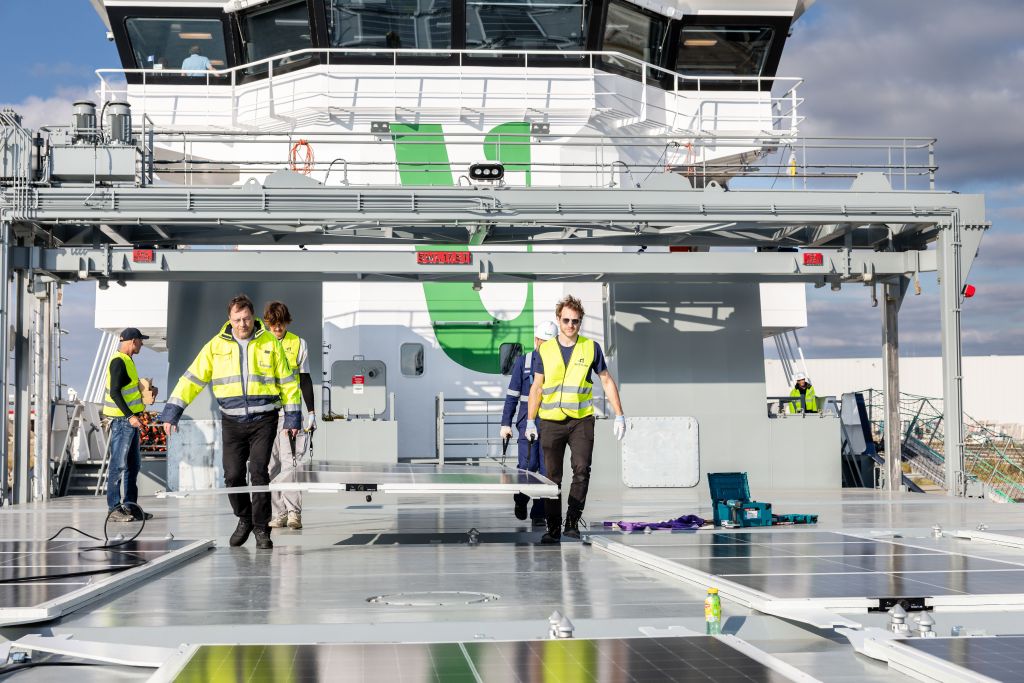
Salet added: “Another benefit is that the panels can stay on the hatch covers during loading and discharging operations. … The crew was sceptical at first, fearing a lot of extra work. However, they soon learned that in practice, Solar Flatracks are easy to use and require minimal maintenance.
“For example, there’s no salt crust formation, because the water can drain freely from the panels.”
The project has received independent validation from Dutch research organisation TNO, which will publish a report on emission reductions and return-on-investment.
Wattlab says the installation marks a milestone in the decarbonisation of coastal and short-sea shipping.
[Images credit: Wattlab]
by Catie Owen | Oct 30, 2025 | Europe, Innovation
France’s solar sector has reached several significant milestones this year, underscoring the country’s growing role in Europe’s renewable energy transition.
Recent data and project developments highlight progress towards France’s 2030 renewable energy targets and showcase how innovation is expanding the nation’s solar capacity beyond traditional formats.
According to thinktank Ember, solar power generated around 6.9% of France’s electricity in 2023, contributing to a total renewable share of 27%. The country’s installed solar capacity has continued to grow steadily, with France targeting 100 GW of solar capacity by 2050 under its national energy strategy.
While nuclear power still provides most of France’s electricity, the expanding contribution from solar and wind demonstrates an accelerating diversification of the energy mix.
Record renewable generation
One of this year’s key achievements came during the summer, when France and the UK both recorded historic highs in renewable electricity generation. France produced 19.5GW of solar power at peak on 19 July 2025, covering almost 40% of national electricity demand at that time.
This record output highlights both the increasing scale of France’s solar fleet and the improving performance of its systems during high-irradiance periods. The achievement reflects the success of recent installation drives, including utility-scale parks in the country’s southern regions and growing rooftop generation across residential and commercial sectors.
Although such instantaneous highs depend on weather conditions, the milestone reinforces solar energy’s capacity to make a meaningful contribution to France’s power mix.
It also illustrates the need for continued investment in grid flexibility, energy storage, and demand-management systems to balance variable renewable output as capacity expands.
Europe’s largest floating solar power plant
Another major success in 2025 was the inauguration of Europe’s largest floating solar power plant, developed by Q ENERGY in partnership with Velto Renewables. Located in Perthes, Haute-Marne, the 74.3 MWp “Les Îlots Blandin” project spans 127 hectares of former gravel pits and consists of over 135,000 photovoltaic modules.
The facility is expected to generate enough clean electricity to supply around 37,000 people each year, while avoiding approximately 18,000 tonnes of CO₂ emissions annually.
Beyond its scale, the project demonstrates the potential of floating solar to utilise industrial or disused sites, reducing land-use pressures and opening new deployment opportunities across France.
Floating installations also bring technical and operational benefits, including improved module cooling and potential synergies with local biodiversity initiatives. The Perthes site represents a benchmark for similar projects now being explored nationwide.
Looking ahead
France’s record-breaking solar generation and the launch of the continent’s largest floating PV plant signal a sector entering a new phase of growth.
As policymakers continue to refine renewable energy frameworks and the private sector expands investment in diverse technologies, solar is set to play a central role in meeting national and European climate objectives.
These developments will be among the topics discussed at Solar & Storage Live Paris, where industry professionals will explore how innovation and collaboration are shaping the future of France’s clean energy transition.
France Solar Week marks the lead-up to Solar & Storage Live Paris, taking place 5-6 November. Haven’t registered yet? Don’t miss out on your free ticket by securing your place here.
by Catie Owen | Oct 29, 2025 | Europe, Innovation, Large Scale Utility Solar
As France Solar Week draws attention to the nation’s growing renewable energy ambitions, data highlights just how far the country’s solar sector has come – and how much potential remains.
The Solar & Storage Live Paris: French Solar Market Report 2025 outlines steady progress toward national targets, strong policy support, and an expanding base of innovation that continues to strengthen France’s position as a leader in European solar development.
Market growth and trailblazers
France’s solar energy market has expanded significantly over the past decade, becoming one of Europe’s leading renewable sectors. Between 2009 and 2011, solar capacity surged nearly tenfold, reaching 6.7TWh annually by 2015.
In 2023, France’s solar market was valued at several billion dollars, with an expected annual growth rate of 14.24% until 2032. Solar PV generated 4.3% of all electricity in France, with large solar farms driving expansion. Falling solar panel costs, rising energy prices, and new solar technologies continue to boost growth.
Key companies leading the charge in France’s solar market include Engie SA, EDF Renewables, and TotalEnergies SE. Their pioneering efforts are helping to make solar a more viable and attractive option for businesses and industries looking to meet sustainability goals.
Meeting government expectations
France has set ambitious goals for the future of its solar industry. By 2050, the country aims to have 100GW of installed solar capacity, a significant jump from its current level of 17.1GW. The government is also aiming to produce 40% of the solar panels used in France domestically by 2030, reducing reliance on imports.
France has committed to cutting its greenhouse gas emissions by 52% by 2030, compared to 2005 levels. This forms part of a broader effort to meet the European Union’s goal of a 55% emissions reduction by 2030.
To meet these goals, the government has introduced policies to encourage growth, including tax breaks, subsidies, and feed-in tariffs, which guarantee fixed payments for solar energy producers.
In 2023, new laws were passed requiring large car parks to install solar panels – a move expected to add between 6.75 GW and 11.25 GW of solar capacity. The government has also invested €2.2 billion in domestic solar panel production, funding two new factories.
The road ahead
The report identifies several challenges to France’s solar momentum, including the intermittency of solar power, land use competition, and the environmental impact of panel manufacturing and disposal. Solutions cited include investment in energy storage systems, smart grids, agrivoltaics, floating solar farms, and more.
Overall, France’s solar energy market is expected to experience rapid growth in the coming years, driven by robust government policies, innovative technologies, and increasing demand for renewable energy.
With ambitious targets for 2030 and 2050, the country is on track to become a leader in the global solar market.
To read about these developments in full, download the full Solar & Storage Live Paris: French Solar Market Report 2025 or meet the market in person at Solar & Storage Live Paris, taking place 5–6 November 2025.
France Solar Week marks the lead-up to Solar & Storage Live Paris, taking place 5-6 November. Haven’t registered yet? Don’t miss out on your free ticket by securing your place here.
by Catie Owen | Oct 21, 2025 | Europe, Innovation, Storage
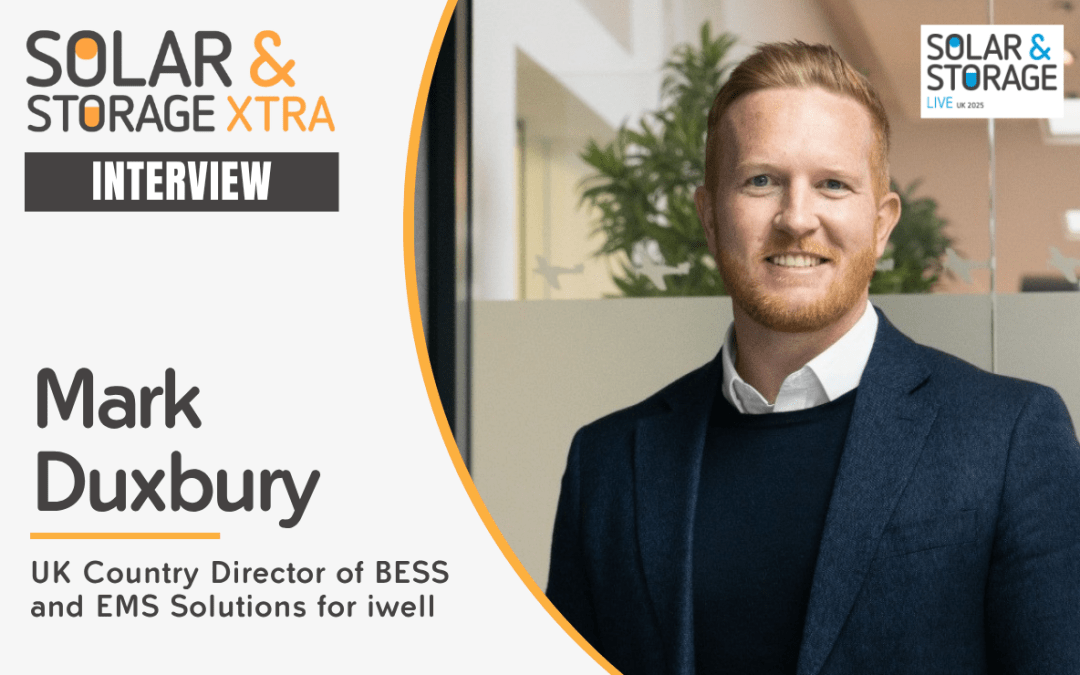
With over a decade of experience in the UK’s energy industry, Mark Duxbury, UK Country Director of BESS and EMS Solutions at iwell, brings a deep understanding of how smart energy systems can accelerate the transition to a decentralised grid.
In this interview, he discusses why now is the right time for iwell’s UK launch, the critical role of battery storage and smart energy management in the clean energy transition, and how the company’s innovation is setting new standards for energy resilience.
iwell has established itself across the Netherlands, Germany, and Belgium before expanding into the UK. What made now the right time to launch here?
The UK energy market is in transition, moving from a centralised to a decentralised model. The inclusion of BESS & EMS is essential for this to happen effectively.
The archaic infrastructure of the National Grid means having to think outside the box when making changes to a site’s energy requirements – coupled with very high and volatile energy prices, this gives the ideal landscape for iwell’s solutions.
With growing confidence in UK cleantech, what role do you see for battery storage and smart energy management in building a more resilient, renewables-based grid?
It’s a crucial role. The energy transition has only just really begun, with decades of future progress needed to ensure the UK’s infrastructure can cope with the electrification of assets of all kinds.
How does iwell’s in-house energy management system give you an advantage in improving energy security, cost management, and renewable integration for businesses?
With over 300 projects now installed, we have refined and honed our EMS, using customer feedback to tailor the system to be able to maximise its effectiveness.
Having the in-house capabilities to make these improvements, rather than looking to a third-party provider to create the change, alongside all of their other clients’ requests, we have been able to accelerate our EMS to the forefront of what is possible.
As an exhibitor at Solar & Storage Live Birmingham, what feedback did you receive, and what key trends or concerns did UK stakeholders raise?
Combining BESS and EMS as a fully integrated solution, delivered by one in-house team, really sets iwell apart from the competition. Our EMS capabilities were very well received, with many follow-up conversations now underway with potential partners.
Looking ahead, what opportunities and challenges do you expect iwell to encounter as you grow your UK presence?
A partnership approach will be key to our growth and success. BESS & EMS are complex solutions that require considered modelling before installation, as well as a strong and reliable partner to manage the assets and optimise their performance.
At iwell we cover the full process, from design and modelling, through installation and then onto operation of the BESS & EMS. This gives our clients peace of mind that their site will continue to operate successfully, but in a more optimised way.
Missed out on Solar & Storage Live UK? Get your free ticket to Solar & Storage Live London – the capital’s most exciting solar event. Or, find a Solar & Storage Live event near you.
by Catie Owen | Oct 17, 2025 | Europe, Innovation
Sponsored Content
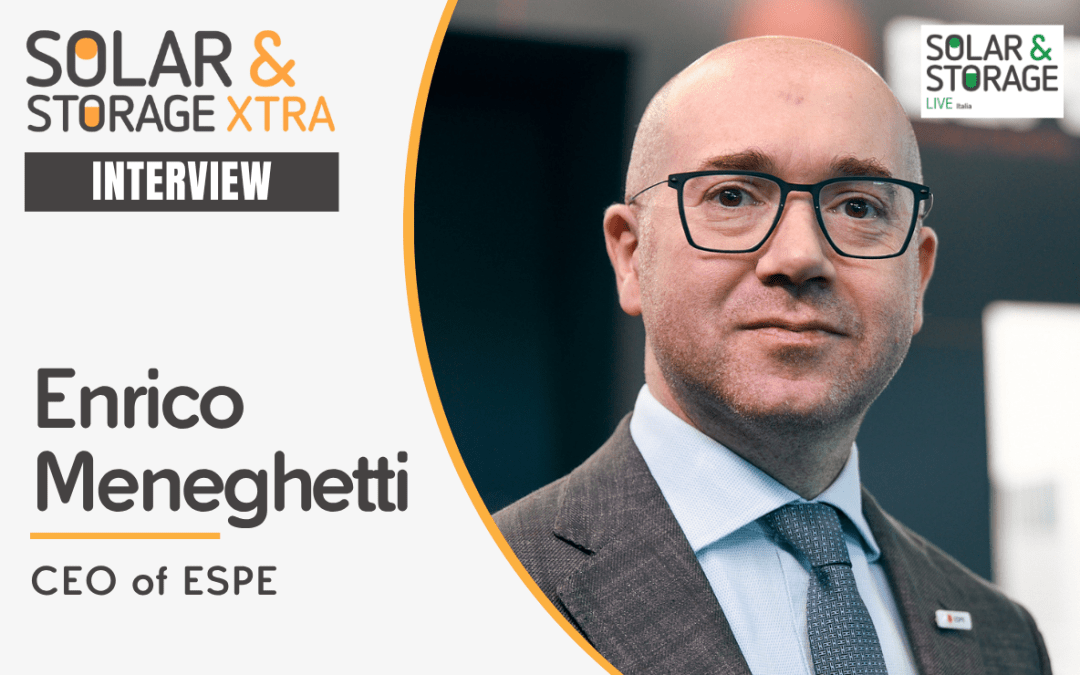
With more than fifty years of experience in renewable energy, ESPE S.p.A. has built a reputation for engineering precision and innovation.
Under the leadership of CEO Enrico Meneghetti, the company continues to prioritise operational excellence over price competition, delivering long-term value and reliability across its photovoltaic projects.
In an interview that coincided with this year’s Solar & Storage Live Italia show, Meneghetti discusses how ESPE’s integrated approach to design, construction, and maintenance supports its mission to drive sustainable growth in an increasingly competitive solar market.
In an increasingly competitive market, where price often appears to be the main driver, why does ESPE choose instead to focus on operational excellence?
The photovoltaic sector has reached a stage of maturity and competitiveness where further gains based solely on price are now marginal.
Operational excellence, on the other hand, not only enables higher profit margins but also delivers tangible, measurable, long-term benefits: increased revenues and reduced operating costs year after year, along with better preservation of asset value over time.
Excellence is an ambitious concept – how does it translate, in practical terms, into the way you design and operate photovoltaic systems?
Our guiding principle is to treat the entire process – from development through to maintenance – as a single, integrated workflow, where each phase is carried out with the goal of maximising the outcomes of the next.
Achieving this requires, above all, a deep and continuously refined level of expertise, built through years of experience across every stage of the value chain.
Another essential element is maintaining direct control over these stages, ensuring that the company’s economic interest extends throughout the process rather than being confined to just one part of it – which could otherwise compromise the overall objective.
Many operators might wonder whether investing in plant excellence truly pays off, given that differences in production yield can seem small. What is the real return, and how does this approach align with ESPE’s long-term strategy?
Field data shows production increases of several percentage points. At first glance, that may appear modest, but it represents a significant and recurring boost in profitability – repeated year after year for at least two decades.
Moreover, this approach enhances the long-term reliability of our plants: extraordinary maintenance and revamping are both postponed and far less extensive than usual. This not only strengthens the long-term business plan but also increases the future value of the asset.
Our commitment to operational excellence has defined ESPE for decades – and now, more than ever, we are convinced that it must remain a cornerstone of our strategy in the years ahead.
Don’t miss out on your free ticket to the next edition of Solar & Storage Live Italia, taking place in Verona 7-8 October 2026. or find an event near you.
by Catie Owen | Oct 17, 2025 | Commercial & Industrial Solar, Europe, Innovation
Conrad Energy has confirmed that planning consent has been granted for its proposed 18 MW floating solar farm at Whisby Quarry in Lincolnshire, in the UK.
Developed in collaboration with Tarmac, the project will mount solar panels on floating buoys across the former quarry lakes.
Key benefits cited include increased efficiency from the reflection of light, improved water quality through regulating temperature, and avoiding the use of productive farmland. The site is already screened by vegetation and will be built on brownfield land.
Conrad Energy states the scheme could generate enough power for the equivalent of up to 4,737 homes annually and save around 4,194 tonnes of CO₂ per year – “the equivalent of driving 54,455,820 miles.”
“By leveraging cutting-edge technology, this project will provide significant environmental and energy benefits,” the company said in a statement.
The design is fully reversible, with a projected 40-year operational lifespan after which the area can be restored and gains in biodiversity achieved.
Conrad Energy says the community will have opportunities to give feedback through local consultations tied to the planning process.
by Catie Owen | Oct 15, 2025 | Asia, Commercial & Industrial Solar, Innovation
JA Solar has begun volume production and initial shipments of its latest high-efficiency photovoltaic module, DeepBlue 5.0, from its advanced manufacturing base in Yangzhou, China.
The company said the launch reflects its ability to scale next-generation PV technology efficiently, reinforcing its position as a reliable partner for the global commercial and industrial solar markets.
The DeepBlue 5.0 module incorporates JA Solar’s proprietary Bycium+ 5.0 n-type cell technology and TOPCon architecture, achieving up to 650W of power output and a conversion efficiency of 24.07%.
The module’s high-density interconnection design is intended to boost energy yield and improve durability in challenging environments. With a temperature coefficient of –0.26% per °C and a bifaciality rate of 85% ±5%, JA Solar said the module delivers consistent performance across a range of climates and installation conditions.
Production takes place at the company’s fully automated Yangzhou facility, which is equipped with intelligent quality control systems and high-capacity manufacturing lines.
JA Solar described the site as a key hub in its global production network, supporting large-scale output while maintaining strict quality standards.
According to the manufacturer, the rollout of DeepBlue 5.0 demonstrates its capability to manage complex production processes efficiently and to meet delivery schedules for international customers.
“The first shipment of DeepBlue 5.0 demonstrates both our technological innovation and the strength of our manufacturing operations,” said Aiqing Yang, Executive President of JA Solar.
“Our partners can rely on consistent, large-scale supply with high performance and long-term reliability.”
by Catie Owen | Oct 15, 2025 | Electric Vehicles, Europe, Innovation
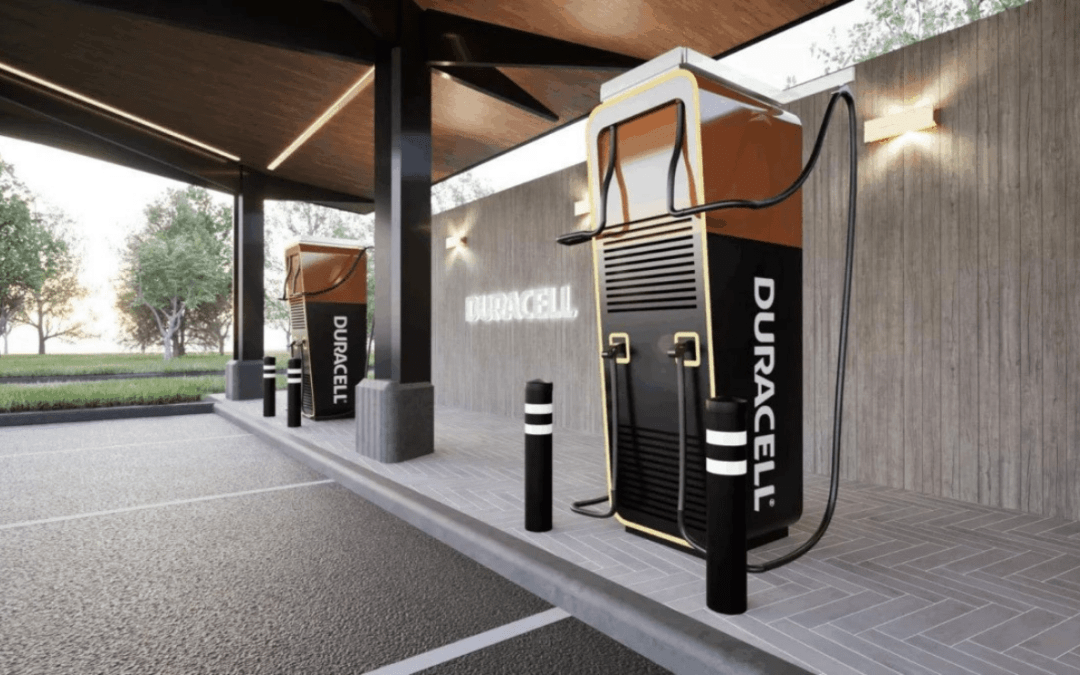
Duracell has announced its entry into the UK’s electric vehicle infrastructure market with the launch of Duracell E-Charge, a new nationwide network of ultra-fast charging stations.
The initiative aims to strengthen public charging provision and support the UK’s accelerating shift to electric mobility.
Backed by more than £200m in planned investment over the next decade, Duracell E-Charge is designed to improve accessibility, reliability and charging speed across the network.
“Duracell has always been a trusted companion in people’s lives, delivering long-lasting performance, uncompromising safety and a commitment to sustainability,” said Javier Hernandez Reta, chief marketing officer at Duracell.
“For decades, consumers have relied on us to go the extra mile. Today, electric vehicle drivers can travel even further, confidently and sustainably, with Duracell E-Charge leading the way.”
Operation of the new network has been licensed to Elektra Charge, a newly formed charge point operator, while The EV Network (EVN) will develop and fund the charging hubs. EVN has delivered several of the UK’s largest EV charging sites and will bring its experience to the new rollout.
“The need in the UK for faster, more reliable charging to keep pace with EV adoption is clear,” said Reza Shaybani, CEO of The EV Network.
“Duracell E-Charge is a direct response to that challenge. The EV Network has already delivered some of the UK’s biggest charging hubs, and now we’re bringing that expertise to one of the world’s most recognised brands.”
The first six Duracell E-Charge locations are due to go live in 2025, with rapid expansion planned through 2026 and beyond. Sites will be located at strategic transport, retail and hospitality destinations.
Offering charging speeds of up to 1,000 kW, Duracell E-Charge will feature high uptime, transparent pricing and multiple payment options, including contactless and plug-and-go.
“Duracell has been powering people’s lives for decades. Now, Duracell E-Charge will be powering their journeys,” said Mark Bloxham, managing director. “Charging your car should be as simple as changing the batteries in your remote.”
[Image credit: The EV Network]
This series covers the developing electric vehicles market of the UK and its increasing infrastructure, as the nation advances its net-zero goals.
For all things EV, don’t miss out on your free ticket to EVCharge Live UK – taking place 22-24 September 2026.
by Catie Owen | Oct 8, 2025 | Electric Vehicles, Europe, Innovation
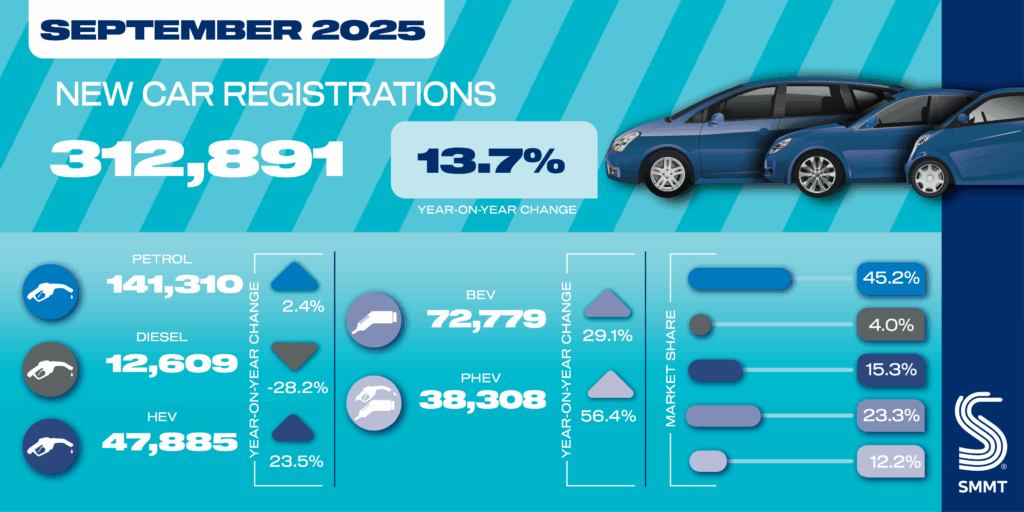
The UK new car market saw strong growth in September, with registrations rising by 13.7% to 312,891 units compared with the same month in 2024, according to the Society of Motor Manufacturers and Traders (SMMT).
All market sectors contributed to the increase, with fleet registrations showing the biggest growth, up 16.9% to 174,336 units. Private consumer demand also increased, rising 8.9% to 131,003 units, while business registrations grew 28.6% to reach 7,552 vehicles.
Battery electric vehicles (BEVs) recorded their highest-ever monthly total, with 72,779 new registrations – a 29.1% rise on last year. BEVs accounted for 23.3% of the market, up from 20.5% in September 2024. Plug-in hybrid (PHEV) registrations also surged by 56.4% to 38,308 units, taking a 12.2% market share, while hybrid electric vehicles (HEVs) increased by 23.5% to 47,885 units.
In contrast, petrol and diesel cars saw reduced market shares. Petrol vehicles grew modestly by 2.4% to 141,310 units but fell from 50.1% to 45.2% of the market. Diesel registrations dropped 28.2% to 12,609 units, representing just 4% of new car sales.
The SMMT said the figures underline the increasing consumer and fleet interest in electrified vehicles but highlighted the need for continued investment in charging infrastructure to sustain growth.
Mike Hawes, SMMT Chief Executive, said: “A record September for electric vehicles shows how quickly the market is changing, with drivers responding to a growing choice of models and improving technology. However, if this transition is to continue at pace, we need public charging to keep up with demand and ensure that no driver is left behind.”
He added that maintaining momentum would require policy consistency and incentives to support private buyers as well as fleets. “Manufacturers are investing billions in new technology, but the benefits will only be realised if consumers have the confidence to make the switch,” Hawes said.
[Image credit: SMMT]
This series covers the developing electric vehicles market of the UK and its increasing infrastructure, as the nation advances its net-zero goals.
For all things EV, don’t miss out on your free ticket to EVCharge Live UK – taking place 22-24 September 2026.
by Catie Owen | Oct 8, 2025 | Africa, Americas, Commercial & Industrial Solar, Innovation
AAAS Energy BV, a Netherlands-based energy developer, has signed a Memorandum of Understanding (MoU) with ChillMine Corporation, a US data centre operator, to develop a new data centre campus in Botswana jointly.
The collaboration aims to establish a world-class facility designed to support AI computing, global hyperscalers, and other energy-intensive digital operations.
Maarten Mennes, Managing Director of AAAS, said, “This MOU with ChillMine is a significant step in our vision to connect sustainable energy development with the digital economy.
By combining power from the Solar PV + BESS Project with natural gas projects in Botswana, currently being developed by third parties, we are creating a unique value proposition for global technology companies seeking to expand into Africa.”
ChillMine’s Co-Founder and CEO, Brian Neirby, added, “We are thrilled to partner with AAAS to bring our data centre expertise to Botswana.
The combination of the energy infrastructure under development and our operational experience will enable us to deliver a best-in-class, high-performance data centre campus that can meet the rigorous demands of the world’s most sophisticated technology users.”
The proposed campus will respond to growing demand for reliable, scalable, and cost-effective data infrastructure across Southern Africa. It will target large-scale cloud providers and other clients requiring continuous, high-capacity power for operations.
As part of the wider development, AAAS intends to integrate the data centre into an Energy Hub and Industrial Park near Palapye. The hub includes a 250 MW solar PV project and a planned Battery Energy Storage System (BESS) of around 100 MW / 400 MWh, both currently in development.
The integrated energy infrastructure is expected to provide a stable and efficient power supply, supporting reliable performance and sustainability across the new data centre campus.
by Catie Owen | Oct 7, 2025 | Innovation
Global renewable energy capacity is expected to more than double by 2030, led by strong growth in solar photovoltaics (PV), according to the International Energy Agency’s (IEA) Renewables 2025 report.
The report forecasts that renewable power capacity will expand by 4,600GW by the end of the decade – equivalent to the total power generation capacity of China, the European Union and Japan combined.
Solar PV is expected to account for around 80% of this increase, driven by falling costs and faster permitting, followed by growth in wind, hydropower, bioenergy and geothermal.
“The growth in global renewable capacity in the coming years will be dominated by solar PV – but with wind, hydropower, bioenergy and geothermal all contributing, too,” said IEA Executive Director Fatih Birol.
“As renewables’ role in electricity systems rises in many countries, policy makers need to play close attention to supply chain security and grid integration challenges.”
India is projected to become the world’s second-largest market for renewable expansion, after China, supported by cost competitiveness and strong policy targets.
Growth is also accelerating in emerging markets across Asia, the Middle East and Africa, where governments are rolling out new auction programmes and increasing renewable ambitions.
While most major developers have maintained or raised their 2030 deployment targets, offshore wind faces headwinds, with growth forecasts around a quarter lower than in last year’s report due to policy changes, supply chain issues and rising costs.
The IEA slightly revised its overall forecast downward compared with last year, citing regulatory changes in China and the United States. However, these reductions are partially offset by stronger expectations in India, Europe and other developing economies.
Despite progress, challenges remain. The IEA warned that concentrated supply chains – particularly for solar PV and rare earth elements used in wind turbines—pose ongoing risks, while grid integration issues and curtailment highlight the need for investment in storage and flexibility.
Renewables’ role in transport and heating is also set to increase modestly by 2030, with renewable electricity for electric vehicles and biofuels driving growth in several key markets.
by Catie Owen | Oct 3, 2025 | Europe, Innovation
Italy is positioning itself as both a regulatory pioneer and a leader in renewable energy, with its new artificial intelligence law arriving alongside a rapid expansion in solar and storage.
Giorgia Meloni’s government has passed the EU’s first comprehensive AI law, aiming for “human-centric, transparent and safe AI use” while focusing on “innovation, cybersecurity and privacy protections.”
Alessio Butti, undersecretary for digital transformation, said the law “brings innovation back within the perimeter of the public interest, steering AI toward growth, rights and full protection of citizens.”
As AI is made both safer and more accessible to the public, solar and storage innovators have more opportunities to get hands-on with a game-changing technology for the industry.
Solar meets AI
Italy’s solar industry is expanding quickly. Installed photovoltaic capacity surpassed 26 GW in 2023, a 20% increase from the previous year, and the government’s National Integrated Energy and Climate Plan targets 52 GW by 2030.
Solar already provides over 11% of national electricity, with southern regions such as Puglia and Sicily benefiting from favourable conditions.
Yet challenges remain: regulatory delays, grid bottlenecks, and storage integration are slowing progress. Analysts estimate that for every euro invested in renewables, 60 cents must go toward grid and storage upgrades to ensure stability.
AI could help address these bottlenecks. Machine learning tools are already being deployed to forecast solar generation more accurately, optimise battery storage, and cut downtime through predictive maintenance.
Initiatives such as Open Climate Fix’s “Quartz Solar AI Nowcasting,” which uses satellite and weather data to improve forecasts, show how smart software can improve grid reliability and reduce costs.
Recent financing deals, such as Enfinity Global’s €316m package for eight new solar plants across Italy, highlight investor confidence.
But the next phase of growth may depend on whether Italy can align its €1bn AI investment fund with clean energy priorities, supporting applications from grid-balancing platforms to advanced storage management.
If successful, Italy’s twin push on AI and renewables could not only stabilise its grid but also position the country as a European hub for ethically governed, technologically advanced clean energy.
Italy Solar Week marks the leadup to Solar & Storage Live Italia, taking place in Verona 8 – 9 October. Secure your free place here, or find an event near you.
by Catie Owen | Oct 3, 2025 | Electric Vehicles, Europe, Innovation
Sponsored Content
Electric mobility is transforming global transportation, with EV sales soaring past 17 million in 2024. As nations push toward net-zero, innovation in charging, storage, and fleet solutions is critical.
Vestel Mobility, a leader in sustainable mobility solutions, outlines how it is driving this transition, delivering sustainable, scalable technologies that power the next era of clean, connected mobility.
1. Global developments in the electric vehicle industry
Source: Global EV Outlook 2025, IEA. International Energy Agency Website: www.iea.org
The transition to electric mobility is no longer a vision of the future. It is today’s reality. With global zero-emission targets set for 2050, electric vehicles (EVs) are at the centre of the transformation.
2024 marked a turning point: more than 17 million electric cars were sold worldwide, representing over 20% of new car sales. By the end of the year, the global EV fleet reached nearly 58 million vehicles.
The momentum has carried into 2025, with the first quarter alone seeing more than 4 million EVs sold, a 35% year-on-year increase. By year-end, one in every four new vehicles sold globally is expected to be electric.
China, Europe, and the United States continue to dominate, together accounting for 95% of sales.
Europe, however, faced stagnation at a 20% sales share in 2024 due to expiring incentives, especially in Germany and France. Yet stricter EU CO₂ standards are expected to boost sales to 25% in 2025 and close to 60% by 2030.
The UK is already ahead, with nearly 30% EV penetration thanks to strong regulatory frameworks. Norway continues to lead the world, with 88% of its car sales being fully electric.
In 2025, global electric car sales are expected to exceed 20 million, representing one-quarter of total car sales. Worldwide sales are projected to grow by 25%, similar to the growth rate in 2024.
Europe leads on coverage, with fast chargers every 50 km on over 75% of highways. Europe’s public charging infrastructure exceeded the mark of 1 million charge points in 2024, which corresponds to a growth of 35%.
Within the EU, 11 out of 27 countries recorded an increase of more than 50%. The Netherlands is in the lead with 180,000 public charging points, followed by Germany (160,000) and France (155,000).
The ratio of EVs per public charger in Europe is 13:1, a decrease of almost 10% from 2023.
The expansion of the fast and ultra-fast charging infrastructure in Europe has also accelerated significantly. Ultra-fast chargers (150 kW+) grew 50% to 71.000 chargers and now make up nearly 10% of all public fast chargers.
About 20% of ultra-fast chargers in the EU already offer charging capacities of 350 kW and more, even though only a few vehicles can fully use this power.
The Electrification of heavy transport
The electrification wave is also reshaping heavy-duty vehicles, buses, and logistics. Electric truck sales grew by 80% in 2024, reaching 2% of global sales.
Europe and the U.S. are projected to reach cost parity by 2030. In parallel, electric bus adoption is rising in Europe under the Clean Vehicles Directive, targeting 100% zero-emission city buses by 2030.
Light commercial vehicles (LCVs) are also on the rise, with London, Amsterdam, and Brussels promoting electrification through Low Emission Zones. Meanwhile, electric two- and three-wheelers — the most electrified vehicle segment — account for 15% of global sales.
Finally, the growing market for used EVs is democratizing access. As batteries last longer and prices fall, used EVs are becoming the gateway for millions to join the e-mobility revolution.
2. Vestel Mobility Solutions: Redefining the future of transportation
Vestel Mobility is more than a technology provider — we are an enabler of the global e-mobility transition. By combining decades of expertise in consumer electronics with a bold vision for sustainable transportation, we deliver solutions that address the entire mobility ecosystem: from vehicles, to charging, to energy storage, to fleet management.
2.A. Automotive components & the cockpit experience
The car of the future is no longer just a machine — it’s a digital ecosystem on wheels. Vestel’s Cockpit Experience concept is at the heart of this transformation.
- Cutting-edge display technologies: Wide-screen configurations powered by ELED, MiniLED, and QLED deliver high resolution, low energy consumption, and unmatched user focus.
- Smart vehicle intelligence: AI-driven facial recognition for keyless entry, driver monitoring for fatigue and distraction detection, gesture and voice controls, and integrated camera/audio systems.
- Flexible architecture: Scalable infotainment platforms, Body Control Modules (BCM), and Zonal Controllers designed for next-generation vehicles.
- Faster time-to-market: Accredited test labs and consumer electronics agility allow Vestel to deliver innovations quickly without compromising reliability.
At upcoming showcases, Vestel will present:
29″ Side-to-Side Display | 15.6″ Dual QD MiniLED | 12.3″ QLED & MiniLED | Dual 12.3″ ELED Displays | 13.3″ QD MiniLED | Wireless Charging Units | High-performance infotainment platforms.
Vestel is redefining the cockpit not just as a driving space, but as a personalised, safe, and connected experience.
2.B. Electric charging stations:
Vestel Mobility provides advanced EV charging solutions from 7.4 kW to 1.2 MW, integrating Plug and Charge (PnC) technology, OCPP protocol, and over-the-air updates for seamless operation. With decades of expertise in electronics and a vision for sustainable mobility, Vestel ensures reliable, high-performance charging with sophisticated design and 24/7 premium support.
Vestel has been manufacturing AC charging solutions since 2017, starting with models tailored for homes and small businesses. Today, our portfolio covers the entire spectrum of e-mobility needs — from residential use to public charging hubs and heavy-duty transport electrification.
- AC Charging Solutions
Compact, user-friendly, and smart-connected, Vestel’s AC chargers are designed for homes, offices, hotels, and semi-public environments. Their sleek form factors and energy-efficient design make them ideal for private and shared use.
- DC Fast and Ultra-Fast Charging Solutions
Vestel’s DC portfolio ranges from 40 kW to 80 kW units suitable for urban areas and small fleets, to ultra-fast chargers of 160 kW, 240 kW, 320 kW, 400 kW, 720 kW, and 1.2 MW designed for highways, logistics hubs, and large-scale fleet operations. These solutions reduce charging times dramatically, enabling both passenger and heavy-duty vehicles to be road-ready in minutes.
- Advanced Features Across the Range
All Vestel chargers are designed with Plug and Charge (PnC) technology, OCPP compliance, dynamic load balancing, and over-the-air updates, ensuring compatibility with global standards and future upgrades. This not only maximises user convenience but also ensures network operators benefit from seamless integration and long-term reliability.
Vestel’s charging stations empower the widespread adoption of e-mobility by offering flexible, scalable, and sustainable solutions that adapt to every use case from individual drivers to global fleet operators.
2.C. Battery & energy storage solutions
Energy storage is central to the future of mobility and renewable integration. Vestel’s portfolio addresses all scales:
- Telecom Battery: Backup power for towers and data centres, ensuring uninterrupted connectivity.
- Residential Battery Systems: Solar-integrated solutions for independent homeowners.
- Commercial & Industrial Storage: Scalable, high-capacity systems for factories, hospitals, and data centres.
- Utility Scale Systems: Enhanced durability and performance for demanding industrial use cases.
Vestel empowers individuals and enterprises to store renewable energy efficiently, reduce costs, and ensure energy resilience
3. Fleet management & heavy vehicle charging
The electrification of fleets and heavy-duty vehicles is one of the most critical milestones on the road to net-zero transportation. While heavy-duty trucks make up only 10% of vehicles, they contribute more than 70% of CO₂ emissions in road transport — making this sector a top priority for transformation.
Vestel Mobility addresses this challenge with Stella-M, a next-generation megawatt-scale charging solution built specifically for electric heavy-duty vehicles and large fleets.
- High-performance charging for heavy vehicles
With its advanced technological infrastructure, Stella-M delivers unparalleled power and efficiency, enabling logistics operators and public transport providers to keep fleets moving with minimal downtime.
- Future-ready infrastructure
Stella-M and Vestel’s broader fleet charging solutions will reinforce the company’s pioneering role in public transport, logistics, and commercial vehicle electrification — both in national and international markets.
- European leadership example
Vestel is already spearheading its’ first megawatt charging project in the EU with Russell Group, combining MCS (Megawatt Charging System) and CCS (Combined Charging System) connectors in one operation. This dual compatibility ensures adaptability to current and future fleet standards.
- Integrated fleet solutions
Beyond hardware, Vestel supports operators with smart fleet management systems, dynamic load optimisation, remote monitoring, and predictive maintenance, creating a complete ecosystem for zero-emission logistics.
Vestel enables fleet operators to transition smoothly to electrification by providing ultra-fast, scalable, and intelligent charging ecosystems. The result is higher operational efficiency, lower emissions, and a clear path toward sustainable transportation on a global scale.
4. Sustainability: Vestel’s commitment beyond technology
Vestel’s mission extends beyond innovation — we are equally committed to environmental responsibility.
- Net Zero by 2050 Science-Based Targets initiative (SBTi)-approved targets
- 42% reduction in Scope 1 & 2, 25% reduction in Scope 3 by 2030
- Renewable Energy Growth: Scaling solar generation to cut 5,430 tons of CO₂ annually
- Energy Efficiency Projects: Saving 13,278 MWh in 2024 alone
- Circular Economy: 18,289 tons of recycled cardboard used
- Global ESG Recognition: Ranked among the top 10% of companies in S&P Global Sustainability Yearbook 2025, with an A- in the CDP Climate Change score and a B in the CDP Water Security score. EcoVadis score has improved to 64. Included in the Borsa İstanbul Sustainability Index since 2016. It ranks 2nd among 100 companies in the sector on a global basis with a score of 87* in the ESG assessment.
Vestel is not only powering e-mobility but also driving systemic sustainability across industries.
The future of transportation is electric, intelligent, and sustainable. With advanced cockpit systems, ultra-fast charging, scalable battery solutions, and pioneering fleet management initiatives, Vestel is at the forefront of this transformation.
This series covers the developing electric vehicles market of the UK and its increasing infrastructure, as the nation advances its net-zero goals.
For all things EV, don’t miss out on your free ticket to EVCharge Live UK – taking place 22-24 September 2026.
by Catie Owen | Oct 2, 2025 | Europe, Innovation
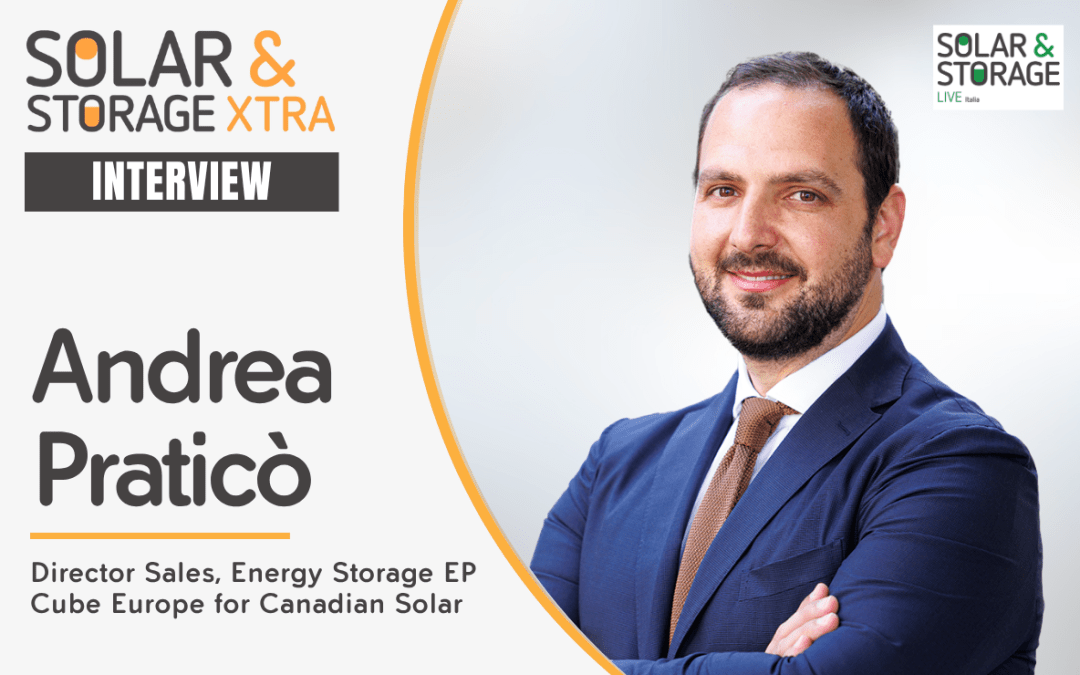
With the inaugural edition of Solar & Storage Live Italia on the horizon (8-9 October), we spoke to Andrea Praticò from Canadian Solar.
Andrea discussed the evolution of the storage sector in Europe, the incentive frameworks in Italy the company are keeping an eye on, and their latest energy storage solution.
“Over the next decade, we expect home energy storage in Europe – and particularly Italy – to become a standard component of residential PV systems, not a niche add-on.”
What was the original vision behind EP Cube, and how does it fit into Canadian Solar’s broader residential storage strategy in Italy?
Andrea: The original vision behind EP Cube was to give homeowners a flexible, future-proof, and user-friendly energy storage solution that adapts to their evolving needs. Designed with modularity at its core, customers can start with a smaller capacity and expand as their consumption or EV charging needs grow.
In Italy, this fits perfectly into the growing residential market: we want to empower households to maximise self-consumption of solar, reduce energy bills, and gain resilience against rising energy costs. With Italy’s high solar penetration and growing interest in electrification, EP Cube offers a new way to fully bring value to homes and businesses.
How do you see home energy storage evolving in Europe and Italy over 5–10 years, and what role do you expect EP Cube to play in that evolution?
Andrea: Over the next decade, we expect home energy storage in Europe – and particularly Italy – to become a standard component of residential PV systems, not a niche add-on. Three trends will drive this:
- Increasing electricity price volatility, which strengthens the case for storage.
- Electrification of transport and heating, which raises household energy demand and the need for smart management.
- Integration with flexibility markets, where households can contribute to grid stability and earn revenue.
EP Cube is positioned to play a leading role in this evolution because of its scalability, smart integration with PV and EV charging, and sleek design that suits Italian homes. It’s not just a battery; it’s an energy management hub that prepares households for the future of distributed energy.
How do you expect the regulatory and incentive frameworks in Italy (or the EU) to influence EP Cube adoption?
Andrea: In Italy, incentives have historically been crucial for driving solar adoption, and we see a similar role for storage. Programs like the Superbonus and Communita Energetica (CER) have boosted awareness, even though they are being phased out. Going forward, we expect:
- EU-level initiatives, like the Green Deal and REPowerEU, to accelerate distributed energy solutions.
- Italian policies focusing on grid resilience and decarbonisation, where storage will be central.
- Potential new regional incentives for self-consumption and grid services.
These frameworks will lower barriers for households to adopt EP Cube, making it easier to justify investment while reinforcing the long-term trend towards energy independence.
Ahead of Solar & Storage Live Italia in October, what are you hoping to showcase or communicate to the Italian market via EP Cube?
Andrea: At Solar & Storage Live Italia, we want to show Italian customers and partners what makes EP Cube unique:
- Its modularity – households can scale their storage over time.
- Its design – compact, modern, and easy to install, fitting seamlessly into Italian homes.
- Its intelligence – smart energy management, compatibility with EV charging, and integration with PV.
This year we are especially excited to showcase our three-phase EP Cube together with our partner Exsal. This version has been launched this year and which meets the needs of larger Italian households and aligns with the country’s grid requirements.
In addition, we will present our upcoming EP Cube HEMS (Home Energy Management System), which will enable even smarter optimisation of household energy flows, helping families integrate PV, storage, EVs, and appliances into a single intelligent platform. We are already collaborating with software partners such as Home Connect to develop this important feature.
As you can see, EP Cube is redefining energy generation and management by maximising efficiency, enhancing comfort, and making sustainable living smarter.
Canadian Solar will be attending Solar & Storage Live Italia – find them at stand C65.
Italy Solar Week marks the leadup to Solar & Storage Live Italia, taking place in Verona 8 – 9 October. Secure your free place here, or find an event near you.
by Catie Owen | Sep 30, 2025 | Asia, Innovation, Storage
A subsidiary of oil and gas company Reservoir Link has signed an agreement to jointly develop Malaysia’s first dispatchable solar PV plant.
Founder Group Limited, trading as Founder Energy, announced on 26 September that it had signed a head of agreement with Planet QEOS, an agricultural technology and energy group.
The deal will see a consortium led by Founder and Planet QEOS deliver a 310MWp ground-mounted solar PV plant in Baram, northern Sarawak, paired with a 620MWh battery energy storage system (BESS).
The project, named the Baram DeepTech Energy Program, is estimated to be worth RM1.16bn
According to earlier reports from Planet QEOS, partners in the programme also include Malaysian renewable energy firms EFS Energy and ES Sunlogy, along with China State Construction Engineering Corporation (CSCEC) and Chinese renewables provider Hopewind.
Sarawak deputy minister Datuk Gerawat Gala told The Star in August that the project would bring “round-the-clock renewable power to Baram…unlocking the full potential of the Baram hinterland for sustainable growth with improved connectivity, modern infrastructure, new industries, and skilled employment opportunities.”
The consortium will now seek regulatory approvals, financial close and definitive agreements, including power purchase contracts. Plans also include the development of a 200MW Tier-4 Green Data Centre Park in Baram, with Tier-4 being the highest reliability ranking for data centres.
Malaysia has been relatively slow in adopting large-scale storage, partly due to its stable peninsular electricity grid and natural gas resources.
However, renewable energy growth – needed to meet the country’s 2050 net zero goal – along with rising demand from data centres, is expected to increase the role of BESS.
by Catie Owen | Sep 29, 2025 | Europe, Everything Installer, Innovation, Press Release
Press Release
Chloris, the AI‑native platform for utility‑scale renewables project developers, will launch its “grid connection” product (Grid Connector) at Solar & Storage Live Italia in Verona on 8‑9 October.
About Chloris
Utility‑scale renewable projects are worth millions of dollars, yet development processes are often fragmented, manual and subjective, with only outdated tools in support of developers.
Furthermore, the common approach is to treat each phase (land acquisition, permitting, grid connection, techno‑economic analysis and PPAs to name a few) in isolation, leading to missed opportunities and sub‑optimal outcomes.
Chloris is building an AI‑first platform that unifies every key step in the utility-scale renewables development journey. Within a single collaborative workspace, developers can test numerous project variants via specialised tools, integrations with other products, and context‑aware agents, allowing them to find the best projects to develop – at scale.
Tackling the grid‑connection bottleneck
In Europe, grid access has become the primary barrier to deploying large‑scale solar and storage projects. Internal research reveals that over 80 % of utility‑scale solar & BESS projects fail because they cannot secure a feasible connection. For some developers, the failure rate reaches 98 %.
Italy illustrates the scale of the challenge: Terna (Italian TSO) reports more than 350 GW of pending connection requests, compared with a national target of only 65 GW of new renewable capacity by 2030 [1].
However, most of these projects will never see the light, being the result of speculative tactics enabled by the current legislation, and are now clogging the connection queue with virtual congestion that will never concretize.
To solve this problem, the Italian authorities are now reforming how grid rights are allocated. Under the new DL Energia decree [2], expected to enter into force soon, Terna is expected to get rid of 60% of the connection queue [3] and get a fresh start through the open‑season mechanism for allocating new grid capacity [4].
Introducing Grid Connector
To help developers navigate this upheaval, Chloris is launching Grid Connector, the first specialised tool within its platform. Grid Connector aggregates and enriches grid‑connection data from open‑source and official sources and overlays proprietary insights, giving solar and BESS developers a comprehensive view of the network. Key features include:
- Comprehensive network mapping: Users will have access to the whole Italian energy infrastructure – cleaned, normalised and enriched – like substations, power lines, power / storage plants and more in operation, under construction and in development;
- Congestion analysis: The tool estimates virtual (and soon real) congestion at the substation level, considering connected, contracted and pending capacity, helping developers to quickly identify nodes with available capacity or potential bottlenecks;
- Cost and timeframe forecasting: Grid Connector forecasts connection costs and timelines based on plant type, configuration and location, helping developers to choose the optimal locations and configurations for their projects.
- Parallel scenario testing: Built‑in AI agents allow users to run multiple connection scenarios concurrently, compare outcomes and iterate rapidly.
Together, these functions give developers the intelligence they need to target projects with a high probability of connection and to avoid wasting time and capital on congested nodes.
Meet Chloris in Verona
Chloris will reveal Grid Connector at Solar & Storage Live Italia in Verona. Visitors to the Start‑up Zone can see it at the stand S20.
To learn more about Chloris or to book a private demo, please visit chloris.ai and leave your email there, or contact one of the founders on LinkedIn (Alessandro | Andrea).
[1] Terna’s Econnextion platform
[2] Article from “Rinnovabili.it” on the DL Energia 2025
[3] Article from “Advant” on the DL Energia 2025
[4] Terna’s “Piano di Sviluppo 2025”
Italy Solar Week marks the leadup to Solar & Storage Live Italia, taking place in Verona 8 – 9 October. Secure your free place here, or find an event near you.
by Catie Owen | Sep 25, 2025 | Everything Installer, Innovation, Press Release
Press Release
DMEGC Solar has won the PV module UVID reliability AQM Award 2025. The TÜV Rheinland awards adhere to rigorous testing standards and an impartial selection process.
The UVID reliability assessment specifically evaluates the extent of power degradation in PV modules caused by prolonged outdoor ultraviolet (UV) exposure, serving as a critical indicator of a module’s long-term power generation performance and reliability.
DMEGC Solar’s INFINITY RT modules demonstrated outstanding performance in these tests, with their resistance to UV ageing far exceeding standard requirements.
This ensures efficient and stable power output even in harsh environments characterised by high temperatures, high humidity, and intense UV radiation, thereby delivering higher energy yields and longer-term investment protection for customers.
This award reflects the company’s profound expertise in material science, cell technology, and encapsulation processes.
By utilising encapsulation materials with superior UV resistance and advanced anti-UV cell technologies, the company has significantly enhanced its modules’ ability to block UV radiation, thereby markedly reducing power degradation associated with UV exposure.
A spokesperson for DMEGC’s PV Technology Quality department stated, “We are greatly honoured to receive this significant award from TÜV Rheinland. This is not only an affirmation of the exceptional quality of our products but also an encouragement for our unwavering commitment to a ‘quality-first’ philosophy.
“Moving forward, we will continue to focus on providing customers with higher efficiency, longer lifespan, and more reliable PV products, promoting the widespread adoption of clean energy, and contributing to the global carbon neutrality goals.”
It is noteworthy that, thanks to their consistently excellent product reliability, INFINITY RT modules have also performed exceptionally well in evaluations conducted by other authoritative third-party testers, Kiwa PVEL and RETC, earning the titles of “Top Performer” and ” Overall Highest Achiever,” respectively.
The company remains committed to leading the high-quality development of the PV industry through technological innovation and reliable quality, effectively navigating market challenges.
Want to publish a press release? Submit your content here for review by our editorial team.








 2024 marked a turning point: more than 17 million electric cars were sold worldwide, representing over 20% of new car sales. By the end of the year, the global EV fleet reached nearly 58 million vehicles.

 The ratio of EVs per public charger in Europe is 13:1, a decrease of almost 10% from 2023.