by Solar&StorageXtra Team | Aug 7, 2025 | Americas, Storage
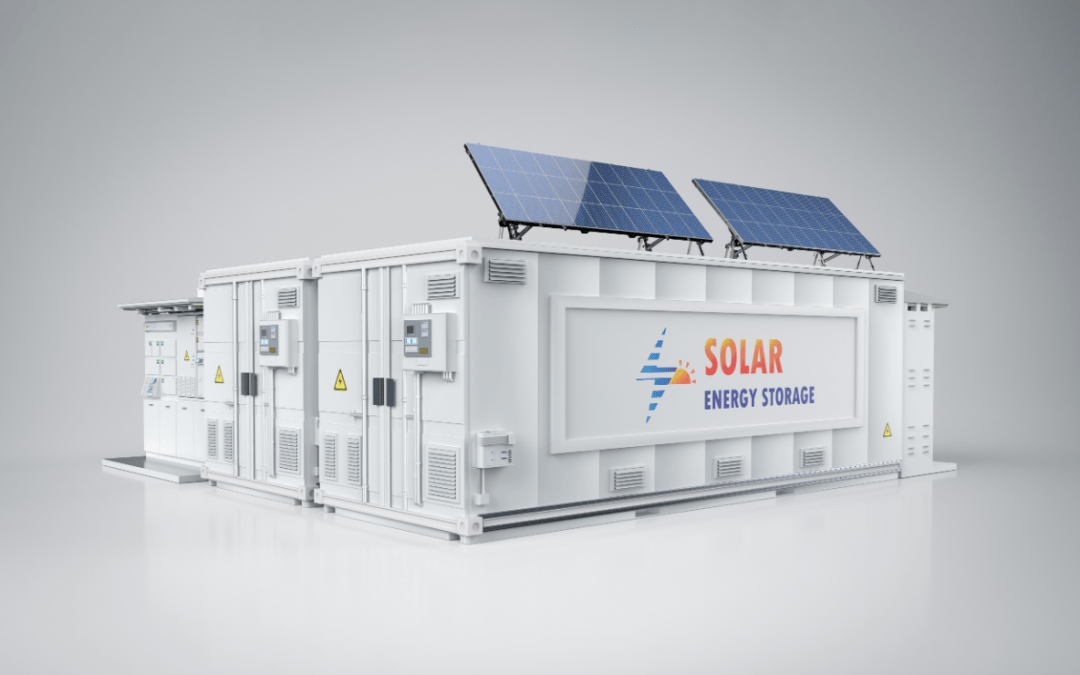
US-based SolarMax Technology Inc has announced plans to broaden its operations beyond residential solar with a new utility-scale battery storage project in Texas.
The company’s subsidiary, SolarMax Renewable Energy Provider Inc, has signed an engineering, procurement and construction (EPC) contract with Longfellow BESS I LLC for a 430MWh battery energy storage system in Pecos County.
The agreement includes full EPC services, covering design, installation, testing, start-up and commissioning.
The project is expected to generate around $127.3m in revenue. SolarMax also confirmed it will acquire an 8% equity interest in Longfellow BESS I LLC.
“This contract represents a key step in scaling our commercial footprint in the United States and validates our strategy to diversify beyond residential solar into commercial-scale EPC services,” said David Hsu, CEO of SolarMax.
The Longfellow BESS I project forms part of the portfolio of Infinite Grid Capital (IGC), an energy storage investment fund. It is being co-developed at the Gas Century Processing Plant owned by Mitchell Malone’s Longfellow Ranch Partners.
The battery system will be integrated with the existing natural gas facility, with plans for future additions including solar generation and an AI-powered data centre.
by Solar&StorageXtra Team | Aug 6, 2025 | Americas, Large Scale Utility Solar
Governor Jared Polis announced new measures to expand access to affordable renewable energy in Colorado, USA.
These include an executive action to prioritise clean energy across state agencies and the launch of the Colorado Energy Savings Navigator (CESN) – a digital platform that connects residents to over 600 energy rebates and 18 bill assistance programmes.
“Today we are taking action to ensure that Coloradans can easily access clean energy savings, especially ones that expire soon,” said Governor Polis.
“We continue to do all we can to make people aware of how you can reduce costs on energy bills and keep money in your pocket.”
With average household energy costs in Colorado projected to rise by up to $500 annually by 2035 due to new federal policies, Colorado’s steps aim to lower energy bills, speed up clean energy development, and secure economic certainty for businesses.
Public Utilities Commission Director Rebecca White said the CESN tool was designed to solve the “time-consuming” process of accessing rebates.
Environmental and energy leaders welcomed the announcement. “This Executive Action will give people tools they need to save money on energy and accelerate clean energy deployment,” said Kelly Nordini, CEO of Conservation Colorado.
Washington targets renewables
The signing of Executive Order 14315: Ending Market Distorting Subsidies for Unreliable, Foreign-Controlled Energy Sources and the One Big Beautiful Bill Act on July 7 2025, heralded the end of subsidies for renewable energy projects in the US.
The Executive Order cited costs to taxpayers and dependency on supply chains “controlled by foreign adversaries” as the motivations behind cutting the tax cuts.
In cutting discounts for wind and solar projects, the US plans to revert its focus to fossil fuels.
In retaliation, Colorado Governor’s executive action instructs state agencies to streamline project development and maximise federal tax credit opportunities before they expire.
Advanced Energy United’s Emilie Olson commented: “It sends a clear signal that Colorado will move forward in spite of Washington, D.C.”
by Solar&StorageXtra Team | Aug 1, 2025 | Americas, Innovation, Storage
TrinaSolar, a provider of smart PV and energy solutions, is supporting AI data centres and facility owners by delivering integrated renewable energy systems featuring its Vertex +700W large-format PV modules (LFMs).
Data centres, essential to the AI ecosystem, require substantial electricity to operate. This rising energy demand increases pressure on power grids.
In response, TrinaSolar has deployed a net-zero computing facility in a region known for extreme weather conditions. The site is powered by a combination of solar, wind, and storage technologies.
The facility generates approximately 10 million kilowatt-hours of clean electricity each year, contributing to an annual reduction of 8,000 tonnes in carbon emissions.
“Trina’s Vertex modules address the critical energy challenge facing hyperscale data centre operators in securing stable, reliable baseload power for AI computing workloads that consume electricity at unprecedented scales,” said Eric Cao, Vice President of TrinaSolar’s North American PV business.
by Solar&StorageXtra Team | Jul 28, 2025 | Americas, Large Scale Utility Solar
The latest Electric Power Monthly report from the U.S. Energy Information Administration (EIA), covering data through May 2025, shows solar remains the fastest-growing source of electricity in the United States.
In May, utility-scale solar generation (installations >1 MW) rose by 33.3% compared to May 2024. Small-scale solar, such as rooftop systems, increased by 8.9%.
Together, solar accounted for more than 11% of the country’s electricity that month – a 26.4% year-on-year increase.
For the first time, combined utility- and small-scale solar output (38,965 GWh) exceeded wind generation (36,907 GWh).
From January to May 2025, utility-scale solar generation grew by 39.8%, while small-scale solar rose by 10.7%, totalling an overall increase of 31.1% compared to the same period in 2024.
Solar made up 8.4% of the nation’s electricity in the first five months of 2025, up from 6.6% the year prior.
Solar generation also surpassed output from hydropower (6.1%) and now exceeds the combined output of hydropower, biomass, and geothermal sources.
Wind generation accounted for 12.2% of U.S. electricity between January and May 2025, 3.9% more than the previous year and nearly double that of hydropower. Combined, wind and solar provided 20.5% of U.S. electricity in that period, surpassing coal and nuclear.
In May alone, renewables generated 29.7% of U.S. electricity, second only to natural gas, which declined by 5.9% from the previous year.
The report follows EIA’s June findings, which demonstrated that the US’s renewable energy generation reached a record high in 2024. However, eyes on the country’s 2025 changes to its renewable policies, which threaten the US’ clean energy development.
by Solar&StorageXtra Team | Jul 24, 2025 | Americas, Commercial & Industrial Solar, Europe, Storage
A new scenario-based analysis from consultancy firm McKinsey suggests that increasing global tariffs could reduce solar PV and BESS installations in the US and EU by up to 10% by 2035.
According to the report, titled “How might tariffs affect the energy transition?”, growing trade tensions between the US, EU, and China could see solar PV installations fall by 9% in the US and 7% in the EU.
European BESS installations could also decline by as much as 10% in a high-tariff environment.
McKinsey’s high-impact scenario models 60% tariffs on all Chinese imports to the US, 20% on goods from other countries, and a 47.7% tariff on Chinese solar modules and batteries entering the EU.
The report does not account for other recent developments, including cuts to US renewable energy subsidies announced earlier this month.
Despite potential setbacks, McKinsey said solar PV installations in the US and EU “could increase more than twofold,” citing steep price declines in solar technology across 2022 and 2023.
A scenario resembling the late-2024 trade landscape projects the EU as reaching 750GW of solar capacity by 2035, while the US could reach 553GW.
In a “No real disruption” scenario, where tariffs on Southeast Asian modules average 52% and additional tariffs are applied to Canadian, Mexican, and Chinese imports, US installations fall to 512GW, with EU capacity remaining at 750GW.
The report notes that BESS capacity in the EU is likely to grow fivefold due to a more geographically diverse supply chain. “Raw materials for batteries, such as lithium and cobalt, are accessible across Latin America, Africa, and Australia,” the report states.
“Tariffs add uncertainty to the clean energy landscape,” it concludes. “Adoption of clean-energy technologies will likely take longer and cost more the longer tariffs last and the higher they are.”
The most widely reported tariffs have come from the US, with April’s tariffs garnering much criticism across a variety of sectors. These prompted many of the targeted countries to implement tariffs of their own against the US.
by Solar&StorageXtra Team | Jul 24, 2025 | Americas, Commercial & Industrial Solar
Engie North America has acquired a portfolio of distributed solar projects from developer Prospect14.
The deal includes 22 net energy metered (NEM) solar PV projects in Pennsylvania, totalling over 70MW of capacity. Kristen Fornes, head of distributed solar and storage at Engie North America, said the projects support both the company’s goals and the state’s energy transition.
“These projects align with the company’s mission to deliver locally sourced energy while supporting Pennsylvania’s transition to a more resilient and decarbonised energy system,” she said.
Prospect14, based in Ardmore, Pennsylvania, was founded in 2018 as Glidepath Ventures and rebranded in 2020. Since then, the company has overseen several large-scale transactions.
In 2020, Prospect14 sold a 278MW, 12-project portfolio to Grasshopper Solar and another four projects, totalling 887MW, to an unnamed independent power producer.
All projects were located in Pennsylvania, although the value of the Grasshopper deal was not disclosed.
Another notable transaction involved CleanChoice Energy acquiring the 29.42MW Kylertown solar project, spanning 150 acres.
Engie North America’s total installed renewables and energy storage capacity reached 51.6GW by the end of March 2025. Its parent company also recently expanded operations in Chile, where it is building its first solar-plus-storage facility in the country’s Metropolitan Region.
The 151MW project is backed by a $130m investment and is scheduled to begin commercial operation in Q3 2026.
by Solar&StorageXtra Team | Jul 22, 2025 | Americas, Commercial & Industrial Solar, Everything Installer, Storage
The Solar Energy Industries Association (SEIA) has released a new roadmap to promote circular economy principles across the US solar and storage sector.
The plan sets out a vision to manage the growing volume of clean energy equipment reaching the end of its service life, while fostering economic and environmental benefits.
Titled “A Vision for Implementing the Circular Economy in the Solar and Storage Industry,” the roadmap outlines how the sector can reduce waste, improve supply chain resilience, and extend the lifespan of solar and storage products.
Abigail Ross Hopper, SEIA president and CEO, explained:
“As the industry continues to expand, it’s important that we implement strategies that extend the life of our products while reducing waste to unlock economic opportunities and a healthier environment. That’s what the circular economy is all about.”
“This roadmap outlines the everyday solutions for turning our vision into reality – by providing a concrete action plan to develop national standards, create demand for recovered and recycled materials, and reduce waste in landfills.”
The circular economy approach seeks to decouple economic growth from raw material use, aiming to make the industry more sustainable and cost-efficient. By recovering valuable materials and supporting reuse, the initiative also aims to enhance US energy security and bolster local economies.
The roadmap includes a wide-ranging action plan, which involves developing national recycling and decommissioning standards, providing support to manufacturers, creating guidelines for recycling facilities, and convening a dedicated industry sustainability conference.
It also calls for policies that make resource recovery more accessible than landfill disposal.
A timeline for implementation is included, with key standards expected by 2026. SEIA plans to collaborate with industry stakeholders, all levels of government, academia, and other partners to execute the strategy.
The full roadmap is available at www.seia.org/circulareconomy.
by Solar&StorageXtra Team | Jul 21, 2025 | Americas, Large Scale Utility Solar
The US Department of the Interior has announced it will no longer offer preferential treatment to wind and solar energy developments on public lands.
The decision follows the signing of Executive Order 14315, Ending Market Distorting Subsidies for Unreliable, Foreign-Controlled Energy Sources, and the implementation of the One Big Beautiful Bill Act.
Under the new policy, all decisions related to wind and solar facilities – including leases, rights-of-way, construction and operational plans, and environmental consultations – will be subject to increased scrutiny by the Office of the Secretary.
The Department states this oversight will ensure “thorough and deliberative” evaluations.
“Today’s actions further deliver on President Trump’s promise to tackle the Green New Scam and protect the American taxpayers’ dollars,” said Acting Assistant Secretary for Lands and Minerals Management Adam Suess.
“American Energy Dominance is driven by US-based production of reliable baseload energy, not regulatory favouritism towards unreliable energy projects that are solely dependent on taxpayer subsidies and foreign-sourced equipment.”
Policy changes
As part of the policy shift, the Department plans to eliminate longstanding fee discounts for wind and solar developers. These include right-of-way and capacity fee reductions that have historically supported renewable energy projects on federal lands.
According to the Department, the move aims to level the playing field for other energy sources such as domestic natural gas and clean coal.
Officials argue that ending these subsidies will promote energy security, grid stability, and job creation by supporting “dispatchable, cost-effective and secure” energy technologies.
This marks a new milestone in the administration’s ongoing changes to federal energy policy, reversing support for renewable energy development seen under previous administrations.
The US solar industry spoke out against the initial executive order, signed 7 July, which threatened to undermine the domestic renewables sector in favour of fossil fuels. In Trump’s inaugural speech, the phrase “we will drill, baby, drill” indicated his preference for the already thriving oil industry.
by Solar&StorageXtra Team | Jul 21, 2025 | Americas, Asia, Commercial & Industrial Solar, Europe
US-based independent power producer Enfinity Global has sold a 49% equity stake in its 402MW solar portfolio in Italy to the State Oil Fund of the Republic of Azerbaijan (SOFAZ), Azerbaijan’s national sovereign wealth fund.
The portfolio includes 14 solar PV plants – both operational and under construction – across the Lazio and Emilia-Romagna regions. Once complete, the plants are expected to produce around 685GWh of electricity annually.
Enfinity will retain a 51% majority stake and continue managing the assets. “SOFAZ will act as Enfinity’s long-term partner and investor in Italy,” said Carlos Domenech, CEO of Enfinity Global.
The partnership is expected to support Enfinity’s broader pipeline, which includes 2.6GW of solar and 5.3GW of energy storage projects.
SOFAZ, which manages over $65bn in assets, was founded in 1999 to oversee Azerbaijan’s oil and gas revenues. The acquisition aligns with its goal of securing stable returns while supporting the transition to renewable energy.
Enfinity was supported by Mediobanca (financial), Legance (legal), and Fichtner (technical). SOFAZ was advised by JLL (M&A), Dentons Europe Studio Legale Tributario (legal), EY (financial and tax), and DNV (technical).
Founded in 2019, Enfinity has a global solar portfolio of 35.5GW, including 1.1GW of operational capacity and 1.3GW under construction. Its battery energy storage portfolio totals 12.9GW, with projects in the US, Italy, UK, India, and Japan.
The company also recently secured up to €100m from Eiffel Investment Group to fund its European solar and storage projects through four of Eiffel’s sustainable investment vehicles.
by Solar&StorageXtra Team | Jul 21, 2025 | Americas, Commercial & Industrial Solar
The California Energy Commission (CEC) has awarded a $4m grant to perovskite developer Tandem PV to support third-party testing of its perovskite-silicon tandem solar panels.
According to the company, the funding will cover performance testing in real-world environments and assessments of the panels’ long-term durability.
This external validation will complement Tandem PV’s internal testing efforts and marks a step towards commercialisation of the perovskite-silicon tandem technology.
Tandem PV states that its panels currently reach a 28% conversion efficiency and are 30% more powerful than typical silicon panels.
Research from Oxford PV, another perovskite developer, indicates that perovskite-silicon tandem cells could theoretically reach 43% efficiency, well above the 29% ceiling for conventional silicon cells.
“This award accelerates our durability testing to bring us closer to delivering a new standard for clean energy and delivering high-efficiency solar that’s proven, reliable and ready for the market,” said Tandem PV founder and CTO Colin Bailie.
Both Tandem PV and Oxford PV have recently focused on scaling production. Tandem PV secured $50m in March to fund a commercial-scale perovskite manufacturing facility in the US.
In April, Oxford PV signed a perovskite technology patent licensing agreement with Trinasolar.
Meanwhile, California’s solar sector continues to evolve. The removal of a proposed amendment that would have sharply reduced compensation for residential solar exports under net energy metering was welcomed by the California Solar & Storage Association.
However, increasing curtailment due to high renewable capacity remains a challenge. In March, the California Independent System Operator curtailed over 900,000MWh of solar and wind generation – a record monthly figure – underscoring the need for grid infrastructure upgrades.
by Solar&StorageXtra Team | Jul 18, 2025 | Africa, Americas, Asia, Europe, Large Scale Utility Solar, Middle East, Oceania
Global renewable energy capacity grew by more than 15% in 2024, according to the Renewable Energy Statistics 2025 report released by the International Renewable Energy Agency (IRENA) this week.
However, the agency warns that regional disparities in growth are widening.
Asia accounted for 71% of new capacity additions, maintaining its lead for a second consecutive year. Europe and North America followed, contributing 12.3% and 7.8% respectively.
In contrast, Africa, Eurasia, Central America, and the Caribbean together made up just 2.8% of global additions. Despite its potential, Africa’s renewable capacity increased by only 7.2%.
IRENA Director-General Francesco La Camera said: “The renewable energy boom is transforming global energy markets, driving economies and creating vast investment opportunities.
“However, the growing regional divide highlights that not everyone is benefiting equally from this transition.”
He added: “Bridging the divide and closing the investment gap between countries and regions is critical. It requires targeted policies, international financing, and partnerships that unlock capital and technology where they are needed most.”
UN Climate Change Executive Secretary Simon Stiell echoed these concerns, saying: “The global shift to renewables is increasingly inevitable, but its massive human and economic benefits are not yet being shared across all countries and regions.”
“To deliver on the global agreement at COP28 to triple renewables by 2030, we need to move much further and faster… The investments required will pay huge dividends – cutting emissions, driving economic growth, creating jobs, and supporting affordable, secure energy for all.”
Despite a record-breaking 582 GW being added last year, IRENA notes that the world remains off track to meet the 11.2 TW target needed by 2030.
by Solar&StorageXtra Team | Jul 17, 2025 | Americas, Commercial & Industrial Solar
Independent power producer Sol Systems has announced a $675m revolving construction finance facility to support its upcoming solar and storage developments.
The funding will back construction loans, tax equity bridge loans, and letters of credit for an initial 500MW of projects across Illinois, Ohio, and Texas. The first group of projects is expected to go online by the end of 2026.
“This facility is a major step forward in scaling Sol’s operating portfolio,” said Richard Romero, CFO of Sol Systems.
“It gives us the capital to reliably and quickly deliver clean energy projects across the country. We’re grateful to our partners and lenders for their vision, trust, and alignment to accelerate this shared mission.”
The company noted that the financing demonstrates strong investor confidence in the long-term value of clean energy assets. The pipeline includes shovel-ready projects that align with both state and corporate decarbonisation goals.
“We’ve seen long term energy supply and demand market dynamics drive continued investment into renewables,” said Dan Diamond, Chief Development Officer at Sol Systems.
“Customers continue to leverage utility scale solar for cleaner, faster, cheaper generation supply. This sizable financing paves the way for the growth of our IPP platform.”
Sol Systems says the funding will enable it to expand its operations more efficiently, supporting the broader deployment of renewable infrastructure and reinforcing its position as a leading independent power producer.
[Image credit: Sol Systems. Image caption: The three-year commitment will initially fund 500 MW of solar and storage projects across Illinois, Ohio, and Texas]
by Solar&StorageXtra Team | Jul 14, 2025 | Americas, Commercial & Industrial Solar
SolarBank Corporation has cleared a milestone for its 7.2 MW ground-mount solar project in upstate New York, as the Hoadley Hill Road project has passed the Coordinated Electric System Interconnection Review (CESIR).
This will allow the company to move forward with permitting, financing, and construction.
The project is expected to generate enough electricity to power approximately 850 homes and will feed directly into the local grid.
It is backed by New York’s Value of Distributed Energy Resources (VDER) program, with a projected year-one compensation rate of $0.0971/kWh.
“With the interconnection review now in the rearview mirror, we’re shifting into high gear,” said Dr. Richard Lu, CEO of SolarBank. “We’re now full speed ahead on permitting and project financing to bring this clean energy solution online.”
SolarBank is also pursuing incentives through NYSERDA’s NY-Sun Program, which could provide a one-time payment of up to $0.395 per watt (DC). These incentives aim to support solar development and reduce financial risk for developers.
Once fully permitted and financed, the project will operate as a community solar installation. Residents and businesses will be able to subscribe to the solar farm and receive utility bill credits without the need for on-site solar panels.
SolarBank has completed over 100MW of projects and has a development pipeline exceeding 1GW. The company says the Hoadley Hill project demonstrates its scalable model and commitment to long-term clean energy infrastructure.
New York currently leads the US in community solar capacity and is targeting 6 GW of installed solar by the end of 2025 as part of its Climate Leadership and Community Protection Act.
The company notes that the project’s success depends on permitting, financing, and stable policy support.
by Solar&StorageXtra Team | Jul 10, 2025 | Americas, Commercial & Industrial Solar
President Donald Trump has issued a new executive order aimed at tightening remaining loopholes in renewable energy subsidies, further reinforcing his administration’s shift away from federal support for wind and solar projects.
The order follows passage of the “One Big Beautiful Bill,” which already repealed major clean energy tax credits under the Inflation Reduction Act (IRA).
It directs the Treasury Department to narrowly interpret what qualifies as “under construction,” restricting eligibility for subsidies unless “a substantial portion of a subject facility has been built”.
Critics argue the move undermines bipartisan agreements that allowed projects a 12-month grace period under existing rules.
Jason Grumet, CEO of the American Clean Power Association, said, “The executive order and commitments to the Freedom Caucus seem at odds with that agreement.
The administration’s next steps are a clear test of whether Senate leadership or the House Freedom Caucus has more influence on national policy”.
In addition to narrowing tax credit eligibility, the order escalates restrictions on Chinese-backed clean tech by tightening “Foreign Entity of Concern” (FEOC) rules.
It also instructs the Interior Department to eliminate policies favouring wind and solar development on federal lands, potentially impacting large-scale projects.
Abby Hopper, president of the Solar Energy Industries Association, emphasised, “Business certainty, predictability, and even-handedness are bedrocks of federal policy that cannot be undone by the stroke of a pen”.
Supporters argue the crackdown could prevent abuse of subsidies and reduce the federal deficit.
“The Trump administration could… make it very specific in terms of what is under construction,” said Thomas Pyle of the Institute for Energy Research.
As solar accounted for 50GW of new capacity in 2024, the industry now faces heightened uncertainty amid growing energy demand and global calls for decarbonisation.
by Solar&StorageXtra Team | Jul 8, 2025 | Americas, Commercial & Industrial Solar
On 7 July, US President Donald Trump signed an executive order instructing federal agencies to implement provisions that scale back tax incentives for solar and wind energy projects.
The “One Big Beautiful Bill Act” calls for the US Treasury Department to oversee the phaseout of renewable energy tax credits, as laid out in the recent budget bill passed by Congress and signed into law by the president.
Additionally, the Interior Department has been tasked with reviewing and revising any existing policies that prioritise renewables over other energy sources.
In the executive order, as reported by Reuters, Trump stated that renewable energy resources are “unreliable, expensive, displaced more dependable energy sources, were dependent on foreign-controlled supply chains and were harmful to the natural environment and electric grid.”
Impact
Under the One Big Beautiful Bill Act, tax credits for renewable energy will effectively cease for projects that have not started construction by the end of 2026.
Projects initiated after this deadline must be completed and operational by the end of 2027 to be eligible for any remaining incentives.
This marks a significant departure from prior legislation, which allowed developers to claim a 30% tax credit for eligible projects through 2032.
Both the Treasury and Interior Departments are required to submit reports to the White House within 45 days, detailing the steps taken to implement the executive order.
Reactions
The changes drew strong reactions from solar Industry groups prior to being signed into law.
The US solar industry, in particular, has voiced opposition to the rollback. As previously reported by Solar&StorageXtra, leading solar companies and trade associations have condemned the legislation, warning that it could slow growth, cost jobs, and stall private investment in clean energy infrastructure.
Many in the sector had hoped to see tax credit extensions or permanent policy support to encourage long-term planning and stability in the future. However, doubts arose in January following Trump’s rollback of environmental legislation made under his predecessor, President Biden.
The administration has emphasised that the policy changes are designed to promote what it describes as energy independence and reliability, despite demonstrating a de-prioritisation of domestic renewable energy generation.
by Solar&StorageXtra Team | Jul 3, 2025 | Americas, Commercial & Industrial Solar, Storage
The solar industry has reacted negatively to the US Senate’s reconciliation bill, which narrowly passed 51-50 on 1 July.
- A proposed excise tax which targeted solar and wind projects that used above a certain amount of Foreign Entities of Concern (FEOC) materials was dropped from the final reconciliation bill before it reached the Senate. This was the largest change from the bill’s draft.
- Both the 45Y Production Tax Credit (PTC) and 48E Investment Tax Credit (ITC) for solar and wind will phase out by the end of 2027. This deadline has been brought forward from the Inflation Reduction Act’s date of 2032.
- However, developments which begin before mid-2026 and end ahead of 2027 can still claim credits.
- Energy storage has been excluded from the rollback of several tax credits; however, the definition of a battery module has been changed: “which is comprised of all other essential equipment needed for battery functionality, such as current collector assemblies and voltage sense harnesses, or any other essential energy collection equipment.”
Multiple industry bodies have warned that the bill threatens domestic US manufacturing, job security, and national energy independence.
Addressing the consequences
Abigail Ross Hopper, president and CEO of the Solar Energy Industries Association (SEIA), said the legislation “undermines the very foundation of America’s manufacturing comeback and global energy leadership.”
“Families will face higher electric bills, factories will shut down, Americans will lose their jobs, and our electric grid will grow weaker.”
In SEIA’s official statement, Hopper adds that the bill will prevent millions of American families from accessing the energy savings, resilience, and freedom that utilising solar and BESS provides.
“Every (Senate) member should ask themselves what kind of future they’re voting for. Our communities, our businesses, and our futures are on the line,” Hopper concludes.
Backtracking on support
The Solar Energy Manufacturers for America (SEMA) Coalition echoed SEIA’s concerns, highlighting how the legislation reverses previously promised support for US solar manufacturers.
In SEMA’s official statement, Mike Carr, Executive Director of the SEMA Coalition, touches on the industry’s “price war” following an overabundance of cheap imports worldwide.
“As we have been telling Members of Congress for months, this bill will lead to a flood of Chinese imports, hurting US manufacturing jobs and investments.”
Carr emphasises that US solar companies are not just competing with private businesses, but with “the country of China and all the resources and power that entails.”
“SEMA member companies have invested billions of dollars in state-of-the-art factories to take on that fight with the knowledge that the government has their back to level the playing field.”
Incentives terminated
One of the central criticisms of the bill is its abrupt termination of the Domestic Content Bonus, passed in 2022 under President Biden, which was designed to reward the use of American-made solar components.
Carr cautioned that this move will encourage stockpiling of lower-cost Chinese panels, which could dominate new US energy installations for years to come.
“[It] pulls the rug out from under companies that have taken real risks to restore American solar manufacturing and ensure national energy independence.”
The SEMA Coalition warned that the policy reversal could lead to “grid insecurity” and a loss of trust in federal commitments.
“How are we going to expect any companies to trust that our federal policies won’t flip-flop in the future?” Carr concludes.
As the bill now moves to the US House of Representatives before finalising and Presidential sign-off, both SEIA and SEMA are urging lawmakers to reconsider the bill and safeguard the future of the US solar industry.
by Solar&StorageXtra Team | Jun 13, 2025 | Americas, Large Scale Utility Solar
Zelestra has begun full commercial operations at the 300 MW San Martín solar plant in La Joya, Arequipa – now the largest solar facility in Peru.
Completed in under 18 months by Zelestra’s in-house engineering, procurement, and construction team, the plant features 450,000 solar modules and is expected to generate 830 GWh of renewable energy annually.
This output is enough to supply electricity to over 440,000 homes.
The project, which supported 900 jobs at peak construction, is anticipated to reduce carbon emissions by more than 166,000 tonnes each year.
Power generated at the site will be delivered to Kallpa Generación under a long-term power purchase agreement, contributing to Peru’s efforts to diversify its energy mix.
Leo Moreno, CEO of Zelestra, said: “The successful delivery of San Martín reinforces our commitment to a customer-first approach. We are proud to see the most ambitious solar project in Peru now fully operational and look forward to a long-term partnership with Kallpa.”
Zelestra currently has a development pipeline of 7 GW in solar and battery energy storage projects across Latin America, including 1.7 GW already contracted in Peru, Chile, and Colombia.
The company was recently named among the world’s top 10 corporate clean energy sellers by BloombergNEF and ranked second across Europe, the Middle East, and Asia.
by Solar&StorageXtra Team | Jun 12, 2025 | Americas, Large Scale Utility Solar
The United States produced more energy in 2024 than previous years, driven in part by record output from solar, wind, and biofuels, according to the U.S. Energy Information Administration (EIA).
Total domestic energy production exceeded 103qd British thermal units (Btu), surpassing the previous record set in 2023 by 1%.
“Biofuels, wind, and solar production each set records in 2024, contributing to record total renewable energy production in the United States,” the EIA reported.
Solar energy saw the biggest leap among renewables, growing 25% compared to 2023, while wind generation increased by 8%. Biofuels – including ethanol, biodiesel, and sustainable aviation fuel – hit a record 1.4m barrels per day, up 6% from the previous year.
Despite this growth, fossil fuels remained dominant. Natural gas accounted for about 38% of total energy production, maintaining its lead since 2011.
Crude oil followed at 27%, with production reaching a record 13.2m barrels per day. Coal, by contrast, fell to its lowest level since 1964, making up just 10% of output.
Older energy sources such as hydropower and nuclear remained flat or declined slightly.
“Output from other energy sources that are primarily used for electric power generation either peaked decades ago… or fell slightly from their 2023 values,” noted the EIA.
The data reflect a steadily shifting US energy landscape – one still dominated by fossil fuels but with renewables claiming a growing share.
by Solar&StorageXtra Team | Jun 11, 2025 | Americas, Large Scale Utility Solar, Storage
US-based independent power producer Soltage has closed a $260m financing deal to support the rollout of its distributed solar and energy storage pipeline in the US, which exceeds 2GW in total capacity.
The funding will back near-term construction of 250MW of solar and storage installations.
The financing package includes a revolving construction loan, a tax equity bridge loan, and a term loan facility. It was led by the National Bank of Canada and First Citizens Bank, with participation from BankUnited, Cadence Bank, and Siemens Financial Services.
“This financing marks Soltage’s continued deployment of innovative financial structures that enable efficient capital investment in domestic energy infrastructure,” said Jesse Grossman, CEO of Soltage.
“With the support of National Bank of Canada, First Citizens Bank, and our valued financial partners, this facility will enable construction of the next 250MW of distributed solar and storage projects across our national portfolio.”
Based in New Jersey, Soltage develops and operates distributed utility-scale clean energy projects, supplying power to utility, commercial, industrial, and municipal customers.
The company is backed by infrastructure investment manager Igneo Infrastructure Partners and has delivered over 125 clean energy projects totalling more than 500MW.
The financing marks a deepening of relationships between Soltage and its financial partners.
by Solar&StorageXtra Team | Jun 10, 2025 | Americas, Commercial & Industrial Solar, Storage
According to the Solar Energy Industries Association (SEIA)’s US Solar Market Insight Q2 2025 report, the US added 8.6GW of new solar module manufacturing capacity in Q1 2025.
This makes Q1 the third largest for new manufacturing capacity to date, and overall, the US installed 10.8GW of new capacity in Q1. Solar and BESS account for 82% of all new generating capacity.
The report also notes that US solar cell production capacity doubled to 2GW in the same time frame, due to a new factory in South Carolina coming online.
SEIA’s report hails Texas as a returning winner in the US’ solar race, as it added more capacity in Q1 than any other state. Florida overtook California to reach second place.
“Solar and storage continue to dominate America’s energy economy, adding more new capacity to the grid than any technology using increasingly American-made equipment,” said SEIA president and CEO Abigail Ross Hopper.
Uncertain horizons
“The 10.8 GW of solar capacity installed in Q1 2025 represents a significant portion of new US electricity generation, highlighting solar’s growing dominance in the energy mix,” said Zoë Gaston, Principal Analyst at Wood Mackenzie – who worked with SEIA on the report.
However, the report also highlights increasing legislation that could hinder the sector’s growth. It cites economy-wide tariffs, new anti-dumping and countervailing duties (AD/CVD) on cells and modules from Southeast Asia, and shifts in renewable energy policies (such as the reconciliation bill) as culprits.
SEIA warns that these hindrances could result in lost jobs, energy shortages, rising energy bills, factory closures, and a fall in national energy production by 173TWh.
“The proposed changes to federal tax incentives, along with ongoing tariff concerns, could significantly impact this growth trajectory and potentially lead to energy supply challenges,” adds Gaston.
“It’s important to consider the critical role of solar in America’s energy landscape.”